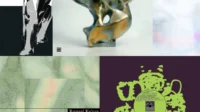
Tri/xon Unites with The Last Poets’ Umar Bin Hassan for the Innervisions Release MAD/NESS


The intersection of spoken-word history and contemporary electronic production has reached a new zenith with the release of MAD/NESS, a collaborative project spearheaded by the enigmatic artist Tri/xon. Released under the influential Innervisions label, the track features the iconic vocals of Umar Bin Hassan, a foundational member of the legendary group The Last Poets. This release serves as a bridge between the militant, rhythmic poetry of the 1960s civil rights era and the high-fidelity, tension-driven aesthetics of modern dance music. By blending these disparate cultural timelines, the production team—which includes notable contributions from Innervisions stalwarts Dixon and Trikk—has crafted a piece that is as much a social commentary as it is a club-oriented sonic exploration.
Chronology of a Collaborative Endeavor
The genesis of this project traces back to a shared vision of revitalizing the narrative power of the voice within the context of house and garage music. Tri/xon, known for a methodical approach to sound design, sought to incorporate the gravitas of Umar Bin Hassan, whose work with The Last Poets remains one of the most significant influences on hip-hop, spoken word, and African-American literature.
The development of the track took place over several months of technical refinement. Initial sessions focused on the vocal treatment of Bin Hassan’s performance, ensuring that the urgency of his delivery was not lost in the high-frequency environment of a dancefloor mix. Following the tracking of the vocals, the production moved into the hands of the Innervisions core team. The track underwent extensive mixing and mastering at the renowned Dub On Audio facility, where engineer Marcelo worked to ensure that the low-end frequencies—essential for the track’s UK garage-influenced rhythmic backbone—did not overwhelm the linguistic clarity of the poetry. The final product was formally slated for a November release, positioning it as a standout addition to the 2026 winter catalog for the Berlin-based label.
Technical Anatomy and Production Philosophy
At its core, MAD/NESS is an exercise in structural contrast. Tri/xon’s production philosophy for this record draws heavily from the raw, unpolished energy of early house music, while simultaneously adopting the syncopated, skittering percussion characteristic of UK garage. The track operates on a binary of tension and release, a hallmark of the Innervisions sound that prioritizes emotional arc over repetitive loops.
The inclusion of Dixon and Trikk in the production credits underscores the collaborative nature of this release. Dixon, whose reputation as a tastemaker and curator for Innervisions is globally recognized, provided critical guidance on the track’s arrangement. His influence is evident in the spatial distribution of the soundscape, which allows the listener to distinguish between the driving bassline and the nuanced textures of the mid-range synthesizers. Trikk, known for a more percussive, tribal-influenced sound, contributed to the rhythmic complexity of the percussion, ensuring that the track maintains momentum even during its more atmospheric, spoken-word-heavy interludes.
The technical specifications of the production are indicative of the high standards maintained by Dub On Audio. The master was balanced to emphasize the presence of the vocal track, preventing the digital artifacts that often plague modern dance tracks when paired with complex, human-voice samples. By utilizing professional-grade analog hardware in the mastering process, the team achieved a warmth that complements the vintage aesthetic of Bin Hassan’s performance.
Historical Context: The Last Poets and the Electronic Dialogue
To understand the weight of this release, one must consider the historical importance of Umar Bin Hassan. As a member of The Last Poets, Bin Hassan was at the forefront of a movement that utilized poetry as a political tool. Their 1970 self-titled album is widely considered a seminal work that provided the lyrical blueprint for generations of hip-hop artists.
The decision to place these vocals into a dance music context is not merely a stylistic choice but an act of cross-generational dialogue. Historically, electronic dance music has often functioned as a medium for social expression, particularly within the Black and LGBTQ+ communities that birthed house music in Chicago and Detroit. By integrating Bin Hassan’s voice, Tri/xon and Innervisions are acknowledging the lineage of protest music and its continued relevance in modern clubs. This integration allows the track to function on two levels: as an immersive dance experience and as a vessel for the urgent social critique that Bin Hassan has championed for over five decades.

Implications for the Innervisions Catalog
The release of MAD/NESS represents a strategic pivot for Innervisions. While the label is synonymous with deep, progressive, and melodic techno, the incorporation of high-profile spoken-word collaborations signals an expansion of their creative horizon. Industry analysts note that this shift reflects a broader trend in electronic music where labels are increasingly seeking to ground their releases in tangible cultural narratives rather than abstract sound design alone.
From a commercial standpoint, the collaboration provides a unique market proposition. By appealing to both the traditional electronic music fan base and the global community of jazz, spoken-word, and hip-hop enthusiasts, the label has maximized the potential reach of the release. The digital distribution strategy, anchored by platforms like Beatport, ensures that the track is accessible to DJs and selectors worldwide, further cementing its place in contemporary club rotations.
Fact-Based Analysis of the Soundscape
The structure of the track can be broken down into three distinct phases. The introductory phase sets the tempo, utilizing a restrained percussive pattern that builds anticipation. The mid-section introduces the core thematic element—the vocal performance—which acts as the track’s narrative anchor. During this phase, the instrumentation is kept intentionally minimal to prevent clashing with the rhythmic cadences of the poetry.
The climax of the track, often referred to in production circles as the "drop," utilizes a surge of layered synths and heavy sub-bass to transform the listener’s experience from passive observation to active engagement. It is here that the influence of UK garage is most palpable, as the rhythm shifts into a more erratic, high-energy pattern that demands physical movement. The final phase, or the "outro," serves to dissipate the built-up energy, leaving the listener with a final, lingering thought from Bin Hassan’s performance.
This arc is a masterclass in modern electronic composition. It avoids the common trap of relying on a singular hook or drop, instead opting for a narrative-driven approach that keeps the listener engaged throughout the track’s duration. The collaboration between Tri/xon and the production team ensures that the technical execution matches the artistic ambition of the project.
Industry Reaction and Future Outlook
While it is too early to quantify the long-term impact of MAD/NESS on the charts, initial reception within the electronic music community has been overwhelmingly positive. Prominent DJs have already begun integrating the track into their sets, citing its versatility and the impact of the vocal delivery. The collaboration is expected to set a new benchmark for how electronic producers approach the integration of legacy artists into their work.
Looking ahead, the success of this project may encourage other producers to explore similar collaborations. The potential for blending the wisdom and experience of foundational artists with the technical prowess of the new generation is significant. As electronic music continues to mature, the importance of these intersections—where history meets the future—will likely become a defining characteristic of the genre’s evolution.
In conclusion, MAD/NESS is more than a standard dance release; it is a meticulously crafted production that honors its roots while looking forward to the future of sound. Through the collaboration of Tri/xon, Umar Bin Hassan, and the Innervisions team, the track successfully navigates the complex space between dancefloor utility and artistic expression. It stands as a testament to the enduring power of the voice and the ability of electronic music to facilitate meaningful, cross-generational conversations. Listeners interested in experiencing this synthesis of history and modern production can find the track available on major digital platforms, marking a significant milestone in the 2026 electronic music calendar.