The Best Recordings of Bach’s Six Cello Suites A Comprehensive Guide to the Repertoire’s Summit

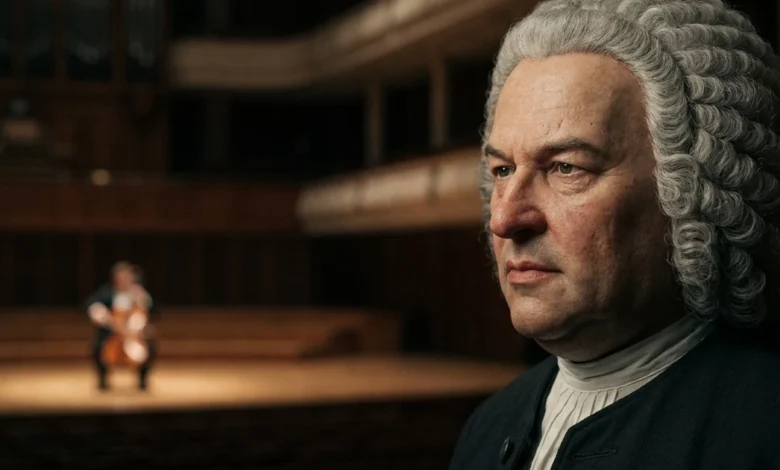
Johann Sebastian Bach’s Six Suites for Unaccompanied Cello, BWV 1007–1012, represent a foundational pillar of Western classical music and the ultimate technical and emotional challenge for any cellist. Composed during Bach’s tenure as Kapellmeister in the court of Köthen between 1717 and 1723, these works emerged during a period of prolific instrumental creativity. Unlike his time in Leipzig, where his duties were largely liturgical, the Köthen years allowed Bach to focus on secular chamber music for the court’s skilled musicians. Despite their current status as the "Old Testament" of the cello repertoire, the suites languished in relative obscurity for nearly two centuries, frequently dismissed as mere technical exercises or "etudes" until a historic rediscovery in the late 19th century.
Historical Context and the Köthen Period
The genesis of the suites is tied to the musical environment of Prince Leopold of Anhalt-Köthen. Because the court followed the Reformed (Calvinist) faith, there was no requirement for elaborate church music, freeing Bach to explore the possibilities of solo instruments. Historical evidence suggests Bach may have written the suites for the court’s principal cellists, Christian Bernhard Linike or Christian Ferdinand Abel.
A significant challenge for modern scholars and performers is the absence of an autograph manuscript in Bach’s own hand. The primary surviving source is a copy made by his second wife, Anna Magdalena Bach, between 1727 and 1731. This manuscript lacks specific performance directions regarding tempo, dynamics, and, most crucially, articulation and bowing. Consequently, the performance history of the suites is characterized by a wide spectrum of interpretation, as each cellist must act as a co-editor of the score.
The suites follow a standardized Baroque structure: an opening Prelude followed by a series of dance movements including an Allemande, Courante, Sarabande, and a pair of Galanteries (Minuets, Bourrées, or Gavottes), concluding with a lively Gigue. However, within this framework, Bach explores a vast emotional landscape, from the pastoral serenity of the First Suite in G Major to the tragic depth of the Fifth Suite in C Minor and the symphonic grandeur of the Sixth Suite in D Major.
Chronology of Rediscovery and Performance
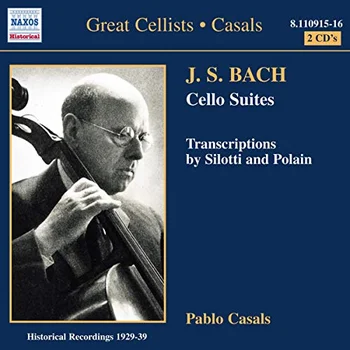
The transformation of the suites from pedagogical material to concert staples is credited almost entirely to the Spanish cellist Pablo Casals. In 1889, at the age of 13, Casals discovered a tattered copy of the suites in a secondhand music shop in Barcelona. He spent twelve years studying and practicing them in private before performing them in public, eventually making the first complete recording of the cycle in the 1930s.
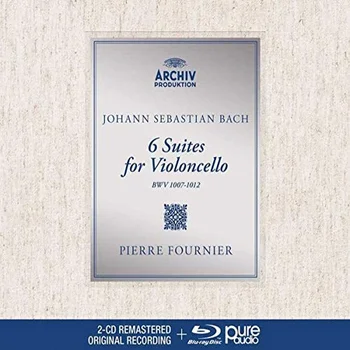
Since the mid-20th century, the recording history of the suites has mirrored the broader evolution of classical performance practice. This includes the rise of the Historically Informed Performance (HIP) movement in the 1970s, which advocated for the use of period instruments, gut strings, and Baroque bows to achieve a more transparent, dance-like sound. Today, the suites are viewed not only as a display of virtuosity but as a profound spiritual journey, with nearly every major cellist in the world attempting to leave their mark on the cycle.
Definitive Interpretations on Modern Instruments
Pablo Casals (EMI/Naxos)
Recorded between 1936 and 1939, Casals’ set remains the most influential recording in history. Eschewing the dry, academic approach common in his era, Casals treated the music as a living, breathing narrative. His performance is characterized by a heavy use of rubato and a rugged, rhetorical intensity. While modern ears might find the audio quality dated and certain technical passages slightly blurred, the sheer force of Casals’ personality and his ability to make the cello "speak" ensure this recording remains essential listening.
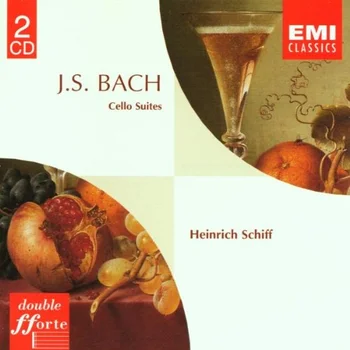
Pierre Fournier (Deutsche Grammophon)
Often referred to as the "Aristocrat of Cellists," Pierre Fournier’s 1960 recording offers a stark contrast to the grit of Casals. Fournier’s Bach is defined by elegance, poise, and a seamless legato. His interpretation is widely considered the "gold standard" for those seeking a balanced, modern-instrument approach. The phrases flow with a natural momentum, particularly in the Sarabandes, where Fournier achieves a sense of timelessness without descending into sentimentality.
Heinrich Schiff (EMI)
For listeners who prefer a more robust and muscular sound, Heinrich Schiff’s 1984 recording provides a compelling alternative. Schiff utilizes a firm bow and a clear, percussive attack that highlights the rhythmic architecture of the dances. His tone is rich and focused, lending a sense of "backbone" to the music. Critics have noted that Schiff manages to make the major-key suites sound genuinely joyful and the minor-key suites appropriately grave without ever becoming turgid.
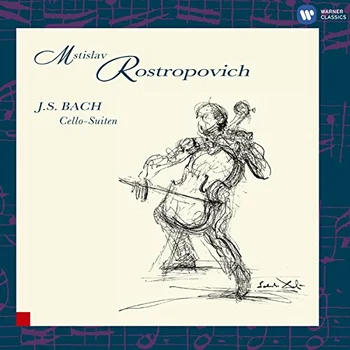
Mstislav Rostropovich (EMI)
Rostropovich waited until 1991, late in his storied career, to record the suites in the Basilica of Vézelay in France. The result is a highly personal and theatrical interpretation. Rostropovich views the suites through a grand, almost symphonic lens, utilizing the vast acoustics of the cathedral to create a sense of monumental drama. While some purists find his tempos and expressive liberties too eccentric, others view it as a profound meditation by a master at the height of his powers.
Landmark Period-Instrument Recordings
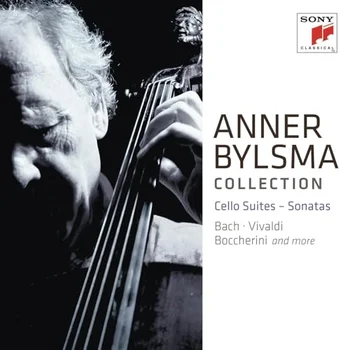
Anner Bylsma (Sony Classical)
The Historically Informed Performance movement reached a milestone with Anner Bylsma’s 1979 recording. Playing on a Baroque cello with gut strings, Bylsma stripped away the Romantic vibrato and heavy bow pressure of the 20th century. His reading is light, agile, and emphasizes the "swing" of the Baroque dances. This recording fundamentally changed the public’s perception of Bach, moving away from the "private prayer" aesthetic toward a more vibrant, courtly energy.
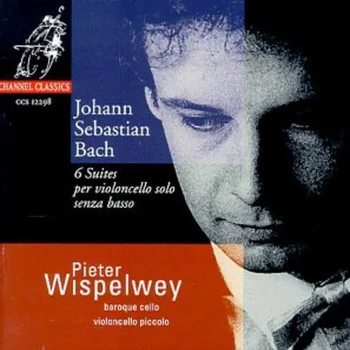
Pieter Wispelwey (Channel Classics)
Wispelwey has recorded the suites multiple times, but his period-instrument accounts are particularly noted for their extroverted nature. He employs a light, airy tone and a flexible sense of pulse that serves the inherent dance rhythms of the music. In the Sixth Suite, Wispelwey uses a five-string violoncello piccolo, the instrument Bach likely intended, allowing the high registers to ring out with a clarity that is difficult to achieve on a standard four-string cello.
David Watkin (Resonus)
A more recent addition to the period-instrument discography, David Watkin’s recording has been praised for its blend of scholarship and spontaneity. Watkin’s touch is relaxed and articulate, allowing the complex counterpoint—where a single cello must imply multiple voices—to emerge with unusual ease. His use of a rare original five-string cello for the Sixth Suite provides a resonant, authentic texture that has made this version a favorite among critics.
Contemporary and Introspective Perspectives
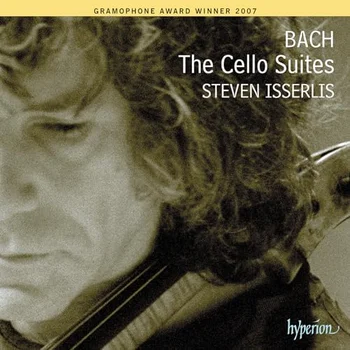
Steven Isserlis (Hyperion)
Steven Isserlis’ 2007 recording is marked by a searching, spiritual quality. Isserlis has famously described the six suites as a metaphorical journey through the life of Christ, from the Nativity to the Resurrection, though he maintains that the musicality always takes precedence over the program. His playing is unshowy and deeply thoughtful, characterized by clean ornamentation and a steady, rhythmic pulse that allows the music to speak with a quiet, persuasive authority.
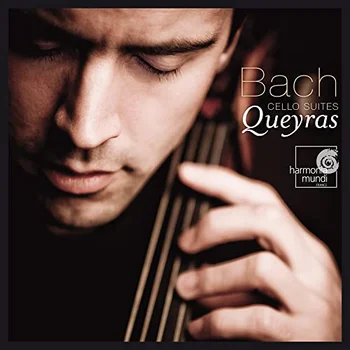
Jean-Guihen Queyras (Harmonia Mundi)
Queyras offers a recording that bridges the gap between modern and period styles. While playing a modern setup, he incorporates the lightness and rhythmic flexibility of the HIP movement. His account is noted for its lucidity and warmth, treating the suites as six distinct worlds. The recording is intimate and conversational, making it one of the most accessible versions for modern listeners.
Yo-Yo Ma (Sony Classical)
Yo-Yo Ma’s third and most recent recording, "Six Evolutions" (2018), represents a lifetime of reflection. Unlike his earlier, more polished versions, this recording is raw and inward-looking. The sound is captured in a close, dry acoustic that reveals the physical details of the performance—the grain of the wood and the intake of breath. Ma plays like a storyteller, emphasizing the human vulnerability within Bach’s mathematical perfection.
Technical Analysis and Broader Impact
The enduring appeal of the Cello Suites lies in Bach’s ability to create a "polyphonic" experience using a monophonic instrument. Through the use of broken chords and rapid register shifts, Bach tricks the ear into hearing multiple simultaneous melodic lines. This is most evident in the Fugue-like sections of the Preludes to the Second and Fifth Suites.
The Fifth Suite is also notable for its use of scordatura, where the highest string is tuned down a whole step from A to G. This changes the harmonic overtones of the instrument, creating a darker, more somber resonance. The Sixth Suite, conversely, pushes the cello to its upper limits, requiring the extra range of a fifth string to maintain the brilliance of the D Major key.
The broader impact of these works cannot be overstated. Beyond the concert hall, the suites have permeated popular culture, appearing in film scores, modern dance choreographies, and even as symbols of human resilience in times of crisis. They remain a rite of passage for every cellist and a source of infinite discovery for listeners. Whether performed on a warm modern instrument or a lean Baroque setup, Bach’s Cello Suites continue to stand as the definitive testament to the expressive power of a single wooden box and four (or five) strings.
Related posts: