Reba McEntire Makes Surprise Return to the Stage at 2022 CMA Awards Following Vocal Rest to Honor Loretta Lynn

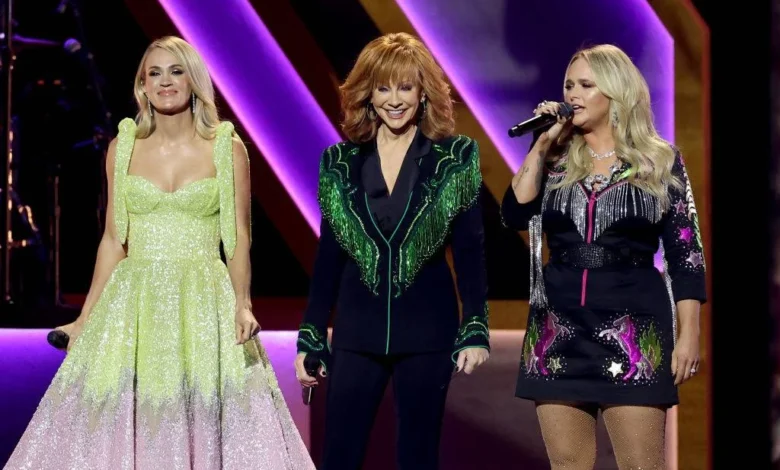
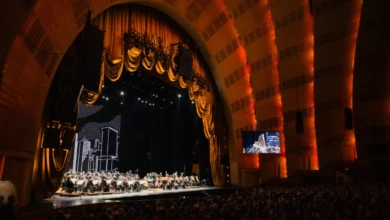
The 56th Annual Country Music Association (CMA) Awards, held at the Bridgestone Arena in Nashville, Tennessee, witnessed a significant moment in country music history as Reba McEntire made an unannounced return to the spotlight. Just days after a medical directive forced her into strict vocal rest, McEntire joined fellow superstars Carrie Underwood and Miranda Lambert for a high-profile tribute to the late Loretta Lynn. The performance served as a powerful testament to McEntire’s resilience and her enduring status as "The Queen of Country Music," a title she has held for decades. The appearance was particularly noteworthy given the concerns regarding her health that had surfaced only one week prior, causing a temporary halt to her national tour.
The Health Crisis and Vocal Rest Mandate
In the week leading up to the 2022 CMA Awards, the country music community expressed concern following an official announcement regarding Reba McEntire’s physical condition. On November 2, 2022, McEntire took to her social media platforms and official website to inform fans that she would be postponing several dates of her "Reba: Live in Concert" tour. The decision was not made lightly but came under the direct recommendation of her medical team.
According to the statement released by her management, McEntire was placed on vocal rest to prevent long-term damage to her vocal cords. This medical intervention resulted in the rescheduling of three major tour dates: Columbus, Ohio; Raleigh, North Carolina; and Indianapolis, Indiana. These performances, originally slated for early November, were pushed back to December 2022 to allow the singer sufficient time for recovery.
Vocal rest is a common but serious requirement for professional vocalists, particularly those maintaining the rigorous schedule of a national tour. For a performer of McEntire’s caliber, whose career spans nearly half a century, maintaining vocal health is paramount. The suddenness of the postponement led many industry analysts and fans to speculate that she might be absent from the CMA Awards ceremony entirely. However, her appearance on the Nashville stage just seven days later suggested a rapid recovery or a significant personal commitment to honoring one of her greatest influences.
A Career-Spanning Tribute to Loretta Lynn
The 2022 CMA Awards opened with a solemn yet celebratory tribute to Loretta Lynn, the "Coal Miner’s Daughter," who passed away on October 4, 2022, at the age of 90. Lynn was a trailblazer for women in the genre, becoming the first woman to win the CMA’s Entertainer of the Year award in 1972. The 50th anniversary of that historic win coincided with the 2022 ceremony, making the tribute even more poignant.
The performance began with Carrie Underwood, who delivered a stirring rendition of Lynn’s 1966 hit "You Ain’t Woman Enough (To Take My Man)." She was followed by Miranda Lambert, who performed "Don’t Come Home A-Drinkin’ (With Lovin’ on Your Mind)," Lynn’s first number-one single. The atmosphere in the Bridgestone Arena shifted to a higher level of intensity when Reba McEntire appeared on stage to perform "You’re Lookin’ at Country."
The climax of the tribute featured all three women—representing three distinct generations of country music royalty—harmonizing on Lynn’s signature autobiographical song, "Coal Miner’s Daughter." The visual of McEntire, Underwood, and Lambert standing together was widely interpreted by critics as a symbolic representation of the lineage of female power in country music. Despite her recent vocal issues, McEntire’s performance was characterized by the clarity and emotional resonance that have defined her career since her debut in the mid-1970s.
Chronology of Events: November 2022
The timeline of McEntire’s health scare and her subsequent return to the stage illustrates a compressed period of recovery and professional dedication:
- October 4, 2022: The passing of Loretta Lynn is announced, prompting the CMA to plan a major tribute for the upcoming awards show.
- November 2, 2022: Reba McEntire officially announces that her doctor has ordered vocal rest. She postpones her tour dates in Columbus (Nov. 3), Raleigh (Nov. 4), and Indianapolis (Nov. 5).
- November 3–8, 2022: McEntire remains largely out of the public eye, presumably following the strict "no-speaking" protocols often associated with professional vocal rest.
- November 9, 2022: The 56th Annual CMA Awards take place. McEntire surprises the audience by not only attending but performing the opening tribute.
- December 2, 2022: The rescheduled tour dates begin, marking McEntire’s full return to a headlining concert schedule.
Statistical Context and Industry Significance
The significance of the 2022 CMA tribute can be measured through the lens of the participants’ career achievements and the historical data of the awards themselves.

Loretta Lynn’s impact on the charts was monumental. Over her career, she achieved 24 number-one hit singles and 11 number-one albums. Her 1972 Entertainer of the Year win was a glass-shattering moment that paved the way for the women who honored her that night. Reba McEntire herself has won the CMA Female Vocalist of the Year award four times and the Entertainer of the Year award in 1986. Carrie Underwood and Miranda Lambert have similarly dominated these categories in the 21st century.
From a viewership perspective, the 2022 CMA Awards saw a notable presence in the cultural zeitgeist. The ceremony, broadcast on ABC, utilized the tribute to Lynn as its primary emotional hook. According to Nielsen data, the opening segment of major awards shows often draws the highest concentration of viewers, ensuring that McEntire’s return reached the widest possible audience. The performance also trended heavily on social media platforms, where fans expressed relief at seeing McEntire in good health after the previous week’s alarming news.
Official Responses and Peer Reactions
The reaction from the star-studded crowd at the Bridgestone Arena was immediate. As the trio concluded "Coal Miner’s Daughter," they were met with a prolonged standing ovation. Industry peers, many of whom were unaware of the exact nature of McEntire’s recovery, praised her professionalism.
While McEntire did not provide a detailed medical breakdown of her condition, her performance spoke to the effectiveness of the vocal rest. In the days following the awards, Miranda Lambert and Carrie Underwood both took to social media to express their honor in sharing the stage with McEntire and Lynn’s memory. Lambert noted that singing with Reba and Carrie was a "pinnacle moment" of her career, while Underwood highlighted the importance of honoring the "foundational women" of the genre.
Medical experts in the field of laryngeal health note that vocal rest for professional singers often involves a combination of complete silence, hydration, and specialized exercises once the rest period concludes. McEntire’s ability to perform a high-stakes televised set just a week after a medical mandate suggests that the issue was caught early enough to prevent chronic injury, such as vocal nodules or hemorrhaging, which have sidelined other artists for months or even years.
Broader Impact and Implications for the Genre
The events surrounding the 2022 CMA Awards highlight several broader themes within the contemporary country music industry. First, it underscores the physical demands of modern touring. As artists like McEntire continue to perform well into their 60s and 70s, the management of physical health and vocal longevity becomes a central aspect of their brand and business operations.
Second, the tribute reinforced the importance of historical continuity in country music. Unlike some genres that focus almost exclusively on the "new," country music maintains a deep reverence for its "hall of fame" icons. By having Reba McEntire—a veteran who bridge the gap between the traditionalists of the 60s and the modern stars of today—lead the tribute, the CMA solidified the narrative of a continuous, evolving tradition.
Finally, the surprise return of McEntire served as a masterclass in crisis management and public relations within the entertainment industry. By being transparent about the need for rest and then delivering a flawless performance shortly thereafter, McEntire’s team successfully turned a potential health scare into a triumphant comeback story. This narrative of resilience further cemented her status as a beloved figure in American music.
As the 2022 CMA Awards concluded, the conversation remained centered on the strength of the female voice in country music. The tribute to Loretta Lynn, anchored by a recovered and resolute Reba McEntire, ensured that the legacy of the "Coal Miner’s Daughter" would continue to inspire future generations, while proving that "The Queen of Country Music" is far from ready to relinquish her throne.