EFG London Jazz Festival Returns in November with Coltrane Centennial, Robert Glasper, Melody Gardot and More – JAZZIZ Discovery

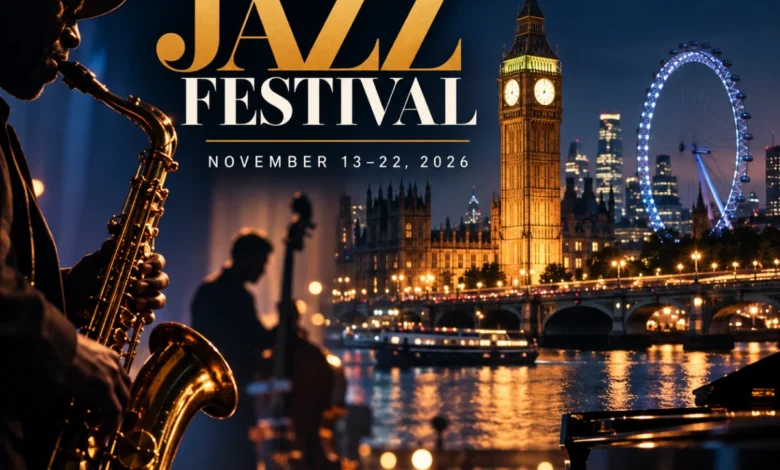
For ten days, the festival will permeate the city’s geography, bridging the gap between prestigious acoustic-optimized concert halls—such as the Royal Albert Hall and the Barbican—and the subterranean, high-energy environment of London’s historic jazz club circuit. This year’s edition is particularly notable for its dual focus on the legacies of John Coltrane and Miles Davis, both of whom were born in 1926. By anchoring the 2026 program in these centennial commemorations, organizers are positioning the festival as a dialogue between the foundational pillars of the 20th-century jazz canon and the boundary-pushing contemporary artists who continue to reshape the genre’s vocabulary.
A Centennial Tribute: Honoring Coltrane and Davis
The historical significance of the 1926 birth year serves as the thematic backbone of the festival. John Coltrane’s influence remains a gravitational force in modern music, and the festival’s opening night at the Barbican, titled Coltrane 100: Both Directions at Once, underscores this enduring impact. The event features a quintet of contemporary luminaries, including saxophonists Joe Lovano and Melissa Aldana, pianist Nduduzo Makhathini, bassist Linda May Han Oh, and drummer Jeff "Tain" Watts.
Producers have emphasized that the performance is not a mere retrospective or a historical reenactment. Joe Lovano has noted that the project is designed to channel the "spirit of Coltrane," utilizing his compositional frameworks and philosophical approach to improvisation as a springboard for original creative output. The rapid sell-out of this performance signals a sustained public appetite for high-level artistic interpretation of the jazz canon. Beyond the stage, the festival expands its tribute through the Barbican’s "Jazz on Screen" series, which includes screenings such as Spike Lee’s Mo’ Better Blues, offering a cinematic lens into how jazz culture has been archived and romanticized.
Similarly, Miles Davis, the architect of cool jazz and fusion, receives a comprehensive spotlight. Emma-Jean Thackray, a prominent figure in the British contemporary scene, will lead a thematic performance at the EartH Theatre on November 13 titled Dear Miles — A Love Letter. This program, complemented by late-period retrospective screenings, illustrates the festival’s commitment to examining the "evolutionary" rather than "static" nature of these icons.
Chronology of a Ten-Day Musical Marathon
The festival’s schedule is structured to maintain a high-density flow of performances, moving from high-profile galas to niche, specialized club sets.
Opening Weekend (Nov 13–15):
The opening night on November 13 is a microcosm of the festival’s breadth. While the Barbican hosts the Coltrane quintet, the Royal Festival Hall will hold the Opening Gala: Jazz Voice, a perennial favorite that showcases the human voice as a primary instrument. Concurrent sets by Fergus McCreadie, Sarathy Korwar, Morcheeba, and Emma-Jean Thackray demonstrate the festival’s intent to cater to diverse audiences simultaneously.
The following day, November 14, shifts toward the intersection of jazz, electronic, and global traditions. Indian-born vocalist Asha Puthli performs The Cosmic Voyager at the Barbican, while the electronic music pioneer Goldie presents an ambitious, large-scale orchestration of his Dare to Dream project at the Royal Festival Hall. This blending of genres—where trip-hop, jazz, and classical orchestration meet—is a hallmark of the modern London jazz scene.
Mid-Week Highlights (Nov 16–19):
As the festival progresses, the schedule pivots to international heavyweights. Melody Gardot’s headline appearance at the Royal Albert Hall on November 16 marks a peak for the festival’s mid-point, followed by a multi-night residency from the British trio GoGo Penguin at KOKO. The latter half of the week features a global array of talent: Tunisian oud master Anouar Brahem, trumpeter Ambrose Akinmusire, and the collaborative duo of pianist Alfredo Rodriguez and percussionist Pedrito Martinez.
Concluding Momentum (Nov 20–22):
The final days focus on technical virtuosity and avant-garde exploration. The inclusion of the Kronos Quartet and the Norwegian trumpeter Nils Petter Molvær highlights the festival’s interest in the "jazz-adjacent" world, where chamber music and ambient soundscapes intersect with improvisation.
The Club Culture Residency: Robert Glasper at Blue Note
A critical element of the 2026 festival is the extended residency of Robert Glasper at the Blue Note London. Spanning the entire duration of the festival, this "Celebrating the Jazz Clubs" component is designed to ensure that the festival remains anchored in the city’s intimate cultural infrastructure.
The residency serves as an analytical anchor for the event. By hosting a major artist like Glasper in a club setting for ten consecutive days, organizers are intentionally highlighting the symbiotic relationship between "festival hall" prestige and "club scene" authenticity. This approach prevents the event from becoming an isolated series of ticketed galas, instead fostering an environment where spontaneous, late-night jam sessions at venues like Ronnie Scott’s remain the lifeblood of the 10-day period.
Fact-Based Analysis: The "Jazz Without Borders" Philosophy
The EFG London Jazz Festival has effectively moved away from the traditional, restrictive definitions of jazz. Data from previous years’ attendance records and program diversity suggest that the festival’s growth is directly tied to its "Jazz Without Borders" philosophy. By integrating hip-hop, electronic music, and global folk traditions, the festival has successfully captured a younger, more diverse demographic while maintaining the loyalty of traditional jazz enthusiasts.
From an economic perspective, the festival functions as a major catalyst for London’s evening economy. By utilizing a decentralized model—spreading performances across the city—the festival ensures that various boroughs and independent venues benefit from the influx of international visitors. The programming choice to feature artists like Fatoumata Diawara and Anouar Brahem alongside mainstream acts like Morcheeba reflects an institutional recognition that the global "jazz conversation" is now a multilingual and multicultural phenomenon.
Industry Perspectives and Broader Impact
While official statements from the Serious production team have focused on the logistical complexity of the 2026 program, there is a clear consensus among industry critics that this year marks a turning point for the festival. The intentional move to pair centennial celebrations with forward-looking commissions suggests a strategy of "preservation through innovation."
By commissioning new works that reference Coltrane and Davis, rather than simply paying tribute to them, the festival is effectively expanding the repertoire of the jazz world. This approach addresses a common criticism of historical festivals: that they tend to prioritize the past at the expense of the present. Instead, the 2026 EFG London Jazz Festival functions as a living archive.
Conclusion
As the capital prepares for the arrival of thousands of visitors, the 2026 EFG London Jazz Festival stands as a testament to the resilience and adaptability of live music. It provides a unique space where the rigid structures of classical music, the improvisational freedom of traditional jazz, and the digital rhythms of contemporary electronics can coexist.
The festival serves not merely as a calendar event but as an essential indicator of where the genre is headed. Through the participation of artists like Soweto Kinch, Isaiah Sharkey, and the diverse roster appearing across the city, the 2026 edition confirms that jazz remains a vital, evolving language. Those interested in the full program, ticket availability, and specific venue logistics for the November 13–22 period are directed to the official EFG London Jazz Festival website, which provides comprehensive, real-time updates as the event approaches.
Related posts: