The Language of the Blues: Tracing the Ancient West African Roots of American Musical Heritage

The emergence of the blues in the American South is often framed as a spontaneous cultural phenomenon, yet historical analysis reveals deep, structural parallels to the West African tradition of the griot. The griot, or jali, functions as a hereditary singer-historian, a guardian of genealogy, and a social commentator whose craft has transcended centuries and continents. By examining the linguistic, technical, and sociological commonalities between these West African figures and the pioneers of American blues, historians have uncovered a persistent cultural continuity that bridges the gap between the Sahelian courts of the past and the Mississippi Delta of the early 20th century.
The Role and Etymology of the Griot
The term "griot" is widely believed to have originated from the French guiriot, which is likely an adaptation of the Portuguese criado, meaning a servant or someone who is "brought up" or trained. This etymological root aligns with the rigid, intergenerational training system inherent to the tradition. Griots are typically born into families where the vocation is passed down from fathers and uncles over decades. This long-term apprenticeship ensures the preservation of an vast oral archive, encompassing dynastic histories, moral parables, and musical compositions.
Functionally, the griot is far more than an entertainer. They serve as the collective memory of a community. In medieval West African society, they occupied a position analogous to the European court bards or Norse skalds. They held the power to praise leaders or, conversely, to serve as social satirists whose verses possessed enough political weight to destabilize or even effectively dethrone chieftains. This duality—the ability to act as both a vessel for history and a sharp-tongued critic of the status quo—is a hallmark of the tradition that would later echo through the American blues scene.
Structural Parallels: Solo Performance and Instrumentation
A distinct departure from the broader West African musical landscape is the griot’s performance style. While much of West African music is defined by communal participation, polyrhythmic drumming, and collective dance, the griot typically performs as a soloist, accompanying themselves on stringed instruments such as the kora (a harp-lute) or the ngoni. This solitary, string-focused performance is a defining feature that separates the griot from the collective ensemble traditions of their neighbors.
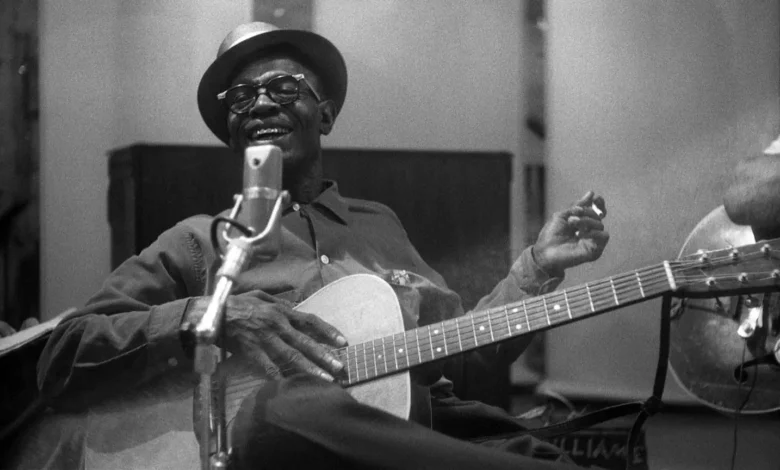
This specific performance structure provides one of the strongest links to the development of the blues. When African populations were forcibly transported to the Americas, they were stripped of their instruments and cultural infrastructure. However, the internal mechanics of the griot tradition—the intimate, solo, self-accompanied singing style—re-emerged in the rural South. Musicologists such as Alan Lomax have noted that figures like Blind Lemon Jefferson, Charley Patton, and Sid Hemphill utilized a musical vocabulary that mirrored this tradition with striking accuracy. These musicians were not merely playing songs; they were carrying on a lineage of solo, narrative-driven performance that prioritized individual expression and historical documentation.
Chronology of Cultural Migration
The transmission of these musical traits occurred across a complex timeline defined by trauma and resilience:
- 16th–19th Century: The period of the Trans-Atlantic Slave Trade forces the dispersal of West African populations, resulting in the syncretism of African rhythmic structures with the musical traditions of European settlers.
- Late 19th Century: The post-Reconstruction era in the American South sees the rise of itinerant laborers and sharecroppers. The "blues" begins to coalesce as a distinct genre, characterized by its focus on individual life experiences, suffering, and societal commentary.
- 1920s: The advent of the "race records" era marks the commercialization of the blues. Artists like Charley Patton and Blind Lemon Jefferson become the first documented "blues griots," capturing the attention of a wide audience and codifying the genre’s tropes.
- 1960s–Present: Scholars like Paul Oliver and Alan Lomax begin publishing definitive works, such as Savannah Syncopators and The Land Where the Blues Began, formally documenting the African retentions within the blues and elevating the status of the blues singer as a cultural historian.
Social Dynamics and the "Devil" Archetype
The social standing of the blues musician has often been characterized by a paradoxical blend of reverence and suspicion, mirroring the status of the griot in traditional West African society. Just as griots were sometimes viewed as possessing "magical" or dangerous knowledge—leading to the unique tradition of burying deceased griots in hollow trees rather than the earth to prevent desecration—blues musicians were often cast as outsiders.
The mythos surrounding the "bluesman at the crossroads" is, in many ways, an American manifestation of this ancient suspicion. Because these singers possessed an uncanny ability to recount the intimate details of a community’s failings, triumphs, and secrets, they were often viewed with a blend of awe and apprehension. Their status as "outsiders" allowed them the freedom to speak truth to power, providing a necessary catharsis for the communities in which they traveled. As researcher Paul Oliver noted in Savannah Syncopators, the blues singer is rarely the pillar of the community, but they are almost always the most essential observer of it.
Expert Perspectives and Modern Analysis
The ongoing study of this connection is not merely an academic exercise; it provides a framework for understanding the "viscera" of the blues. In The Language of the Blues, author Debra Devi provides a comprehensive guide that moves beyond the technical aspects of the music to explore its historical and cultural context.
The work has received significant acclaim from musicians who recognize the gravity of this lineage. Bonnie Raitt has lauded the resource as "as fascinating as it is informative," while blues-rock performer Joe Bonamassa notes that the work provides a necessary education on the origins of the genre. Ministry’s Al Jourgensen, known for his own intense musical style, describes the book as a "guide book to the soul," suggesting that for many, the blues is more than a set of chord progressions—it is a spiritual and historical inheritance.
These testimonials underscore the broader implication of the griot-blues connection: the blues is not a static art form, but a living, breathing archive. When a modern artist performs the blues, they are participating in a lineage that stretches back to the savannahs of West Africa, continuing a process of documentation that has survived centuries of displacement.
Implications for Musical Historiography
The recognition of the griot tradition as a foundational element of the blues necessitates a re-evaluation of how we categorize American music. It shifts the focus from the blues as a product of the 20th-century South to the blues as a continuation of a sophisticated, ancient African intellectual tradition.
This acknowledgment carries significant weight in the context of cultural preservation. By identifying these "retentions," historians are able to better understand the agency of enslaved people in maintaining their cultural identity. The music was not a byproduct of their circumstances; it was a chosen instrument of survival and communication.
As further research is conducted, it is becoming increasingly clear that the "blues singer" is an archetype that serves the same function today as the griot did in the courts of Mali or Songhai. They are the social satirists, the record-keepers, and the voices that refuse to let the history of their people fade into silence. The "mechanics" of the blues, as described by those who study it, are in fact the mechanics of human memory—a tradition that, as Alan Lomax suggested, has survived with remarkably little interruption, proving the enduring power of the oral history tradition.