International Jazz Phenom Jan Kus Delivers a Masterclass in Modern Global Fusion with His Landmark Debut Album Faith

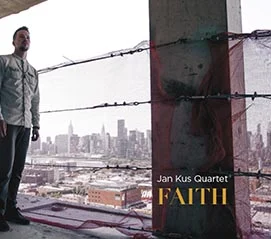
The contemporary jazz landscape has long functioned as a global crucible, absorbing folk traditions, classical harmony, and avant-garde impulses into a constantly evolving American-born art form. Amid this dynamic terrain, Slovenian-born saxophonist, composer, and bandleader Jan Kus has emerged as a formidable voice of a new generation. With the 2016 release of his self-produced debut full-length album, Faith, Kus transitioned from a heavily decorated conservatory prodigy to a mature compositional force on the international stage. Recorded with an eclectic ensemble of transatlantic peers and celebrated guest artists, Faith synthesizes Eastern European classical discipline, American bebop tradition, and Latin rhythmic vitality into a unified, highly sophisticated sonic statement that has redefined expectations for millennial jazz artists.
From Conservatory Prodigy to Transatlantic Innovator
Jan Kus’s trajectory toward international recognition began early in his native Slovenia, where his exceptional facility on the saxophone marked him out as a rare talent. Recognizing his potential, the Slovenian Ministry of Culture awarded Kus a prestigious scholarship to study abroad at the Royal Conservatory of The Hague in the Netherlands. This formative European period exposed him to a vast network of emerging jazz musicians across the continent. During these undergraduate years, Kus toured extensively, performing in Belgium, Cyprus, Greece, Hungary, Italy, Slovakia, and the Netherlands, absorbing diverse regional musical sensibilities while rigorously refining his instrumental technique and improvisational vocabulary.
Seeking to immerse himself directly in the epicenter of the jazz tradition, Kus crossed the Atlantic Ocean in 2012 to undertake postgraduate studies at the Aaron Copland School of Music at Queens College in New York City. There, he studied under the tutelage of renowned alto saxophonist Antonio Hart, a direct lineage bearer of modern jazz royalty through his extensive mentorship under master trumpeter Dizzy Gillespie. Kus’s academic tenure in New York was distinguished by high-level achievement, culminating in his receipt of the Jimmy Heath Award, an honor bestowed upon exceptionally promising wind players in memory of the legendary saxophonist and composer. This transatlantic migration from the structured conservatories of Europe to the rigorous, competitive bandstands of New York City provided Kus with the dual perspectives that would ultimately anchor his debut album.
Anatomy of Faith: Personnel and Global Collaboration
Released independently in 2016, Faith serves as a comprehensive showcase of Kus’s fully realized artistic vision. Eschewing the conventional boundaries of straight-ahead jazz, Kus curated an ensemble that mirrors the borderless nature of modern creative music. The core quartet features Kus on tenor and soprano saxophones, supported by pianist and Fender Rhodes player Sean Fitzpatrick, double bassist Dan Martinez, and drummer Joel Mateo. Together, this foundational rhythm section provides a flexible, highly responsive engine capable of shifting effortlessly between aggressive post-bop polyrhythms and expansive, ambient balladry.
Beyond the core quartet, Faith distinguishes itself through a carefully integrated roster of guest musicians who elevate the recording’s texture and emotional depth. Mentorship comes full circle on the recording as alto saxophonist Antonio Hart joins his former student, while Polish electric guitarist Rafal Sarnecki, percussionist Carlos Maldonado, and electronic artist Ziga Murko expand the sonic palette. Perhaps most notable is the inclusion of vocalist Mélanie JB Charles, a rising figure on the millennial jazz circuit whose distinctive, instrument-like vocal delivery plays a pivotal role in shaping the album’s vocal-instrumental synthesis.
Deconstructing the Tracklist: Innovation Meets Tradition
The 13-track sequence of Faith offers a masterclass in dynamic contrast, balancing intricate original compositions with inspired reinterpretations of jazz standards. The album opens with a series of conceptual narrative fragments, punctuated by hard-hitting originals such as "Emptiness," where Kus’s brash, full-bodied tenor saxophone locks horns with Antonio Hart’s razor-sharp alto. Rather than competing for sonic space, the two saxophonists weave intricate counterpoint melodies before expanding into high-intensity improvisational excursions. Their interplay demonstrates an acute awareness of harmonic tension and release, functioning as an eloquent dialogue that pushes the rhythm section to ever-greater intensity.
Among the album’s most daring inclusions is a radical restructuring of Thelonious Monk’s classic bebop anthem, "Rhythm-a-Ning." Reimagined here for a hard-charging quartet featuring trumpet virtuoso Alex Sipiagin alongside Kus, the track deconstructs Monk’s angular phrasing into a high-velocity sprint. Pianist Sean Fitzpatrick and drummer Joel Mateo construct a labyrinth of shifting metric tensions, while bassist Dan Martinez anchors the arrangement before pivoting the groove into an infectious, devouring Latin rhythm. Above this rhythmic foundation, the dual horns colorize the melody with fleet-footed precision, underscoring Kus’s profound rhythmic intelligence—a quality that separates technically proficient players from true improvisational masters.
Vocal Integration and Lyrical Nuance
The contributions of vocalist Mélanie JB Charles provide some of the album’s most arresting moments, challenging traditional divisions between instrumental jazz and vocal interpretation. On the track "Strength," Charles utilizes her voice not merely as a vehicle for lyrical storytelling, but as an independent horn-like instrument, doubling and harmonizing with Kus’s saxophone lines in a seamless display of ensemble cohesion.
Conversely, the ballad setting "I’m Just a Little Person"—which appears in two distinct interpretations on the album—highlights the mature restraint of both performers. Treated with spacious minimalism, the primary vocal version emphasizes the breathy, highly individualized timbre of Charles’s voice alongside the remarkable sustain and dynamic control of Kus’s tenor. On the alternate trio version, Kus shifts to the soprano saxophone, initiating the arrangement with an open, inquiring phrase that allows the rhythm section to cultivate a gentle, loping atmosphere of lingering introspection. Both approaches validate the old jazz adage that a musician’s true artistic caliber is revealed in how they navigate the exposed architecture of a slow ballad.
Modern Grooves and Latin Complexities
Among the album’s sprawling tracklist, which includes recurring thematic segments such as "One for the Band" broken into various narrative perspectives ("Jan’s Story," "Sean’s Story," and "Dan’s Story"), the muscular composition "Neófito" stands out as a defining artistic statement. Driven by complex harmonic ideas, dense multi-layered textures, and a heavy underlying Latin groove, the track projects a distinctly modern urbanity. It encapsulates the core philosophy of Faith: an unyielding commitment to modern jazz traditions filtered through a thoroughly internationalized worldview.
Broader Industry Implications and Future Outlook
The critical reception of Faith established Jan Kus as a significant new voice in contemporary jazz, validating the extensive institutional training and cross-cultural collaborations that shaped his development. In an industry increasingly populated by homogenous revivalist acts, Kus’s debut represents a vital counter-trend—one where global perspectives and genre-blending experimentation are successfully harnessed to advance the idiom rather than dilute it.
Industry analysts note that albums like Faith signal a broader shift in the global jazz economy, where geographic boundaries are increasingly irrelevant to artistic formation. By synthesizing the rigorous academic traditions of European conservatories with the intense, real-world vernacular of New York City bandstands, Kus has positioned himself at the vanguard of a borderless jazz movement.
With peerless dexterity, masterful breath control, and a warm, resonant tone that belies his youth, Jan Kus has delivered a foundational statement that justifies the early accolades bestowed upon him by international cultural institutions. As he continues to perform and record internationally, the jazz community will undoubtedly keep a watchful eye on his trajectory, anticipating how this formidable young lion will continue to shape the evolution of improvised music in the decades to come.