Free Audio Plugin Round-Up: Pulsar Audio DigiTape, Born Second Timetravel, and Analog Obsession The Machine Add Character to Digital Workstations

The landscape of audio production software continues to expand, offering modern music producers and sound designers access to tools that once required substantial financial investment in physical hardware or high-end proprietary systems. This week’s curated selection of complimentary audio plugins highlights a fascinating intersection of digital nostalgia, hardware emulation, and vintage analog character. Featuring two distinct tape saturation processors and a faithful recreation of a sought-after boutique guitar pedal, these releases provide creators with robust sound-shaping capabilities across macOS, Windows, and Linux operating systems without impacting production budgets.
Main Facts of the Week’s Releases
The latest offerings in the free plugin ecosystem cater to producers seeking distinct harmonic saturation, tape compression, and time-based modulation effects. Pulsar Audio has introduced DigiTape, a unique processor that recreates early 2000s digital tape algorithms. Meanwhile, developer Born Second has released Timetravel, an emulation of the discontinued Old Blood Noise Endeavors (OBNE) BL-44 reverse delay pedal. Rounding out the trio is Analog Obsession, a developer renowned for high-grade analog emulations, with the release of The Machine, a tube-driven vintage tape recorder simulation.
Each plugin targets specific workflow demands, ranging from the gritty digital artifacts of early native processing to the warm, harmonic distortion associated with reel-to-reel tape machines and vacuum tube preamplifiers. Compatibility spans industry-standard digital audio workstation (DAW) formats, including VST, VST3, AU, and AAX, ensuring seamless integration into professional and project studio environments alike.
Chronology and Evolution of Software Processing Standards
To understand the significance of this week’s releases, it is helpful to examine the timeline of audio software development. The Virtual Studio Technology (VST) standard, pioneered by Steinberg, celebrated its thirtieth anniversary. Over the past three decades, software signal processing has evolved from rudimentary, CPU-intensive algorithms into hyper-realistic emulations capable of rivaling multi-thousand-dollar studio hardware.
In the late 1990s and early 2000s, digital audio workstations transitioned from specialized hardware DSP cards to native processing reliant on host computer central processing units. During this era, developers faced stringent computational limitations. To achieve real-time playback, engineers engineered clever approximation algorithms that yielded unique digital artifacts, aliasing, and compression characteristics.
By the 2010s, computational power advanced to a point where developers could prioritize pristine accuracy, simulating analog circuits down to the component level. However, a counter-movement has emerged in recent years, with producers actively seeking the charm of early digital constraints and lo-fi digital imperfections. The release of Pulsar Audio’s DigiTape directly addresses this historical niche, turning what was once a technological limitation into a deliberate creative choice.
Pulsar Audio DigiTape: Embracing Early 2000s Digital Artifacts
Pulsar Audio, a developer typically associated with high-end emulation processors, has taken a sideways step into historical digital aesthetics with DigiTape. Rather than modeling reel-to-reel analog tape, the plugin emulates two distinct digital tape simulation algorithms originating from the early 2000s.
During that period, software developers operated within tight CPU boundaries, forcing them to design highly efficient, creative mathematical approximations of tape behavior. These early digital approximations frequently introduced subtle aliasing, distinctive phase characteristics, and unique nonlinear saturation curves that defined the sound of electronic music and indie rock productions from the turn of the millennium.
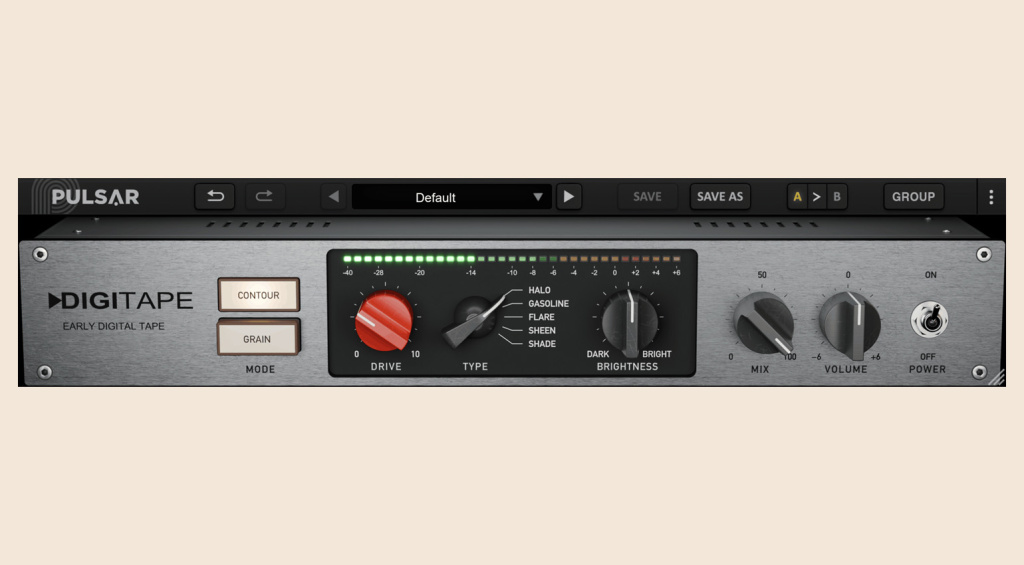
DigiTape provides users with a streamlined interface governed by two primary operational modes: Colour and Grain. Additionally, the plugin offers five selectable algorithm types—Halo, Gasoline, Flare, Sheen, and Shade—allowing producers to tailor the harmonic distortion profile to individual tracks or master buses. Core parameters include a prominent Drive control for managing input gain and saturation intensity, a Brightness control for high-frequency contouring, and a Mix knob for parallel processing applications. DigiTape is available as a free download supporting VST, VST3, AU, and AAX plugin architectures on both macOS and Windows platforms.
Born Second Timetravel: Emulating the OBNE BL-44 Reverse Pedal
Hardware guitar pedals frequently achieve cult status due to limited production runs or unique sonic signatures that transcend their intended instrumental applications. The BL-44 reverse delay pedal, manufactured by Old Blood Noise Endeavors (OBNE), gained widespread acclaim among ambient guitarists, experimental producers, and sound designers before being discontinued.
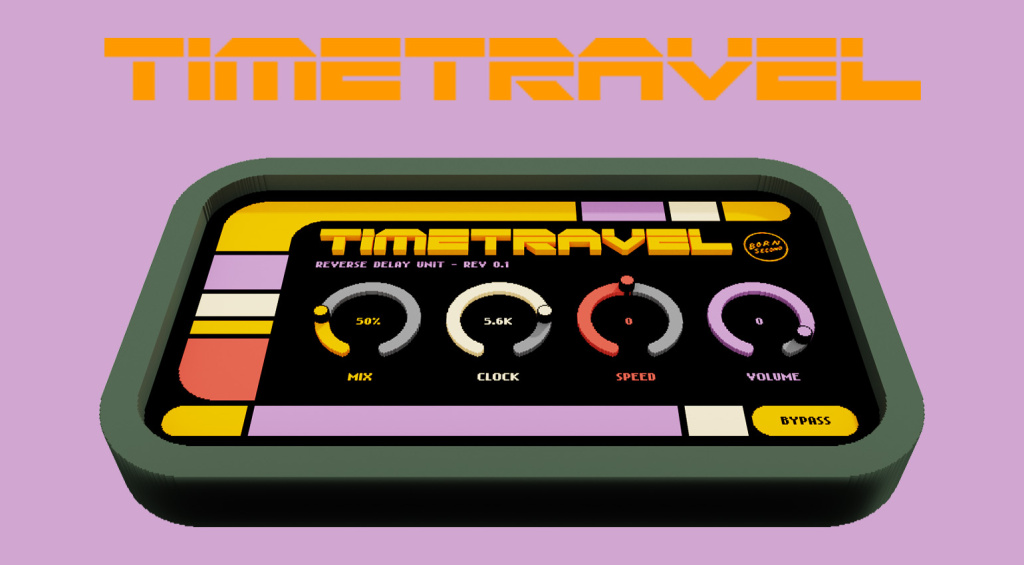
Born Second has bridged the physical-to-digital gap with Timetravel, a software emulation designed to replicate the quirky, ghostly behavior of the original hardware circuit. The plugin functions by continuously capturing incoming audio, reversing the recorded buffer, and playing it back to create a haunting, backward echo effect.
The interface centers around a primary Clock knob, which manipulates the internal sample rate of the processing engine. Because the underlying memory buffer size remains fixed, altering the clock speed simultaneously scales the time horizon of the reverse effect. This design choice introduces wide-ranging sonic variations: higher sample rates yield cleaner, brighter echoes, while lower clock settings plunge the audio into dark, gritty, lo-fi degradation reminiscent of vintage digital samplers.
Complementing the Clock control is a Speed knob, which allows users to shift the pitch and playback speed of the reversed signal across a range of plus or minus one octave. Timetravel is compatible with macOS, Windows, and Linux operating systems, broadening accessibility for alternative OS users.
Analog Obsession The Machine: Tube-Driven Tape Warmth
For producers seeking traditional analog warmth rather than digital nostalgia, Analog Obsession has expanded its catalog with The Machine. The developer has cultivated a dedicated following within the global audio engineering community by consistently delivering functional, high-quality analog-style plugins distributed on a freemium or donation model.
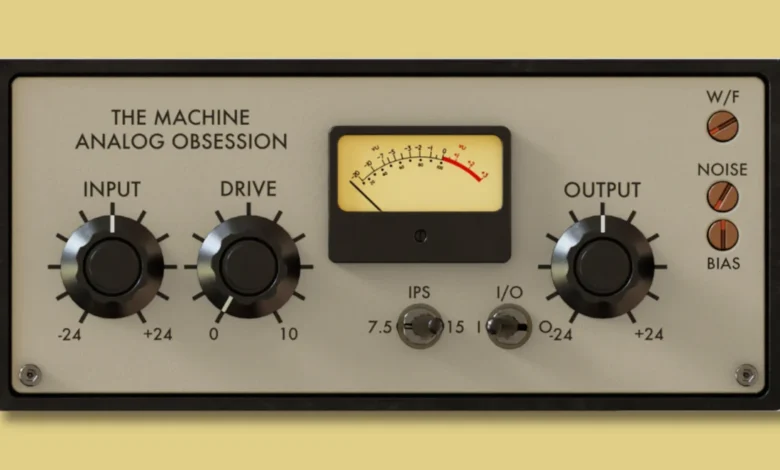
The Machine emulates a classic reel-to-reel tape machine coupled with a dedicated vacuum tube preamp stage. Operation begins at the input stage, where users feed audio into the circuit before driving the internal virtual tubes and magnetic tape medium. The plugin features two selectable tape speeds—7.5 inches per second (IPS) and 15 IPS—each imposing distinct frequency response curves and transient-shaping characteristics. At 7.5 IPS, users experience pronounced low-end buildup and rolled-off highs, whereas 15 IPS provides a more linear response with extended high-frequency fidelity.
To further enhance the illusion of physical hardware, The Machine includes adjustable controls for wow and flutter (simulating mechanical pitch instability) and internal noise generation. These parameters allow engineers to dial in subtle stabilization or extreme lo-fi coloration. The plugin supports VST3, AU, and AAX formats for macOS and Windows environments.
Broader Impact and Industry Implications
The proliferation of high-caliber free audio software highlights a democratization of music production tools that continues to reshape the industry. Historically, professional-grade saturation, tape emulation, and boutique delay effects required significant capital expenditure on hardware units or commercial software licenses. Today, independent developers are lowering the barrier to entry, enabling bedroom producers and commercial studios alike to access sophisticated sound-design tools.
Industry analysts note that the simultaneous release of diverse saturation and time-based plugins reflects a broader consumer appetite for texture and imperfection in an increasingly sterile digital audio workspace. As digital audio workstations achieve near-perfect transparency and pristine resolution, producers increasingly rely on hardware emulations and digital artifacts to inject character, depth, and human emotion into their mixes.
Furthermore, the inclusion of Linux support in releases like Born Second’s Timetravel signals a gradual shift toward wider platform inclusivity within audio software development. As open-source and alternative operating systems gain traction among technical creators, plugin developers are recognizing the value of supporting non-traditional computing environments.
Conclusion
The arrival of Pulsar Audio DigiTape, Born Second Timetravel, and Analog Obsession The Machine underscores the vibrancy of the current audio plugin market. By preserving the eccentricities of early 2000s digital algorithms, immortalizing discontinued boutique guitar pedals, and offering tube-driven tape saturation at no cost, these developers provide the global production community with invaluable sonic assets. Whether producers aim to add subtle harmonic sheen, rhythmic reverse echoes, or aggressive lo-fi degradation, this week’s software additions demonstrate that creative excellence is no longer bound by price tags.