The modern music industry operates in a perpetual state of flux, where traditional promotional strategies frequently clash with the volatile demands of algorithmic discovery. In a recent episode of the New Music Business podcast hosted by Ari Herstand, veteran artist manager Laurie Lee Boutet of Wednesday Management pulled back the curtain on the realities of contemporary music marketing. Best known for guiding the explosive, chart-topping trajectory of the Canadian rock band The Beaches, Boutet offered a critical evaluation of why short-form video trends are losing their luster and how artists can secure longevity by architecting authentic cultural moments rather than blindly chasing fleeting internet metrics.
The Conversation and Core Themes
The discussion between Herstand and Boutet serves as a comprehensive masterclass for independent artists, managers, and industry professionals navigating the post-streaming era. Throughout the nearly hour-long interview, Boutet addressed several pain points plaguing today’s creators, including the diminishing returns of viral TikTok trends, the strategic pivot from content volume to high-impact cultural curation, the evolving dynamic between TikTok and Instagram, and the reinvention of sync licensing as a primary catalyst for career acceleration.
At the heart of the dialogue is a sobering assessment of modern digital marketing: the era of easily manufacturing a hit via a 15-second viral dance challenge is rapidly coming to a close. Instead, Boutet advocates for a return to deliberate, community-focused career building that prioritizes true superfans over passive algorithmic engagement.
The Anatomy of a Breakthrough: The Story of The Beaches
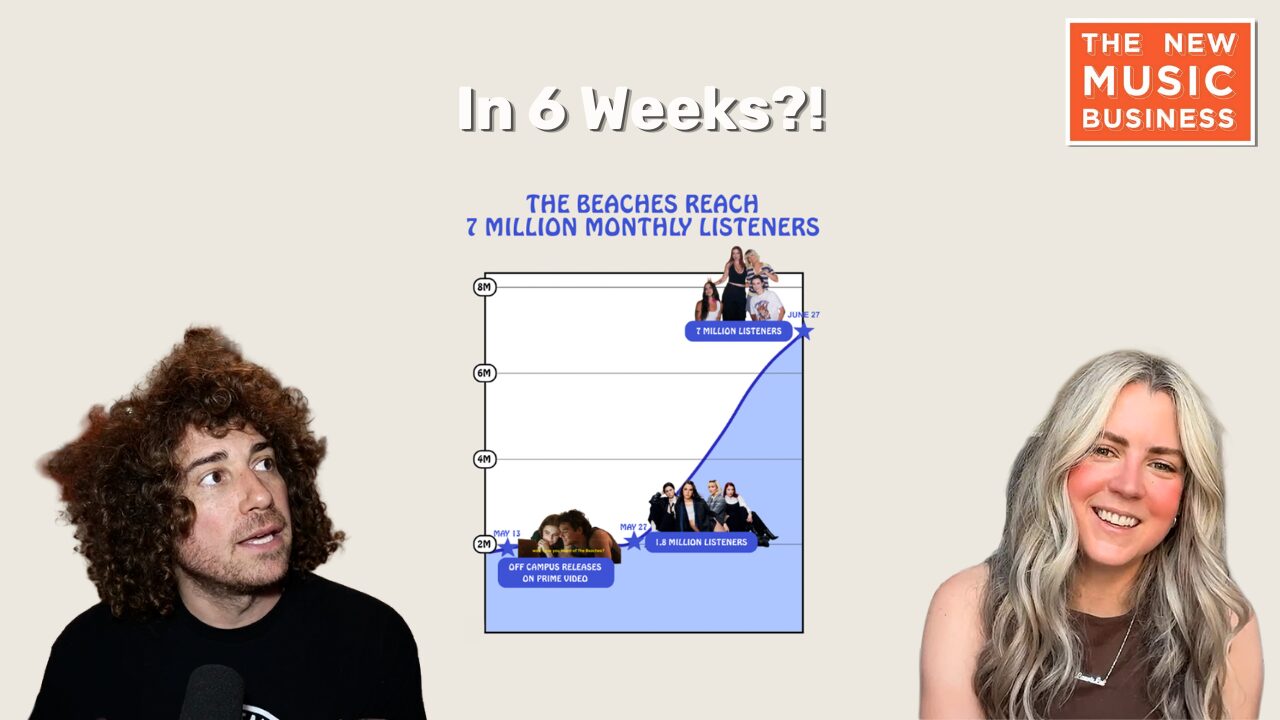
To understand Boutet’s philosophy on modern music promotion, one must examine the meteoric rise of The Beaches. Managed by Boutet under the Wednesday Management umbrella, the chart-topping alternative rock band experienced a transformative career shift following a high-profile sync placement in the Amazon Prime series Off Campus.
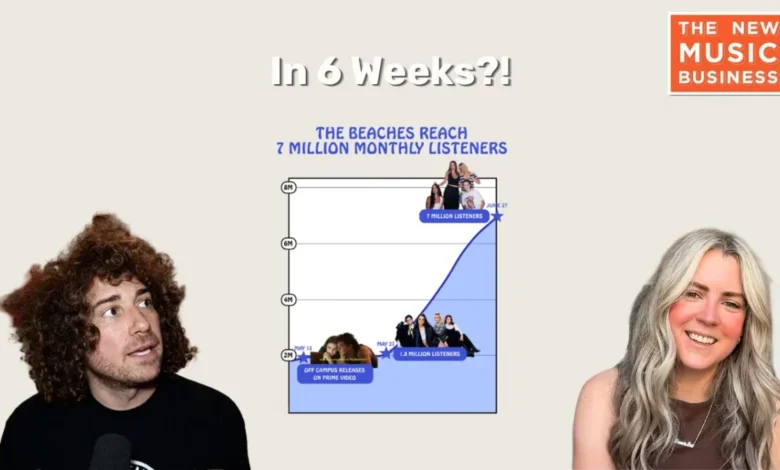
Prior to the sync, the band’s streaming metrics, while stable, reflected the arduous grind typical of modern rock acts carving out a space in a hip-hop and pop-dominated landscape. However, the alignment of the right song with the right visual media landscape ignited a chain reaction. Following the placement in Off Campus, The Beaches saw their daily streams skyrocket from a modest 18,000 per day to an astonishing one million streams per day.
This dramatic escalation underscores a central thesis of Boutet’s management approach: while social media tools are useful for maintaining engagement, powerful sync placements and strategic media integrations possess the unique capability to introduce an artist to entirely new, highly captive audiences overnight. It transformed The Beaches from a regionally celebrated indie rock outfit into an international phenomenon, proving that traditional gatekeepers and film-and-television placements still hold immense power in the digital age.
The Death of the Old TikTok Playbook
One of the most compelling segments of the podcast explored the shifting utility of TikTok for musicians. For several years, music marketers treated TikTok as a silver bullet—a place where a single viral audio snippet could guarantee chart success and millions of streams. According to Boutet, that golden window has narrowed considerably.
Boutet explained that viral TikToks simply do not work the way they used to. Audiences have grown wise to manufactured, overly promotional marketing tactics on the platform. When listeners feel sold to, or when a track is shoehorned into an irrelevant or forced trend, the conversion rate from a passive view to a dedicated fan drops precipitously.
Furthermore, Boutet contrasted the current state of TikTok with that of Instagram, offering strategic guidance on where independent artists should focus their limited time, energy, and capital. While TikTok remains a powerful discovery engine, Instagram has increasingly solidified its place as a retention hub—a space where core audiences gather to ingest deeper narrative content, personal updates, and artistic identity. Artists who spread themselves thin trying to conquer every platform simultaneously often find themselves producing low-quality, high-frequency content that fails to resonate.
Redefining the Content Grind: Stop Wasting Money
In an era where digital creators are frequently advised to post multiple times a day across four or five different platforms, burnout has become an epidemic among independent musicians. Boutet issued a stern warning to artists regarding the financial and creative drain of the modern content treadmill.
Many independent acts flush thousands of dollars down the drain producing endless streams of disposable short-form content, hoping that volume will eventually translate to visibility. Boutet argues that this approach is fundamentally flawed. Instead of treating social media as a daily chore list of meaningless posts, artists must focus on creating genuine cultural moments. A single, well-thought-out, culturally resonant event or visual statement will always outperform weeks of forced, algorithmic filler.
This philosophy extends to traditional visual assets as well. Boutet tackled the contentious question of whether indie artists should bypass music videos altogether. While the traditional high-budget music video has seen a decline in return on investment for smaller acts, the underlying necessity for compelling visual storytelling remains vital. The key, according to Wednesday Management’s approach, is ensuring that every visual expenditure directly serves the broader narrative of the release, rather than checking a box out of a misplaced sense of industry obligation.
Cultivating True Superfans in the Modern Era
As the streaming economy matures, the limitations of passive listening have become glaringly apparent. Generating millions of programmatic streams on a track does not automatically translate into ticket sales, merchandise movement, or sustainable career longevity.
Boutet and Herstand explored the blueprint for cultivating true superfans—the foundational supporters who drive long-term career viability. Building a dedicated community requires transparency, consistency, and an active effort to invite fans behind the curtain of the creative process. In a landscape saturated with hyper-polished, algorithmic content, vulnerability and genuine human connection stand out as rare commodities. Boutet emphasizes that nurturing these relationships yields far greater dividends over a decade than courting a fleeting viral moment that evaporates by the next news cycle.
Implications for the Broader Music Industry
The insights shared by Laurie Lee Boutet point to a broader maturation of the music business in the digital age. The initial Wild West phase of streaming and social media marketing—characterized by frantic algorithmic optimization and a relentless chase for viral validation—is giving way to a more sophisticated, hybrid approach.
As major labels and independent managers alike reassess their strategies, several key industry implications emerge:
-
The Resurgence of Strategic Partnerships: The explosive growth of acts like The Beaches demonstrates that sync placements, brand alignments, and cross-media integrations are more valuable than ever. In a crowded digital marketplace where organic discovery is increasingly difficult, having music embedded in culturally significant television shows, films, and video games provides a vital shortcut to listener attention.
-
Quality Over Quantity in Digital Marketing: The fatigue surrounding short-form video content suggests that marketing teams must pivot toward narrative-driven campaigns. Artists who can successfully translate their personal ethos into compelling cultural moments will capture audience loyalty far more effectively than those relying on repetitive trend-chasing.
-
The Economic Realignment of Artist Budgets: With managers like Boutet advising artists to halt wasteful spending on low-yield content, the independent sector is likely to see a more judicious allocation of resources. Capital saved on ineffective daily social media blitzes can be redirected toward touring, high-concept visual storytelling, and professional team building.
Conclusion
The conversation between Ari Herstand and Laurie Lee Boutet on the New Music Business podcast offers a timely reality check for an industry caught between technological disruption and traditional artist development. By sharing the strategic mechanics behind The Beaches’ remarkable transformation from modest-streaming indie act to a powerhouse drawing one million streams a day, Boutet provided a blueprint for modern music marketing success.
Ultimately, the message to creators is clear: algorithms can accelerate momentum, but only authentic artistry, strategic partnerships, and deep community engagement can sustain a career over the long haul. As the noise of the digital landscape continues to grow, the artists who cut through will be those who refuse to chase the algorithm, choosing instead to make culture.