Nicolas Kummert Embraces Global Rhythms and Collaborative Mastery on His Critically Acclaimed 2017 Album La Diversité

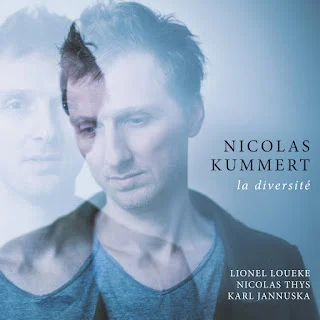
The contemporary jazz landscape thrives on cross-cultural dialogue, improvisation, and the seamless fusion of disparate musical traditions. Few albums in recent memory exemplify this synthesis quite as thoroughly as La Diversité, the 2017 release from acclaimed Belgian saxophonist and composer Nicolas Kummert. Building upon a prolific career that previously yielded notable projects such as Voices in 2014 and Flow in 2015, Kummert’s La Diversité serves as a masterclass in modern ensemble playing, cross-continental musical heritage, and structural ingenuity.
At the core of the project is Kummert’s distinctive compositional voice, anchored by winding, evocative saxophone lines that effortlessly weave through complex harmonic structures. However, what elevates the album from a standard contemporary jazz recording to a transcendent sonic experience is the profound musical partnership between Kummert and award-winning Beninese guitarist Lionel Loueke. Rounded out by the formidable rhythm section of double bassist Nicolas Thys and drummer Karl Jannuska, the quartet delivers a profound exploration of rhythm, melody, and cultural resonance.
The Genesis of a Cross-Cultural Vision
Nicolas Kummert’s deep-seated affinity for African musical traditions is not a recent stylistic affectation; rather, it is the product of a lifelong artistic journey that began in his formative teenage years. At the age of 17, the young Belgian saxophonist embarked on a transformative two-month stay in Senegal. During this pivotal immersion, Kummert collaborated extensively with local musicians, absorbing the intricate polyrhythms, call-and-response frameworks, and soulful vocalizations native to West African music.
This initial exposure acted as a catalyst, sparking a lifelong quest to explore musical traditions far beyond the borders of Western Europe. Over the ensuing years, Kummert’s musical passport expanded significantly. He traveled to and collaborated with artists in Benin, Mali, Kenya, São Tomé and Príncipe, Morocco, and Tunisia. Each stop on this geographic and sonic itinerary left an indelible mark on his artistic sensibilities, shaping a unique compositional style that treats genre boundaries as permeable and rhythm as a universal language.
This decades-long dedication to cross-cultural collaboration naturally paved the way for his eventual partnership with Lionel Loueke. The two artists first crossed paths in 2008 during a recording session for acclaimed Beninese singer Patrick Ruffino. That initial studio encounter blossomed into a deep professional respect and enduring friendship. As Kummert continually refined his compositional concepts over the next several years, he recognized that Loueke’s singular guitar style—which merges West African harmonic sensibilities with modern jazz improvisation and unique vocal percussion techniques—would be the ideal complement to his own musical vision. By 2015, Kummert formally invited Loueke to join his newly formed band, setting the stage for the collaborative synergy that would define La Diversité.
Dissecting the Soundscape: Composition and Arrangement
La Diversité is characterized by an intricate balance between structural discipline and improvisational freedom. A defining trait of Kummert’s leadership is his ability to construct compositions that feel both expansive and intimately focused. His winding saxophone motifs serve as the gravitational center of the album, providing clear thematic pathways for the ensemble to follow.
However, the architecture of these compositions is substantially elevated by the contributions of Lionel Loueke. Loueke’s playing on the album operates on multiple dimensions. On tracks where subtlety is required, his delicate note choices provide a transparent harmonic cushion that drives the music toward a higher level of consciousness and introspection.
Yet, Loueke’s technical versatility ensures that the album never settles into a singular mood. On compositions such as "We’ll Be Alright," Loueke steps forward with a more boisterous, high-energy elucidation, demonstrating a commanding command of tone, attack, and dynamic range. Conversely, the album showcases a remarkable antipodean deliverance on tracks like "And What If We’re Not," where the interplay between Kummert’s tenor saxophone and Loueke’s guitar assumes an exploratory, almost telepathic quality.
Loueke’s technical mastery is further highlighted by his fluid transition between electric and acoustic instruments across the tracklist. On "Le Vent Se Lève," he employs crystalline, bell-like harmonics that evoke the crisp, atmospheric chill of a shifting wind. Later, on "Le Peuple De L’Arc-En-Ciel," Loueke dazzles the listener with intricate, dexterous finger-picking techniques that underscore the rhythmic vitality of the piece.
Intimate Duos and Bold Reinterpretations
While the ensemble performances on La Diversité are uniformly compelling, some of the album’s most poignant moments arrive when the instrumentation is stripped down to its bare essentials. On "Gnossienne A Deux," Kummert and Loueke engage in an intimate dialogue that exposes the raw chemistry between them as a duo. Stripped of the rhythmic safety net provided by bass and drums, both musicians lean into the vulnerability of the space, delivering deeply personal, emotionally resonant performances that highlight their individual virtuosity and collective empathy.
A notable and ambitious undertaking on the album is the inclusion of two distinct versions of Leonard Cohen’s timeless hit song "Hallelujah," alongside a concluding acoustic rendition titled "Hallelujah Again – In Memory of Leonard Cohen." In the hands of lesser artists, revisiting such a ubiquitous cultural touchstone multiple times on a single record could easily border on redundancy. However, Kummert and Loueke navigate this potential pitfall with profound artistic restraint.
Played correspondingly by the full quartet and in a stripped-down duo format, the interpretations of "Hallelujah" avoid sentimentality in favor of a characteristically delicate, respectful treatment. The resulting renditions do not merely replicate the original melody; they deconstruct its emotional core, recontextualizing Cohen’s melancholic masterpiece within the broader aesthetic framework of contemporary jazz. This thoughtful tribute serves as a emotional anchor for the album, bridging the gap between familiar Western folk traditions and the globalized jazz idiom.
Chronological Journey Through La Diversité
The sequencing of La Diversité is carefully designed to take the listener on a dynamic emotional and geographic journey. The album moves fluidly between high-energy rhythmic explorations and languorous, meditative soundscapes.
The record opens with "Rainbow People," a track that immediately establishes the album’s West African rhythmic sensibilities, driven by an infectious groove and bright, optimistic horn lines. This gives way to the atmospheric breeze of "Le Vent Se Lève," before transitioning into the textural depths of "Harmattan" and "Lighthouse."
Midway through the album, the aforementioned interpretations of Leonard Cohen’s work provide a moment of reflective pause, before the ensemble dives into the avant-garde classicism of Erik Satie’s "Gnossienne" and its companion piece, "Gnossienne A Deux."
As the album progresses toward its conclusion with tracks like "Liberté," "La Terre Ne Ment Pas," and the sultry, smoldering title track "Diversity Over Purity," the central thesis of the project becomes unmistakably clear. The album is not merely a collection of disparate songs, but a cohesive artistic statement celebrating the richness that arises when diverse musical cultures meet, converse, and create in real-time.
Complete Track Listing and Personnel
To fully appreciate the scope of the project, a comprehensive examination of the album’s structure and personnel is essential. La Diversité features a total of 14 tracks, each contributing a unique color to the overarching canvas:
- Rainbow People
- Le Vent Se Lève
- Harmattan
- Lighthouse
- Hallelujah
- Gnossienne
- Gnossienne A Deux
- Liberté
- Le Peuple De L’Arc-En-Ciel
- La Terre Ne Ment Pas
- Diversity Over Purity
- We’ll Be Alright
- And What If We’re Not?
- Hallelujah Again – In Memory of Leonard Cohen
The realization of these compositions was made possible by a tightly knit core quartet of world-class instrumentalists:
- Nicolas Kummert: Tenor saxophone and principal composition
- Lionel Loueke: Acoustic and electric guitars, vocalizations
- Nicolas Thys: Double bass
- Karl Jannuska: Drums and percussion
Broader Impact and Critical Implications
In the broader context of contemporary jazz history, La Diversité occupies a significant space. For decades, the genre has grappled with the challenges of globalization—specifically, how artists from Western traditions can engage with non-Western musical cultures respectfully, authentically, and without falling into the traps of appropriation or superficial pastiche.
Nicolas Kummert’s work on La Diversité offers a compelling blueprint for how this cross-cultural exchange can be successfully achieved. Because Kummert’s engagement with African music began in his youth and was sustained through decades of genuine collaboration, travel, and personal relationships, his stylistic integration feels organic rather than calculated. He does not treat African rhythms as exotic ornaments to decorate standard European jazz forms; rather, he treats them as foundational truths that inform his entire musical vocabulary.
Furthermore, the integration of Lionel Loueke—an artist who brings his own deep roots in Beninese tradition combined with a premier American jazz education from the Berklee College of Music and the Thelonious Monk Institute of Jazz—ensures a genuine peer-to-peer dialogue. The resulting music transcends geographic categories, existing instead as a living, breathing testament to the power of artistic collaboration.
As the jazz genre continues to evolve in the 21st century, driven by an increasingly interconnected global community, albums like La Diversité point the way forward. By prioritizing listening, mutual respect, emotional vulnerability, and boundless creative curiosity, Nicolas Kummert and his ensemble have crafted a mesmerizing, innovative experience that continues to reward repeated listening and stands as a high-water mark in modern European jazz.