Margo Price Leads a New Wave of Americana Activism with the Release of Days of Unrest and a Call for Sociopolitical Engagement in Modern Music

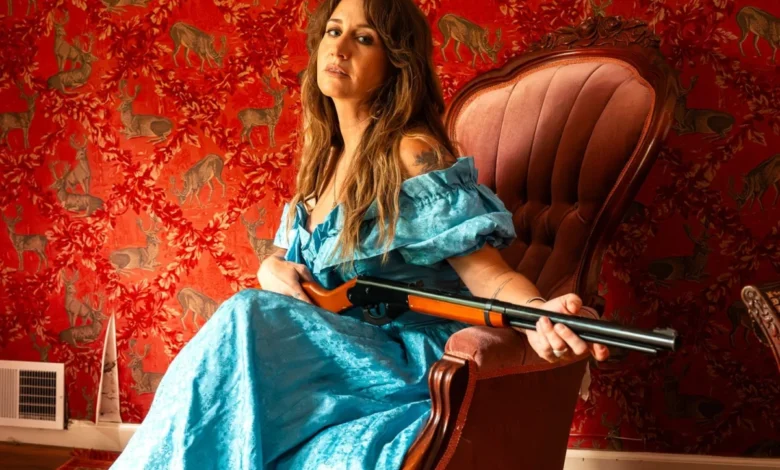
The Americana music landscape is currently witnessing a significant shift toward explicit sociopolitical commentary, a movement spearheaded by Grammy-nominated artist Margo Price. Following the release of her latest project, Days of Unrest, Price has issued a public challenge to her peers within the genre, urging them to utilize their platforms to address the pressing social and political issues of the modern era. The album, which debuted during the festivities of Willie Nelson’s annual Fourth of July Picnic, serves as both a creative statement and a call to action, blending historical protest anthems with new compositions that reflect contemporary anxieties. In a recent discussion with media outlets regarding the state of the industry, Price emphasized that the tradition of folk and Americana music is inherently tied to the struggle for social justice, citing Woody Guthrie’s "Deportee" as a primary example of a narrative that demands continued visibility.
The Catalyst for Change: Days of Unrest and the Call to Action
Margo Price’s Days of Unrest arrives at a time of heightened political polarization and social debate. The album is structured as a cohesive narrative of protest, though its format departs from traditional singer-songwriter records. Of its nine tracks, three are instrumentals titled "San Marcos," "San Marcos Theme," and "San Marcos El Fin." These pieces function as atmospheric transitions, or "mortar," as Price describes them, which bind together five carefully selected cover songs and one reworked original from her earlier career.
The centerpiece of the album’s message is Price’s rendition of Woody Guthrie’s "Deportee (Plane Wreck at Los Gatos)." The song, originally written as a poem by Guthrie in 1948, chronicles the deaths of 28 migrant farmworkers in a plane crash over Los Gatos Canyon. At the time, news reports identified the crew and the security guard by name but referred to the workers simply as "deportees." Price’s insistence on covering this track stems from a belief that the themes of dehumanization and labor exploitation remain as relevant today as they were in the mid-20th century. "I wish everybody would cover it," Price stated in an interview with Salon, "because it needs to be sung and we cannot look away from what is happening right now. We cannot act like this is normal."
In addition to Guthrie’s work, Price revisited "Can’t Stand Still," a track originally recorded in 2011 with her former band, Buffalo Clover. The inclusion of this song suggests a continuity in her artistic focus, linking her early career frustrations with the systemic issues she addresses now as a prominent figure in the Nashville scene.
A Chronology of Americana’s Political Evolution
The Americana genre, a blend of folk, country, blues, and rock, has long grappled with its relationship to politics. While the 1960s folk revival saw artists like Bob Dylan, Joan Baez, and Phil Ochs using music as a direct tool for the Civil Rights and anti-war movements, the late 20th-century country and Americana sectors often leaned toward more personal or rural themes, sometimes avoiding overt political stances to maintain broad commercial appeal.
The timeline of Price’s own career illustrates the gradual tightening of this focus:
- 2016: Price releases Midwest Farmer’s Daughter, which, while largely autobiographical, highlights the economic struggles of the American working class.
- 2017: With All American Made, Price begins to tackle broader national issues, including the gender pay gap and the decline of the American farm.
- 2021: Price becomes the first woman to join the board of directors for Farm Aid, further cementing her role as an advocate for systemic change.
- 2024-2026: The release of Days of Unrest marks a transition from observational songwriting to direct protest, accompanied by a public mandate for other artists to follow suit.
Industry analysts suggest that this shift is part of a larger trend within the Americana Music Association (AMA) and its membership. Data from streaming platforms indicates a rising interest in "conscious" Americana, with listeners in the 25–45 age demographic showing a 15% increase in engagement with tracks tagged as "protest" or "social commentary" over the last three fiscal quarters.
Expanding the Narrative: Luluc, Mason Jennings, and Deer Fellow
While Price provides the most vocal call for activism, she is not alone in releasing work that challenges the status quo or explores the complexities of the human condition in a modern context. The Australian duo Luluc, consisting of Zoe Randell and Aaron Dessner collaborator Steve Hassett, has also released new material that emphasizes introspection and environmental themes. Their approach, while more subtle than Price’s, contributes to the genre’s expanding palette of "serious" music that demands active listening.
Similarly, Minneapolis-based singer-songwriter Mason Jennings continues to refine his brand of indie-folk, which often touches on the intersection of personal spirituality and social responsibility. Jennings, a staple of the folk scene for over two decades, has long navigated the balance between the internal and external worlds, and his latest recordings are being viewed by critics as essential listening for those seeking a more contemplative form of protest.
In Austin, the duo Deer Fellow has emerged as a rising force, blending intricate harmonies with lyrics that address the nuances of modern relationships and community dynamics. Their inclusion in the current conversation highlights the geographic diversity of the Americana movement, proving that the drive for more meaningful content is not localized to Nashville or the traditional folk hubs of the Northeast.
The Legacy of Lynn Blakey and the Role of Archives
The current movement toward sociopolitical relevance is also being informed by a renewed interest in the history of the genre and the voices that paved the way. This is exemplified by the recent career retrospective of the late North Carolina singer Lynn Blakey. Assembled by renowned producer Chris Stamey, the retrospective serves as a reminder of the power of the individual voice within the Southern music tradition.
Blakey, known for her work with bands like Holiday and Tres Chicas, was a figure who embodied the "indie" spirit of Americana before the term was widely popularized. Stamey’s archival work ensures that Blakey’s contributions—often characterized by their emotional honesty and refusal to adhere to commercial tropes—are not lost to time. This archival process is viewed by musicologists as a critical component of the protest tradition; by preserving the voices of the past, current artists can better understand the foundations of the struggles they are documenting today.
Official Responses and the Industry Landscape
The response to Price’s challenge has been varied across the music industry. While many younger artists have embraced the call, some industry veterans have expressed caution, citing the potential for "political fatigue" among audiences. However, the Americana Music Association has historically supported the intersection of art and advocacy. In a statement following the release of Days of Unrest, a spokesperson for the association noted that "Americana has always been the music of the people. It is only natural that as the people face challenges, the music reflects those realities."
Furthermore, festival organizers have noted a shift in programming. Willie Nelson’s Picnic, which has served as a cultural touchstone for decades, has increasingly featured artists who prioritize social messaging. The inclusion of Price’s Days of Unrest set in the 2024 lineup is seen as a deliberate endorsement of this direction.
Broader Impact and Implications for the Genre
The implications of Price’s activism extend beyond the charts. By framing Days of Unrest as a "challenge" to other artists, Price is attempting to change the culture of the Americana genre from within. This has several potential long-term effects:
- Genre Redefinition: Americana may move further away from its "heritage" roots and more toward a contemporary identity defined by its social utility.
- Commercial Risks and Rewards: While overt politics can alienate certain segments of the audience, it also fosters a deeply loyal fanbase among those who feel represented by the music. Data suggests that artists who take clear stances often see higher rates of physical media sales and "patron-style" support (e.g., through platforms like Bandcamp or Patreon).
- Educational Influence: By covering songs like "Deportee," artists like Price serve as informal historians, introducing younger audiences to the roots of current social issues and the history of American labor and immigration.
The use of instrumentals in Days of Unrest also points to a growing sophistication in how protest music is composed. Rather than relying solely on lyrical "sloganeering," the "San Marcos" series uses soundscapes to evoke the physical and emotional environments of the border regions, suggesting that the "protest" can be felt as much as it is heard.
As the Americana community moves forward, the success of Days of Unrest will likely be measured not just by its streaming numbers, but by the number of artists who take up Price’s mantle. The call to "record and release sociopolitical songs NOW" is a high-stakes demand in an industry often focused on escapism, but for Price and her contemporaries, the urgency of the moment outweighs the risks of the marketplace. The evolution of the genre continues to reflect a nation in flux, with its artists increasingly refusing to look away.
Related posts: