MAGA Freaks Out Over Netflix Social Media Post That Has Nothing to Do With Charlie Kirk’s Assassination

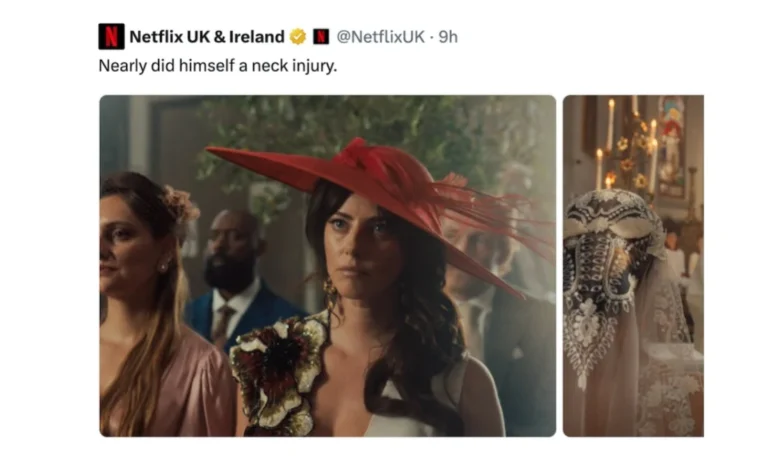
The landscape of digital discourse reached a fever pitch this week when a standard promotional post from the official Netflix UK & Ireland account became the unlikely epicenter of a viral misinformation campaign. The controversy centers on a brief video clip uploaded to the social media platform X, which featured a scene from the second season of the popular Guy Ritchie-helmed series, The Gentlemen. While the post was intended to engage the show’s dedicated fanbase with a humorous observation about a character’s physical reaction, prominent figures within the MAGA (Make America Great Again) influencer sphere misinterpreted the content as a veiled, malicious reference to the recent assassination attempt on conservative activist and Turning Point USA founder Charlie Kirk.
Anatomy of a Digital Misunderstanding
The incident began on September 10, 2026, when the Netflix UK & Ireland social media team shared a short clip from the second season of The Gentlemen. The scene depicts a pivotal moment involving the show’s protagonist, Eddie, portrayed by actor Theo James, and his counterpart, Susie, played by Kaya Scodelario. In the sequence, Eddie is seen marrying the Italian countess Isabella, played by Benedetta Porcaroli. As the ceremony progresses, Susie makes a dramatic exit from the cathedral. The camera captures Eddie’s reflexive, sharp turn of the head to track her departure.
Accompanying the clip, the Netflix account added the caption, “Nearly did himself a neck injury.” The post was clearly designed to highlight the comedic and dramatic tension of the scene, poking fun at the exaggerated speed and intensity with which the character turned to look at his departing associate.
However, within hours of publication, the post was seized upon by a segment of online political commentators who had recently been preoccupied with the news cycle surrounding the assassination attempt on Charlie Kirk. Despite the complete lack of thematic connection, symbols of violence, or political subtext within the clip, several influential accounts began to circulate the post as an example of “liberal media” mocking the tragedy. The accusations quickly gained traction, with users interpreting the caption as a double entendre regarding the physical harm inflicted upon Kirk, despite the lack of evidence supporting such a conspiratorial link.
Chronology of the Online Outrage
The rapid escalation of this incident provides a case study in the velocity of modern social media disinformation.
- September 10, 2026, Early Afternoon: The Netflix UK & Ireland account posts the clip from The Gentlemen. It is intended as a standard engagement-driving post for fans of the series.
- September 10, 2026, Late Afternoon: The post begins to circulate within specific niche communities on X. Users begin to draw parallels between the “neck injury” comment and the injuries sustained by Charlie Kirk during the widely reported attack on his person.
- September 10, 2026, Evening: The narrative matures. Influential MAGA-aligned accounts with hundreds of thousands of followers quote-tweet the post, labeling it as “disrespectful,” “tone-deaf,” and “evidence of an agenda.”
- September 11, 2026: The reach of the post expands beyond the initial echo chambers. Mainstream digital media outlets begin to monitor the situation as the Netflix account faces a wave of automated and manual backlash.
- September 12, 2026: Fact-checkers and entertainment reporters confirm that the clip is an authentic, unaltered scene from The Gentlemen, intended solely for promotional purposes, confirming that the timing of the post was coincidental and entirely unrelated to the political climate.
Contextualizing the Cultural Climate
To understand why a benign promotional post could trigger such a significant backlash, it is necessary to examine the current state of political polarization in the United States and the United Kingdom. Charlie Kirk, as a polarizing figure in conservative politics, occupies a high-profile space in the national conversation. When he was targeted in an assassination attempt, the shockwaves were felt immediately across the political spectrum.
In the wake of such high-stakes violence, online communities—particularly those deeply invested in political tribalism—often enter a state of hyper-vigilance. This phenomenon, known as pattern recognition bias, occurs when individuals are primed to see evidence of their grievances in unrelated stimuli. For those already convinced that mainstream media conglomerates like Netflix hold an institutional bias against their political movement, the “neck injury” caption served as a confirmation of their existing worldview, regardless of the objective reality of the show’s plot.
The Role of Algorithmic Amplification
The incident highlights the role of algorithmic amplification in modern misinformation. Social media platforms often prioritize content that triggers strong emotional reactions—outrage being one of the most potent drivers of engagement. When influential accounts shared the Netflix post with a framing of political mockery, the platform’s algorithm responded by pushing the content to a broader audience.
This cycle creates a feedback loop: the more people react in anger, the more the algorithm treats the post as “trending,” thereby showing it to more people who have no context for the original series. By the time the truth was clarified—that the clip was merely a piece of scripted television—the damage to the brand’s reputation in those specific circles had already been solidified.
Institutional Responses and Industry Standards
Netflix, as a global media entity, typically maintains a strict policy regarding the separation of its promotional material from political commentary. In this instance, the social media team’s intent was purely commercial: to drive interest in the second season of a high-performing series.
Industry analysts note that brands are increasingly finding themselves in the crosshairs of cultural disputes. When a brand like Netflix, which produces thousands of hours of content, engages in day-to-day social media management, it operates under the assumption that its audience understands the context of its own programming. However, this assumption is increasingly challenged by the reality that social media platforms are no longer forums for unified cultural discussion, but rather segmented arenas where context is frequently stripped away.
Broader Implications for Digital Discourse
The incident involving the Netflix post serves as a cautionary tale for both media entities and the public. For media companies, the risk of misinterpretation is higher than ever, requiring a more nuanced approach to social media timing. Even innocuous content can be weaponized in a hyper-polarized environment, forcing companies to implement more rigorous vetting processes for their public-facing communications.
For the public, the incident underscores the necessity of media literacy. The speed with which a benign piece of television marketing was transformed into a political lightning rod illustrates the fragility of objective information in the digital age. The ability to verify the source of a clip, understand the context of its creation, and resist the urge to immediately assign political motives to unrelated events are critical skills for navigating modern online spaces.
Ultimately, the “neck injury” controversy surrounding The Gentlemen did not change the nature of the show, nor did it alter the circumstances of the event it was erroneously linked to. Instead, it served as a momentary, yet illustrative, collision between the world of entertainment and the volatile, high-pressure world of political activism. As the news cycle moves forward, the incident remains a testament to how easily collective perception can be diverted from reality, and how the echoes of political violence can create distorted interpretations of even the most mundane cultural artifacts.
The clip remains on the Netflix UK & Ireland account, standing as an artifact of a digital misunderstanding that speaks more to the state of contemporary political anxiety than to the actual content of the series itself. As of this writing, there have been no formal apologies issued by those who initiated the viral claim, nor has Netflix issued a statement, adhering to the standard professional practice of ignoring groundless, inflammatory claims that lack any basis in fact. The Gentlemen continues to stream, and the discourse, for now, has shifted toward the next viral moment in a cycle that shows no signs of slowing down.