Lil Durk Cleared of Murder-for-Hire Charges in Federal Court as Rapper Shifts Focus Toward Youth Advocacy and Cycle-Breaking

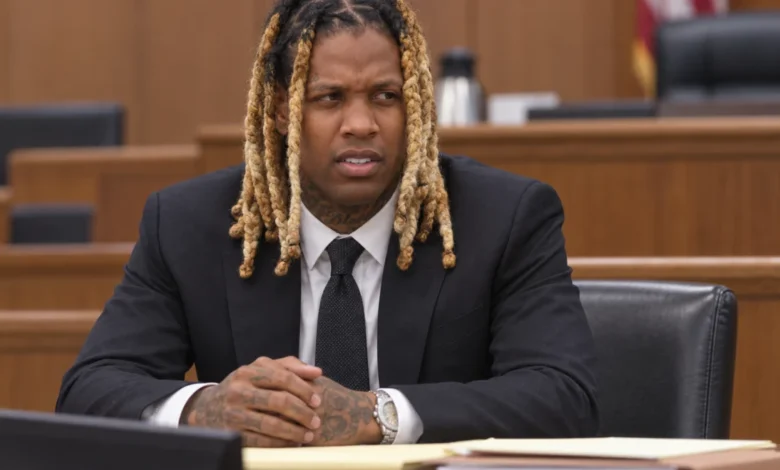
On September 11, 2026, the federal legal landscape surrounding Chicago-born rapper Lil Durk, born Durk Banks, shifted dramatically when a jury returned a verdict of not guilty on all counts in a high-profile murder-for-hire trial. The acquittal, delivered after three grueling days of jury deliberation, cleared Banks of charges including conspiracy, stalking using a dangerous weapon, stalking resulting in death, and two counts of murder-for-hire. The legal victory marks a significant turning point in a case that has captivated the hip-hop industry and federal prosecutors alike, though it represents only one chapter in a broader, ongoing legal battle for the artist.
The charges stemmed from a tragic incident on August 19, 2022, near the Beverly Center in Los Angeles. During the altercation, Saviay’a “Lul Pab” Robinson, a cousin of rapper Quando Rondo, was fatally shot. Federal prosecutors alleged that Banks had orchestrated the hit as part of an ongoing feud between rival factions. While the jury ultimately rejected the prosecution’s narrative regarding Banks’ direct involvement in the murder-for-hire plot, the legal proceedings highlighted the complex, often volatile intersections of fame, environment, and gang-related violence that have long defined the Drill subgenre of hip-hop.
A Chronology of the Legal Proceedings
The federal investigation into the Beverly Center shooting was the culmination of a multi-year surveillance and intelligence-gathering effort by federal agencies. The timeline of the case is as follows:
- August 19, 2022: The fatal shooting of Saviay’a “Lul Pab” Robinson occurs in Los Angeles.
- Late 2022 – 2025: Federal authorities consolidate intelligence, linking various members of the Only The Family (OTF) collective to a series of incidents, leading to indictments under federal conspiracy and racketeering statutes.
- September 2026: The murder-for-hire trial commences in a federal courtroom. Prosecutors present evidence attempting to link Banks to the planning of the Lul Pab hit.
- September 11, 2026: Following three days of deliberation, the jury acquits Lil Durk of all charges related to the Los Angeles incident. His co-defendants, Deandre “OTF Dede” Wilson and David “Browneyez” Lindsey, are convicted of stalking and conspiracy to commit stalking but are similarly cleared of the murder-for-hire counts.
The Pivot: Advocacy and Mentorship
In the immediate wake of his acquittal, Banks opted not to issue a traditional victory statement. Instead, he utilized his platform to release a manifesto aimed at the youth, addressing the systemic pressures that often lead young men from marginalized environments into cycles of violence.
"To the youth, I need y’all to hear me," Banks wrote in a statement released via social media. "There were times in my life when I felt lost and couldn’t see beyond what was right in front of me. I know how deeply your environment and surroundings can influence the way you think, the choices you make, and what you believe is possible for your life, but they don’t have to determine who you become. Growth is real, and it’s never too late to choose a different direction."
This pivot represents a strategic transition for the artist. Observers of the industry have noted that many figures in the Chicago Drill scene have struggled to navigate the transition from local street fame to global stardom without shedding the baggage of their origins. By emphasizing "growth" and "purpose," Banks is positioning himself as an elder statesman of the genre, attempting to leverage his survival of the federal legal system into a cautionary tale for those still caught in the environment he claims to have transcended.
The Looming Legal Challenges
Despite the acquittal in the Los Angeles-based case, Banks remains in federal custody. The legal relief afforded by the September 11 verdict is tempered by a separate, high-stakes racketeering trial scheduled for October 5, 2026. This second trial concerns charges of Murder in Aid of Racketeering Activity (VICAR), a federal statute that carries severe sentencing guidelines, including the potential for life imprisonment or the death penalty.
Legal analysts suggest that the defense team, led by high-profile criminal defense attorneys, will likely use the recent acquittal as leverage. The strategy is expected to focus on the argument that the government’s theory of a centralized, conspiratorial organization—the core of the upcoming racketeering case—has been weakened by the jury’s rejection of the murder-for-hire narrative in the Lul Pab case.
"The defense is going to argue that the prosecution is attempting to ‘pile on’ charges based on the same faulty intelligence that failed to secure a conviction in the Los Angeles case," says legal analyst Marcus Thorne. "While each case is tried on its own merits, the psychological impact of a not-guilty verdict on the jury pool and the public perception of the government’s case strength cannot be overstated."
Broader Implications for the Hip-Hop Industry
The federal prosecution of Lil Durk is part of an ongoing trend in which federal agencies, specifically the Department of Justice, have increasingly utilized the Racketeer Influenced and Corrupt Organizations (RICO) Act to target hip-hop collectives. By classifying these musical groups as criminal street gangs, prosecutors have successfully brought down several high-profile artists in recent years.
The acquittal of Banks provides a rare victory for the defense in these types of trials. In many instances, the use of rap lyrics and social media activity as evidence has been criticized by civil liberties groups as a violation of the First Amendment. In the Los Angeles trial, the jury’s decision suggests a growing skepticism toward the prosecution’s reliance on "guilt by association" and the interpretation of artistic expression as confession.
Sociological Context: Environment vs. Agency
The rhetoric employed by Banks regarding "environment" and "choices" touches upon a long-standing sociological debate. Critics often argue that the Drill scene glamourizes violence, while proponents contend that the music is a raw, unvarnished reportage of the realities of life in segregated and under-resourced urban centers.
By calling for "growth" and urging his followers to "choose their family," Banks is attempting to dismantle the fatalistic worldview that often accompanies the lifestyle depicted in his music. However, skeptics wonder if such a pivot is sustainable while he remains incarcerated and facing the VICAR charges. The coming weeks will determine whether the acquittal provides the momentum needed for a full exoneration or if the federal machinery will prove too formidable to overcome.
Looking Ahead
As the October 5 trial approaches, the public and the legal community are watching closely. The outcome of the upcoming racketeering case will not only decide the fate of one of the most successful rappers of the last decade but will also serve as a litmus test for the effectiveness of federal prosecutorial tactics against the music industry.
For now, the narrative remains one of transition. Lil Durk has demonstrated a capacity to influence his base, and his post-acquittal messaging suggests a man who, regardless of his impending legal hurdles, is determined to change the optics of his legacy. Whether this shift will result in tangible programs or sustained community engagement remains to be seen, but the intent—to break the cycle of violence that has claimed so many of his peers—is now the centerpiece of his public identity.
The legal team representing Banks is expected to file for bond this week, citing the recent not-guilty verdict as a primary reason for his release pending the October trial. If granted, a temporary release would allow Banks to further solidify his advocacy work, providing a platform for the "purposeful movement" he described in his statement. In a career defined by the volatility of the streets and the scrutiny of the courtroom, this period represents the most critical juncture in the life and legacy of Lil Durk.
Related posts: