Catalonia Passes Historic Resolution to Posthumously Pardon Hundreds of Victims Executed During Witch Trials

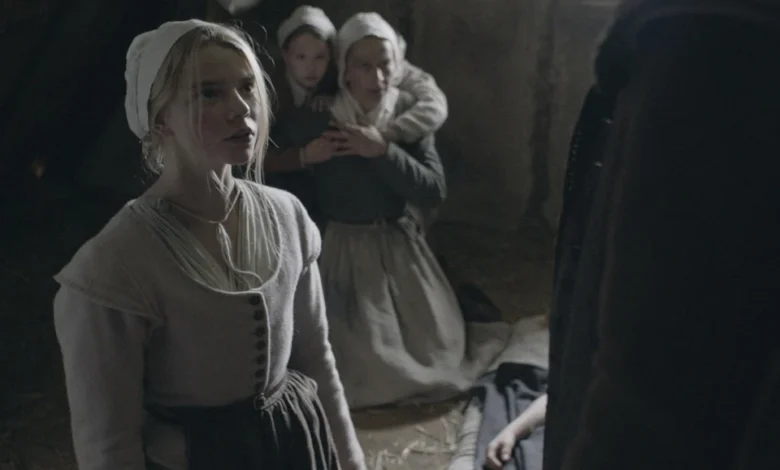
The Parliament of Catalonia has officially approved a resolution to posthumously pardon more than 700 individuals, the vast majority of whom were women, who were prosecuted, tortured, and executed for the alleged crime of witchcraft between the 15th and 18th centuries. This landmark decision, passed with an overwhelming majority of 114 votes in favor and 21 against, represents a significant effort by the regional government to reconcile with a dark chapter of its judicial history. Beyond the symbolic pardons, the measure encourages local municipalities across the region to rename streets and public spaces in honor of those who were unjustly put to death, shifting the historical narrative from one of superstition to one of systemic gender-based persecution.
The Historical Genesis of Witch Trials in Catalonia
While the Salem witch trials of 1692 are perhaps the most famous instance of such hysteria in the Western imagination, historians have long noted that the phenomenon was far more extensive and lethal across Europe. Catalonia, in particular, holds a somber distinction in this history. The region was among the first in Europe to codify the persecution of "witches" into law. The Ordinacions d’Àneu, dating back to 1424, is recognized by many scholars as the first legal text in Europe to formally prohibit witchcraft and detail the procedures for its prosecution.
Unlike other parts of Spain, where the Spanish Inquisition maintained a degree of centralized control and often viewed accusations of witchcraft with skepticism, the trials in Catalonia were frequently driven by local secular courts and feudal lords. In rural, mountainous regions, the absence of strong central oversight allowed for a more virulent form of vigilantism. In these communities, the line between traditional folk medicine and "maleficence" was thin, and the legal standards for conviction were perilously low.
The Mechanics of Persecution: Scapegoating and Social Control
The "witch-hunts" in Catalonia were rarely about theology and almost always about social and economic stressors. Historical records indicate that accusations typically surged following periods of collective trauma, such as the plague, failed harvests, or sudden natural disasters. When a community suffered an unexplained misfortune, such as the sudden death of an infant or the loss of livestock, a scapegoat was sought to provide an explanation for the inexplicable.

The profile of the accused was remarkably consistent. They were often women who lived on the margins of society—widows, those without male protectors, or practitioners of traditional healing. These "wise women" or midwives possessed knowledge of herbs and medicine that was both essential to the community and a source of suspicion. In a society dominated by patriarchal structures and religious orthodoxy, independence in a woman was frequently conflated with a pact with the devil.
Under the secular judicial systems of the time, a confession was considered the "queen of evidence." To obtain these confessions, authorities employed brutal methods of torture. Once a confession was extracted, the fate of the accused was sealed. In Catalonia, the preferred method of execution was hanging rather than burning at the stake. This was not a gesture of mercy but a matter of cold logistics; hanging was significantly cheaper and preserved firewood, which was a precious resource in many rural villages.
Data and the Scale of the European Hysteria
To understand the magnitude of the Catalonian pardons, one must view them within the broader context of the European "Great Witch Craze." Between the years 1580 and 1630, the continent saw its most intense period of persecution.
- Total Executions: Current historical estimates suggest that approximately 50,000 to 60,000 individuals were executed for witchcraft across Europe during the early modern period.
- Gender Disparity: Roughly 80 percent of those executed were women. In some regions, this figure rose as high as 90 percent.
- Regional Density: While Germany (the Holy Roman Empire) saw the highest number of executions, Catalonia was a significant outlier in the Iberian Peninsula due to its early start and the autonomy of its local courts.
In Catalonia, the Inquisition often acted as a moderating force, paradoxically saving lives by requiring higher standards of evidence than the local villagers demanded. When the Inquisition took over a case, the accused was frequently acquitted or given a lighter sentence because the inquisitors viewed witchcraft as a delusion rather than a tangible threat. However, in the many instances where local lords maintained jurisdiction, the death toll remained high.
Political Reactions and the Modern Connection
The move to pardon the victims was spearheaded by pro-independence and left-wing parties in the Catalonian parliament, supported by extensive research from historians and feminist organizations. The campaign, titled "No eran brujas, eran mujeres" (They weren’t witches, they were women), sought to reframe the trials as a form of femicide.

During the parliamentary debates, Jenn Díaz, a member of the Catalonian parliament, emphasized the continuity between historical and modern forms of misogyny. "We are heiresses of the witches, the poisoners, and the healers," Díaz stated in an interview. She noted that the language used to marginalize women has evolved but the underlying intent remains similar, pointing to modern derogatory terms used against feminists. "There is a connection between witch hunts and femicide. We want reparation and an understanding that the past is not as distant as we think."
The 21 votes against the measure came primarily from the far-right Vox party, whose representatives argued that the parliament should focus on modern issues rather than "revisiting the 15th century." However, proponents argued that historical memory is essential for a healthy democracy and that acknowledging past state-sponsored violence is a prerequisite for justice.
A Chronology of Historical Memory and Redress
The Catalonian resolution is part of a growing international movement to address the legacy of the witch trials.
- 1424: The Ordinacions d’Àneu is established in Catalonia, marking the beginning of formalized witch-hunting in Europe.
- 1580–1630: The peak of the witch-hunting hysteria across Europe and Catalonia.
- 1782: The last "witch" in Europe, Anna Göldi, is executed in Switzerland.
- 2008: The Swiss government officially pardons Anna Göldi, acknowledging her trial as a judicial murder.
- 2011: The Steilneset Memorial is opened in Vardø, Norway, to commemorate the 91 victims of the 17th-century Finnmark witch trials.
- 2021: The Catalonian Parliament passes the resolution for the posthumous pardon of over 700 victims.
- 2022: Following the Catalonian example, Scotland’s First Minister Nicola Sturgeon issued a formal apology to the estimated 4,000 people (mostly women) accused of witchcraft in Scotland between 1563 and 1736.
Analysis of Implications: Why the Pardon Matters Today
The decision to pardon victims centuries after their death may appear purely symbolic, but it carries profound legal and social implications. For historians, it validates decades of research that has sought to strip away the supernatural myths of the trials and expose the underlying social engineering. It acknowledges that these women were not practitioners of "dark arts" but victims of a judicial system that failed to protect its most vulnerable citizens.
Furthermore, the resolution serves as a pedagogical tool. By renaming streets and erecting memorials, the Catalonian government ensures that the history of the trials remains in the public consciousness. It serves as a reminder of how easily fear, coupled with a lack of scientific understanding and legal safeguards, can lead to the mass violation of human rights.

The link drawn by modern legislators between historical witch-hunts and contemporary gender-based violence is perhaps the most significant takeaway. By labeling the trials as "femicide," the government of Catalonia is making a contemporary political statement: that the systemic marginalization of women is a historical constant that requires active, legislative intervention to dismantle.
As Catalonia moves forward with the implementation of this measure, the focus turns to local municipalities. Many towns in the Pyrenees, where the trials were most frequent, are now tasked with the delicate work of researching their local archives to identify specific victims. Through this process, the "witches" of the past are finally being returned their names, their dignity, and their place as rightful members of their communities.