Bebe Rexha Unleashes High-Energy Debut at Tomorrowland, Guided by David Guetta’s "Pure Energy" Mandate


Bebe Rexha’s highly anticipated Tomorrowland debut on the Freedom Stage saw the pop superstar deliver a relentless, high-octane performance, meticulously crafted under the direct guidance of electronic music titan David Guetta. The set, described by Rexha as "pure energy" and a fusion of pop and DJ aesthetics, adhered strictly to Guetta’s advice for an uncompromising, high-BPM experience, marking a significant moment for the artist at one of the world’s premier electronic dance music festivals.
The American pop sensation, known for her powerful vocals and genre-blending collaborations, took to Tomorrowland’s renowned Freedom stage today, facing a pivotal moment in her career as she navigated the unique demands of a major EDM festival. Unlike a traditional pop concert, Tomorrowland mandates an immersive, high-energy experience, a challenge Rexha approached with strategic consultation from one of the festival’s most seasoned performers.
The Guetta Blueprint for Tomorrowland Dominance
Ahead of her momentous set, Rexha shared insights into her preparation during an interview with Tomorrowland’s One World Radio. She openly acknowledged the novelty of the undertaking, stating, "This is something I’ve never done before… I wanted to do something as if it was like a DJ and a popstar had a baby. I didn’t want to do a regular pop set." This artistic vision underscored her intent to transcend typical pop performance tropes and fully embrace the high-octane atmosphere synonymous with Tomorrowland.
Recognizing the unparalleled experience of her frequent collaborator, David Guetta, Rexha sought his direct counsel. Guetta, a veritable legend in electronic music, boasts an impressive track record of having performed at Tomorrowland an astonishing 20 times. Rexha recounted her plea: "Guetta, you’ve done Tomorrowland 20 times, I need your help. What does this need to sound like and feel like?" Guetta’s response, delivered with characteristic clarity and conviction, was unequivocal: "It needs to be pure energy. Just go hammer it." This directive became the foundational principle for Rexha’s entire performance strategy.
Guetta’s advice extended beyond a general sentiment, delving into the technical specifics of an effective Tomorrowland set. Rexha revealed that her planned 30-minute performance was meticulously designed for "very high energy" and featured a "really cool mix" of tracks. Crucially, Guetta stipulated a non-negotiable tempo. "Everything is over 135 BPM. It’s very intense," Rexha explained, adding that when she inquired about potentially lowering the tempo, Guetta’s immediate and emphatic reply was, "Absolutely not." This firm guidance underscores the specific demands of the Tomorrowland audience, who expect an unrelenting, adrenaline-fueled sonic journey.
A Career Forged in Crossover Success
Bebe Rexha, born Bleta Rexha, has cultivated a career marked by significant crossover appeal, seamlessly blending pop, R&B, and electronic elements. Her journey began as a prolific songwriter, penning hits for artists such as Eminem and Rihanna ("The Monster") and Selena Gomez. This foundational experience in crafting compelling melodies and lyrics provided her with a deep understanding of popular music dynamics before she transitioned into a prominent performing artist.
Her breakthrough as a vocalist came with collaborations that bridged the gap between pop and electronic dance music, most notably with Martin Garrix on the 2016 hit "In the Name of Love." However, it was her ongoing partnership with David Guetta that solidified her status as a formidable force in the dance-pop sphere. Their 2022 collaboration, "I’m Good (Blue)," proved to be a global phenomenon. The track, which creatively sampled Eiffel 65’s iconic 1998 hit "Blue (Da Ba Dee)," resonated across continents, topping charts in numerous countries and earning a Grammy Award nomination for Best Dance/Electronic Recording. This success not only introduced Rexha to a broader electronic music audience but also showcased her versatility and ability to infuse classic dance sounds with contemporary pop sensibility.
Following "I’m Good (Blue)," Rexha and Guetta continued their successful partnership with "One In A Million" in 2023 and, most recently, "Sad Girls." These collaborations underscore a synergistic artistic relationship, where Guetta’s mastery of electronic production perfectly complements Rexha’s dynamic vocal delivery and pop songwriting acumen. Her presence at Tomorrowland, therefore, was not merely a pop star making a guest appearance, but a testament to her deep integration within the electronic music ecosystem, particularly through her work with one of its most influential figures.
David Guetta: The Maestro of the Mainstage
David Guetta’s influence on global electronic music is virtually unparalleled. Hailing from France, Guetta began his career as a DJ in Parisian clubs in the 1980s, eventually rising to international superstardom in the 2000s and 2010s. He is widely credited with helping to popularize electronic dance music (EDM) in the mainstream, skillfully fusing house music with pop and R&B vocals, creating a distinctive sound that has dominated charts and dancefloors worldwide.
His discography is replete with anthems like "When Love Takes Over," "Titanium," and "Without You," each demonstrating his ability to craft infectious melodies and powerful productions. Guetta’s extensive experience at Tomorrowland, performing over two decades, positions him as an unparalleled authority on the festival’s unique energy and audience expectations. His long-standing relationship with the event has seen him headline countless times, witness its evolution, and contribute significantly to its iconic status. His advice to Bebe Rexha, therefore, comes not just from a collaborator, but from a maestro who intimately understands the pulse of Tomorrowland.
Guetta’s recent activities further illustrate his commitment to pushing the boundaries of dance music while honoring its roots. In 2022, he released a remix of Benny Benassi’s seminal dance classic "Satisfaction," breathing new life into a track that has influenced generations of electronic artists. This remix, alongside his consistent output of chart-topping originals and collaborations, demonstrates his enduring relevance and his role as both an innovator and a guardian of dance music heritage. His mentorship of Bebe Rexha in preparation for her Tomorrowland debut is a clear example of his continued impact on emerging artists and the broader electronic music landscape.
Crafting the High-Octane Setlist
Bebe Rexha’s setlist for her Tomorrowland debut was carefully curated to align with Guetta’s "pure energy" mandate, featuring a compelling blend of her own hits, collaborative tracks, and iconic dance anthems. The selection showcased her versatility and her commitment to delivering an unrelenting, high-BPM experience.
Central to the performance was "I’m Good (Blue)," the colossal hit with David Guetta that propelled her further into the dance music consciousness. This track, with its instantly recognizable sample and driving beat, is a natural fit for a festival like Tomorrowland, guaranteed to ignite the crowd. However, Rexha’s choices extended beyond her recent dance collaborations. She incorporated her 2015 cut with G-Eazy, "Me, Myself & I." While originally a more mid-tempo hip-hop/pop track, its inclusion suggests a re-imagined, sped-up version, demonstrating Rexha’s willingness to adapt her catalogue to fit the high-energy demands of the festival. This adaptation would have required careful production to maintain the song’s integrity while elevating its tempo to over 135 BPM, a testament to her artistic ambition for the set.
Further solidifying her embrace of the electronic music ethos, Rexha included dance classics that resonate deeply with the Tomorrowland audience. Benny Benassi’s "Satisfaction," especially in light of Guetta’s 2022 remix, provided a powerful moment of reverence for dance music history, while Darude’s "Sandstorm" delivered an undisputed anthem known for its driving, relentless energy. These choices signal Rexha’s understanding of the festival’s culture, indicating a performance designed not just to showcase her own artistry but to celebrate the collective spirit of electronic music. Her previous rework of Faithless’s timeless classic "Insomnia" for her track "New Religion" further highlights her appreciation for dance music heritage and her ability to reinterpret it for a contemporary audience. The commitment to keeping "everything over 135 BPM" meant that every track, from her pop hits to the classic anthems, was meticulously arranged and mixed to maintain a seamless, high-intensity flow, creating an immersive and exhilarating experience for the festival-goers.
Tomorrowland: A Global Phenomenon
Tomorrowland stands as one of the world’s most iconic and revered electronic dance music festivals. Originating in Boom, Belgium, in 2005, the festival has grown exponentially, transforming from a local event into a global pilgrimage site for dance music enthusiasts. Its enchanting fairytale aesthetic, elaborate stage designs, and meticulously curated lineups have cemented its reputation as a benchmark for large-scale music festivals.
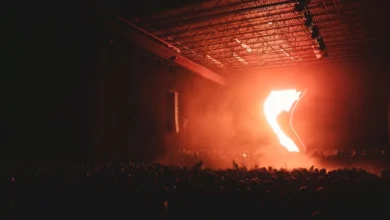
The festival typically spans two weekends, drawing hundreds of thousands of attendees from over 200 countries, making it a truly international gathering. Beyond the music, Tomorrowland is celebrated for its immersive experience, featuring theatrical performances, culinary delights, and a vibrant community spirit. The Freedom Stage, where Bebe Rexha performed, is known for its impressive indoor structure, often featuring intricate LED screens and sophisticated lighting, providing an intimate yet expansive setting for a diverse range of electronic acts. The 2026 edition, despite being several years away, is already generating buzz, a testament to the festival’s enduring appeal and the anticipation it consistently builds among its global fanbase. The festival’s commitment to delivering unparalleled experiences, year after year, ensures its place at the pinnacle of the global festival circuit.
Navigating External Challenges: Wildfire Risk and Festival Adaptations
The 2026 edition of Tomorrowland, specifically during its second weekend, has faced unforeseen challenges related to environmental conditions. The Belgian government issued a wildfire risk warning, prompting immediate and significant adjustments to the festival’s production plans. In response to this official advisory, Tomorrowland organizers announced that there would be "no large-scale" fireworks and "limited pyrotechnics" during weekend two.
This decision, while necessary for public safety and environmental protection, represents a notable alteration to the traditional Tomorrowland experience. Fireworks displays and pyrotechnic effects are integral components of the festival’s spectacular visual identity, particularly during headline sets and the grand finales. The absence of large-scale pyrotechnics requires organizers to innovate and find alternative ways to maintain the visual grandeur and celebratory atmosphere that attendees have come to expect. This situation underscores the increasing impact of climate change and environmental concerns on large-scale outdoor events, forcing organizers worldwide to adapt their planning and production strategies to prioritize safety and sustainability. The festival’s swift and responsible action in adhering to government warnings demonstrates a commitment to attendee welfare and environmental stewardship, even when it means adjusting core elements of the show. Despite these adjustments, the festival proceeded with its full musical lineup, ensuring that the spirit of Tomorrowland continued to thrive.
Broader Implications and The Future of Festival Performances
Bebe Rexha’s Tomorrowland debut, guided by the seasoned hand of David Guetta, carries several significant implications for her career and the broader music industry. It further solidifies her position as a versatile artist capable of transcending genre boundaries, proving that pop stars can not only perform but also thrive within the high-energy demands of an EDM festival. This successful integration could pave the way for more pop artists to embrace similar opportunities, further blurring the lines between traditionally distinct musical genres.
For Bebe Rexha, this performance marks a strategic move that expands her audience base and artistic credibility within the electronic music community. Her willingness to adapt her performance style and embrace the rigorous demands of a dance festival, coupled with Guetta’s endorsement, elevates her status beyond a conventional pop act. It showcases her as an artist who respects the nuances of different musical cultures and is committed to delivering authentic experiences to diverse audiences.
The collaboration also highlights the enduring power of mentorship in the music industry. David Guetta’s guidance was not merely a casual suggestion but a strategic blueprint, demonstrating how experienced artists can shape the trajectory of emerging talents, particularly when navigating new performance territories. This dynamic underscores the value of intergenerational collaboration and knowledge transfer in an ever-evolving musical landscape.
Furthermore, Tomorrowland’s response to the wildfire risk serves as a poignant reminder of the external factors increasingly influencing large-scale events. As climate change continues to impact weather patterns globally, festival organizers will face growing pressures to implement sustainable practices and adapt production elements to prioritize safety. This incident may set a precedent for future festivals to reassess their environmental impact and emergency protocols, leading to more resilient and adaptable event planning strategies across the industry.
In conclusion, Bebe Rexha’s high-energy debut at Tomorrowland, meticulously crafted under David Guetta’s "pure energy" mandate, represents a significant milestone. It not only showcased her artistic versatility and commitment to an electrifying performance but also underscored the evolving dynamics of genre crossover, the invaluable role of mentorship, and the critical importance of adaptability in the face of environmental challenges in the global festival circuit.
Related posts: