Elanor Moss Unveils the Intimate Mechanics of Her Acclaimed Debut Album The Knife, The Needle in Exclusive Track-by-Track Breakdown

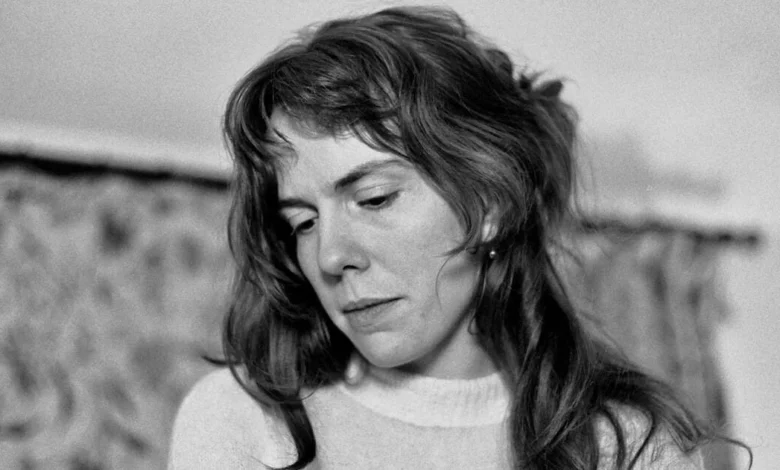
The contemporary British folk and singer-songwriter landscape has seen a notable resurgence of confessional, introspective artistry in recent years. Within this crowded field, emerging artists must demonstrate a distinct perspective to capture the attention of critics and listeners alike. Last month, British singer-songwriter Elanor Moss achieved this distinction with the release of her debut full-length studio album, The Knife, The Needle, issued via Merge Records. The record has quickly established itself as a critical darling, drawing widespread praise for its rare combination of restrained emotional expression and searing lyrical intensity. Following the remarkable critical reception of the album, Moss has offered an exclusive, in-depth track-by-track guide detailing the creative genesis, thematic underpinnings, and collaborative efforts that shaped her first major LP.
Critical Acclaim and the Evolution of Moss’s Artistry
Upon its release, The Knife, The Needle immediately resonated with reviewers and audiences, building upon the foundational success of her two preceding extended plays. Critics have noted a distinct maturation in Moss’s songwriting, observing that her lyricism has grown significantly more refined while delivering a harder emotional impact. Reviewers have highlighted her ability to dissect complex human vulnerabilities with surgical precision, likening her songwriting methodology to the careful application of a scalpel.
Where many contemporary indie-folk releases rely on vague generalizations or generalized poetic tropes, Moss anchors her compositions in stark, concrete imagery. The recurring metaphors of the knife and the needle serve not merely as stylistic devices, but as structural pillars that connect disparate narratives of loss, healing, and interpersonal complexity. This sophisticated approach to lyricism has elevated Moss above many of her contemporaries, marking her as a formidable new voice in the UK singer-songwriter tradition.
The Genesis of The Knife, The Needle: Production and Methodology
The artistic integrity of The Knife, The Needle is due in no small part to its uncompromising recording process. With the exception of the album’s concluding track, Moss and her ensemble recorded the entire record live to analog tape, confining the tracking sessions to a rigorous two-and-a-half-day window at Middle Farm Studios. This methodology required all musicians to perform simultaneously in the same physical space, effectively eliminating the safety net of digital editing and multi-track overdubbing.
For Moss, this high-pressure environment served a thematic purpose. By laying bare the imperfections and spontaneous nuances of live performance, the recording medium mirrored the record’s overarching themes of vulnerability and emotional transparency. Rather than attempting to polish away the acoustic flaws inherent in live-to-tape recording, Moss and her collaborators embraced these moments as authentic components of the musical dialogue. The resulting sound is organic, breathing, and remarkably intimate, placing the listener directly inside the room with the performers.
A Track-by-Track Examination of the Album
Fixer
The creative catalyst for the entire album began at Moss’s kitchen table with the composition of "Fixer." Unlike her typical, more protracted songwriting process, this track materialized in a single sitting. The song serves as a direct thematic successor to an earlier, discarded composition titled "The Knife," which utilized a similar metaphorical framework but failed to reach a satisfying narrative conclusion. By transforming the knife metaphor into a needle, Moss shifted the emotional core of the composition toward a more hopeful and authentic resolution. This breakthrough provided a unifying throughline for the entire record. The track’s stark emotional appeal was further elevated by Matthew Herd’s careful string arrangements, which were designed to serve the core narrative without overpowering Moss’s vocal delivery.
Again, My Love
In contrast to the rapid composition of "Fixer," "Again, My Love" developed through a much more protracted and deliberate process. Moss spent considerable time experimenting with the underlying chord progression and fingerpicking pattern before locking in the verse melody. The song remained structurally incomplete for months until the emergence of a distinctive "doo do doo" vocal refrain unlocked the pathway into the subsequent movement. While frequently misinterpreted by listeners as a romantic break-up song, Moss clarifies that the composition addresses loss in a much broader sense—encompassing the fading of past selves, the dissolution of identity, and the mourning of unfulfilled life trajectories. She compares the song’s thematic progression to the cyclical nature of the seasons, where the starkness of autumn and winter inevitably clears the ground for new growth in the spring.
Sarah Waiting in the Car
Operating essentially as a musical short story, "Sarah Waiting in the Car" underwent a similarly extended development period. Moss focused heavily on capturing the psychological cycles inherent in unhealthy relationships, specifically exploring the mechanisms that keep individuals tethered to volatile environments. Eschewing explicit moral judgment, Moss deliberately constructed the narrative to place the listener directly into the perspective of the speaker. The song highlights the cognitive dissonance of domestic conflict, focusing on moments where the arrival of morning light temporarily dispels the trauma of the preceding night, leaving participants suspended in uncomfortable uncertainty.
Improvisation
Serving as an instrumental interlude, "Improvisation" emerged from a spontaneous studio collaboration. Moss brought a basic chord structure and a single melodic line to the tracking session, humming the motif to saxophonist Matthew Herd and inviting the ensemble to build upon it organically. The resulting piece offers a cyclical blend of light and dark textures. The recording process for this track yielded a serendipitous technical anomaly: an unexpected malfunction in the analog tape machine caused the playback speed to fluctuate erratically, resulting in uncorrectable microtonal key changes. Rather than scrapping the take, the artists recognized that the warped tape quality enhanced the eerie, shifting atmosphere of the piece, ultimately securing its place on the final tracklist.
You Are Coming Home Tonight
"You Are Coming Home Tonight" originated from a single line of lyric and melody that remained dormant for months before the remainder of the song arrived in a sudden burst of inspiration. While the biographical origins of the track were opaque to Moss during its composition, hindsight revealed clear connections to her life circumstances at the time, demonstrating how fictional narrative can frequently articulate emotional truths more accurately than direct reportage. The sparse arrangement provides ample sonic space for Moss’s vocal delivery, emphasizing the raw, plaintive pain embedded within the performance.
Secrets of the Universe
Rooted initially in poetry rather than musical composition, "Secrets of the Universe" began as a standalone text. When Moss eventually applied a simple guitar accompaniment, the resulting friction produced a hesitant, tentative rhythm that mirrored the psychological reservations expressed in the lyrics. The song addresses the courage required to pursue emotional intimacy despite underlying fear. Notably, the concluding resolution—featuring the striking line, "what I thought was a wall was a door"—was an organic discovery made during the writing process itself. As the most directly autobiographical track on the album, it achieved a poignant milestone when played for its subject, Moss’s current partner.
Clothes in a Hotel Sink
Perhaps the most heavily revised track on the album, "Clothes in a Hotel Sink" nearly faced omission from the final tracklist. During a trip to New York, Moss shared the early version of the song with fellow artists Christian Lee Hutson and Maya Hawke, expressing dissatisfaction with its trajectory. Following their advice, Moss simplified the underlying chord progressions to give the track a more immediate, country-leaning aesthetic. Encouraged by her collaborators, she also exercised rigorous editorial discipline, excising an entire verse to ensure every remaining line justified its inclusion. Bolstered by Reid Jenkins’s versatile fiddle arrangements, the finished track successfully evokes the intimate atmosphere of an internal monologue penned from a lonely hotel room.
Louise
Born out of a three-day residency at Peter Miles’s Middle Farm Sessions—an exercise designed to encourage artistic surrender by recording unreleased material live to tape within a strict two-hour window—"Louise" represents the pinnacle of Moss’s spontaneous methodology. Arriving at the retreat without pre-composed material, Moss drew upon contemporary discussions among the resident musicians regarding family dynamics and generational trauma. Written from her own perspective and addressed to her grandmother, the song functions as an exploration of familial forgiveness and empathy.
The Way That it Feels
As the final composition written for the record, "The Way That it Feels" synthesizes the broader thematic arcs of the album. Guided by the intuitive writing principles outlined by author George Saunders in his work on short story composition, Moss allowed the song to emerge organically by following a persistent vocal instinct. The resulting track captures the profound realization of knowing an individual while simultaneously recognizing the vast, unknowable depths of human experience.
Broader Impact and Upcoming Live Performances
The release of The Knife, The Needle marks a significant milestone in Elanor Moss’s burgeoning career, establishing her as a vital new voice in contemporary British folk and indie music. By coupling uncompromising analog production methods with deeply vulnerable, sharply observed lyricism, Moss has crafted a debut statement that demands careful, repeated listening.
To support the release of the album, Elanor Moss and her band will embark on an extensive headline tour across the United Kingdom, bringing the intricate arrangements and raw emotion of The Knife, The Needle to live audiences this autumn.
Elanor Moss Live Tour Dates
Thu. Oct. 1 – Glasgow, UK @ The Poetry Club
Fri. Oct. 2 – Leeds, UK @ The Attic
Sat. Oct. 3 – Manchester, UK @ Low Four Studio
Sun. Oct. 4 – Stroud, UK @ The Prince Albert
Tue. Oct. 6 – Birmingham, UK @ Hare & Hounds
Wed. Oct. 7 – Bristol, UK @ The Jam Jar
Thu. Oct. 8 – Cardiff, UK @ Chapter Arts Centre
Fri. Oct. 9 – Oxford, UK @ Common Ground
Sat. Oct. 10 – Ashburton, UK @ Field System
Sun. Oct. 11 – Brighton, UK @ The Folklore Rooms
Thu. Dec. 3 – London, UK @ Cecil Sharp House
Tickets and further tour information are available via official artist channels.
Related posts: