Smokey Robinson Legal Strategy Undergoes Major Shifts Amid Ongoing Sexual Assault Civil Litigation

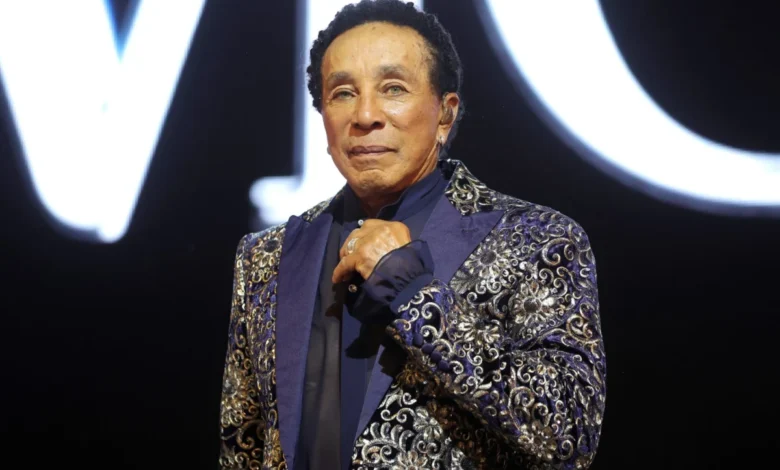
The legal defense of Motown icon Smokey Robinson has entered a period of significant volatility as the 86-year-old music legend prepares to face a high-stakes civil trial in October 2027. Court records from Los Angeles County indicate that Robinson has retained three separate legal counsel teams within the last three months, signaling a frantic effort to stabilize his defense against a $50 million lawsuit that accuses him of orchestrating a systemic pattern of sexual abuse against household employees at his Los Angeles estate.
The litigation, which first surfaced in May 2025, involves allegations from four original plaintiffs who claim they were subjected to sexual assault during their tenure as housekeepers between 2007 and 2024. As the case has expanded to include additional plaintiffs—a second female housekeeper and a male car mechanic—the complexity of the evidentiary requirements and the intensity of public scrutiny have seemingly placed a profound strain on Robinson’s legal representation.
A Chronology of Legal Flux
The instability of the singer’s defense team began in earnest following the departure of high-profile attorney Christopher Frost. Frost, who has represented industry titans such as Berry Gordy and prominent figures like Dave Navarro, had been the primary architect of Robinson’s initial response to the allegations. His exit in June 2026, for reasons that remain undisclosed, marked the first major pivot in the case.
Following Frost’s departure, Robinson enlisted the services of David Kenner, a formidable criminal defense attorney known for his work with high-profile clients such as Suge Knight and rapper Pras Michel. Kenner’s tenure, however, proved remarkably brief. By August 2026, Kenner filed a formal motion to withdraw as counsel, citing a "breakdown in the attorney-client relationship." Such motions are often indicative of fundamental disagreements regarding trial strategy, communication hurdles, or irreconcilable differences in the management of complex civil litigation.
The appointment of Anahita Sedaghatfar on September 15, 2026, represents the third attempt by the Robinson camp to secure a cohesive legal strategy. Sedaghatfar, whose previous experience includes litigation for a diverse roster of entertainment and sports figures—including the group New Edition and television jurist Judge Greg Mathis—has stepped into the role with a mandate to prepare for a trial that remains over a year away.
The Scope of the Allegations
The civil lawsuit at the center of this turmoil alleges that Robinson engaged in a series of predatory behaviors over a nearly two-decade period. The plaintiffs, who are currently litigating anonymously, have asserted that their employment conditions were defined by a hostile environment where their vulnerability as household staff was exploited. The complaint extends to Frances Robinson, the singer’s wife, who is named as a co-defendant for allegedly facilitating and enabling the environment that permitted the purported abuse to continue.
The claims against Robinson are not limited to the original four housekeepers. The inclusion of additional staff members, including a male employee, has widened the narrative of the case, shifting it from a localized dispute to an institutionalized allegation of misconduct. For a figure of Robinson’s stature, whose legacy is built on the foundation of Motown’s cultural impact, these allegations strike at the core of his public image.
Defense Counter-Offensive and Judicial Setbacks
Robinson has maintained a posture of total innocence throughout the proceedings. In his initial public statements, he dismissed the litigation as a "vile" and "false" attempt to leverage his wealth for personal gain. This defensive stance materialized in a countersuit filed by the singer against his accusers, alleging defamation and further claiming that the plaintiffs had engaged in illicit activities, including the deletion of digital evidence and the theft of property from the Robinson home.

However, the legal path for the defense has not been without significant setbacks. A judge dismissed Robinson’s defamation counterclaims earlier this year, citing a lack of sufficient evidence to sustain the allegations of a coordinated smear campaign. While Robinson has moved to appeal this decision, the dismissal serves as a notable hurdle for his legal team, which now faces the difficult task of defending against the primary sexual assault claims without the benefit of a successful countersuit.
The Parallel Criminal Investigation
Beyond the civil courtroom, the situation remains precarious due to an ongoing criminal investigation by the Los Angeles County Sheriff’s Department. While civil litigation operates under a "preponderance of the evidence" standard—a lower threshold than the "beyond a reasonable doubt" standard required in criminal court—the existence of a concurrent police investigation adds a layer of extreme risk to the defendant.
To date, no criminal charges have been filed by the District Attorney’s office. Nevertheless, the investigative process often involves the collection of evidence that can later be subpoenaed for civil discovery. The interplay between the civil and criminal proceedings is a critical factor for any legal team; statements made in depositions for the civil lawsuit could potentially complicate or contradict future testimonies if criminal charges were to be brought.
Broader Implications and Industry Impact
The high turnover rate in Robinson’s legal representation raises broader questions about the challenges inherent in defending public figures against #MeToo-era allegations. Legal analysts note that cases of this magnitude require not only courtroom expertise but also a robust crisis management strategy that can navigate the intersection of social reputation and judicial proceedings.
"When an attorney withdraws due to a breakdown in the relationship, it often signals a divergence in how the client wants to be perceived versus the legal reality of the evidence," says one independent legal observer. "In cases involving high-net-worth individuals and serious allegations of misconduct, the pressure on legal teams to balance a public denial with the realities of the discovery process is immense."
For the entertainment industry, the case serves as a reminder of the evolving standards regarding employer liability and the treatment of service staff in private residences. The trial, slated for October 2027, is expected to be a watershed moment that will force a public accounting of the evidence, regardless of the previous legal maneuvers.
The Road to 2027
As Anahita Sedaghatfar takes the reins, her objective is to consolidate the defense and prepare for a rigorous discovery process. In a statement following her court appearance, she emphasized that the shifting of attorneys is a common occurrence in long-term, high-stakes litigation, suggesting that the defense remains unified in its strategy of denying all allegations.
"My clients unequivocally deny the allegations," Sedaghatfar stated. "I look forward to presenting the facts, addressing the evidence, and vigorously advocating on their behalf."
As the case moves toward trial, the focus will likely shift to the authentication of digital evidence, the credibility of the witnesses, and the testimony of the various household staff who worked at the residence. With the legal team now on its third iteration, the primary challenge for the defense will be to maintain consistency in its arguments and to successfully navigate the scrutiny of a court system that is increasingly focused on the veracity of the accounts provided by both sides. The upcoming months will be crucial as both the prosecution and the defense prepare for what promises to be one of the most high-profile civil trials in the music industry’s recent history.
Related posts: