The late John Andrew Wilkinson, universally known as Wilko Johnson, remains one of the most distinctive and influential figures in the history of British rock and roll. Emerging from Essex in the post-war musical explosion of the 1960s and 1970s, Johnson carved out a musical identity that defied conventional guitar playing conventions. His idiosyncratic style combined high-velocity rhythms, fingerstyle attack, minimalist gear, and an intensely manic stage presence that bridged the gap between classic rhythm and blues and the burgeoning punk rock movement. To understand how Johnson constructed his singular sonic blueprint, one must examine the foundational elements that set him apart from his contemporaries.
Early Influences and the Genesis of a Style
Born in 1947, Johnson grew up during a transformative era for popular music. Like many teenagers of his generation, his aspirations were catalyzed by the arrival of television broadcasts featuring The Shadows, a band that introduced British audiences to the possibilities of the electric guitar as a lead instrument. However, the definitive catalyst for Johnson’s signature technique was Mick Green, the dynamic guitarist for Johnny Kidd & The Pirates. Green’s pioneering approach—simultaneously playing rhythm and lead parts to fill the soundscape of a three-piece band—left an indelible mark on the young musician.
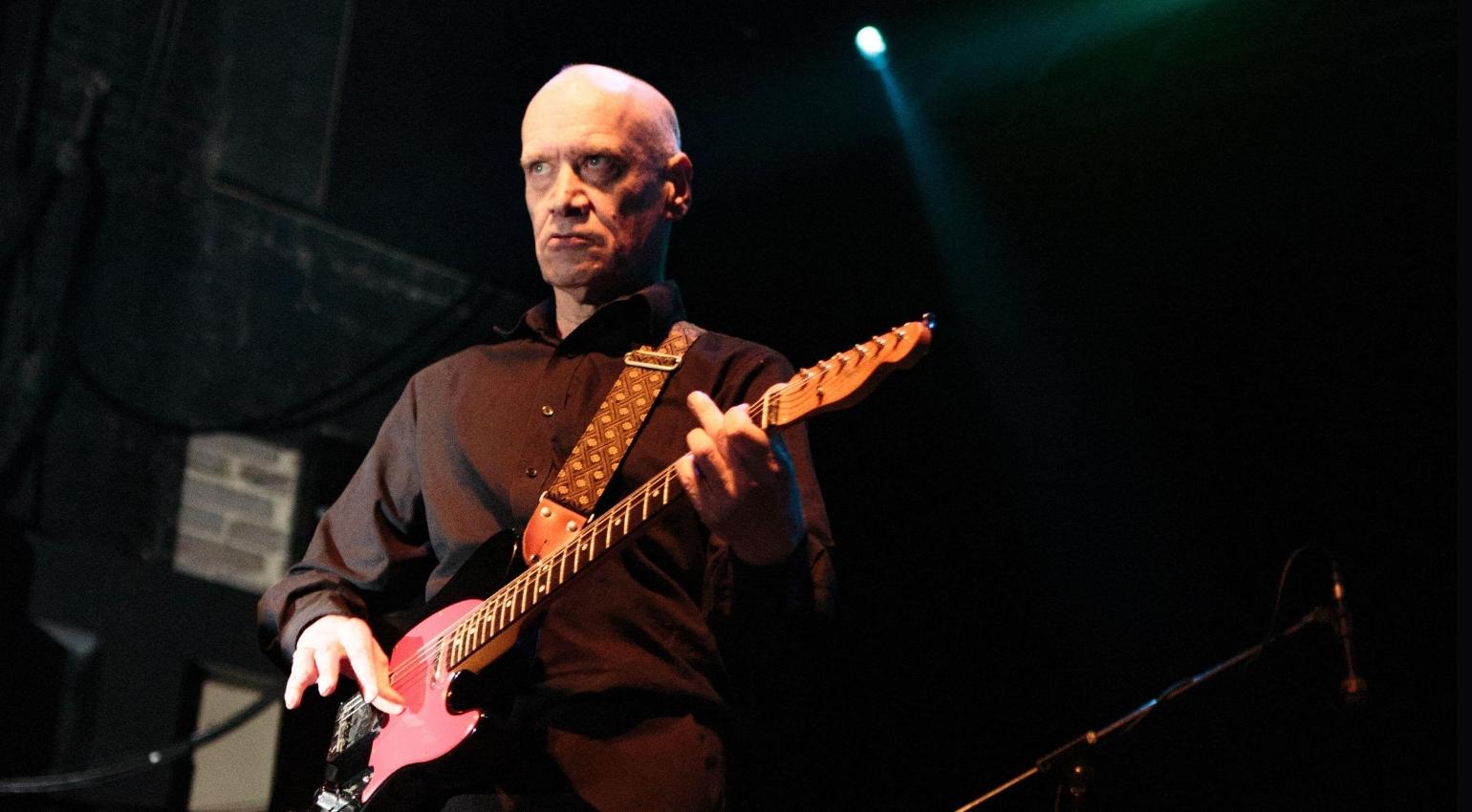
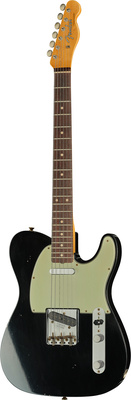
In 1965, Johnson acquired his primary instrument of choice: a Fender Telecaster purchased for ninety pounds, a sum equivalent to well over fifteen hundred pounds in modern currency. This modest acquisition would become an extension of his physical self. Rather than relying on heavy signal processing, cascading effects pedals, or complex amplification rigs, Johnson demonstrated that maximum impact could be achieved through raw technique, a couple of foundational chords, and absolute commitment to performance.
The Fingerstyle Revolving Pattern
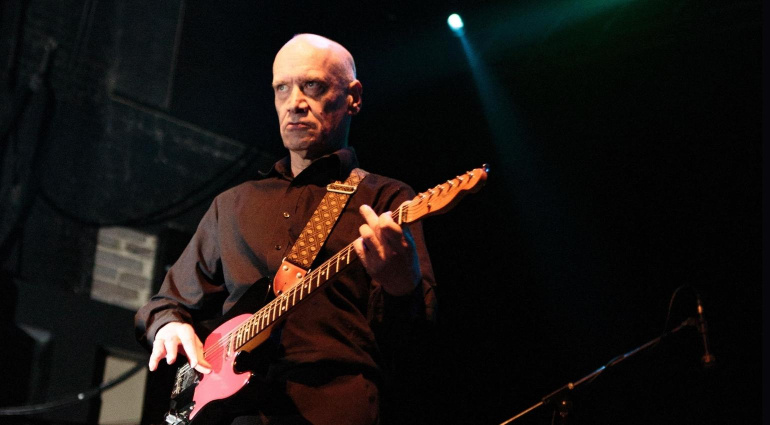
One of the most striking anomalies of Wilko Johnson’s playing is that he completely eschewed the use of a traditional plectrum. Listeners encountering Dr Feelgood’s high-energy studio tracks or incendiary live performances are invariably met with aggressive, rapid-fire riffs and driving chords, yet no pick is involved.
Unlike traditional fingerstyle techniques commonly found in folk or country traditions, which typically utilize fixed finger-picking patterns, Johnson employed a relentless, continuous revolving motion with his right hand. He described this mechanism as a constant down-up, down-up cycle. The true complexity of this method lay in how he struck individual notes within rapid pentatonic licks using his bare fingers, while simultaneously dampening adjacent strings between strokes. This physical approach required immense stamina and precision, effectively turning his right hand into both a rhythm engine and a lead-generating hammer.
Inverted Barre Chords and Muting Mechanics

Johnson’s approach to left-hand harmony was equally unorthodox. Eschewing standard open-position chord structures, he favored inverted barre chord shapes—specifically utilizing the lower half of a barre chord, a configuration also famously championed by Jimi Hendrix. Johnson characteristically played from the D string downward, capturing the root note, major third, perfect fifth, and duplicating the root on the high E string.
This concise voicing served a dual purpose. First, it provided the essential harmonic ingredients of a chord without the sonic mud associated with lower register crowding. Second, it allowed Johnson to execute instantaneous string dampening by simply lifting his fretting fingers off the fretboard while maintaining light contact with the strings. Combined with strategic hammer-ons and fluid movement across the minor pentatonic scale, this method produced the percussive, staccato attack that defined mid-seventies British pub rock.
Dr Feelgood and the Pub Rock Phenomenon
The vehicle through which Johnson first achieved widespread acclaim was Dr Feelgood, a gritty, hard-driving rhythm and blues band formed on Canvey Island in Essex. Emerging in the early 1970s when progressive rock and grandiose glam were dominating the commercial charts, Dr Feelgood offered a stripped-down, rough-and-ready antidote. Clad in matching black suits and channeling a menacing, cinematic aesthetic heavily influenced by classic crime cinema and The Shadows’ disciplined stage blocking, the band was a masterclass in taut musicianship.
Tracks like Roxette, featured on their debut album, perfectly encapsulated Johnson’s methodology. The song relies on simple harmonic movements—such as a minor third hammer-on resolving to a major third, punctuated by a sharp G chord stab—yet generated an intensity that galvanized live audiences. Similarly, their high-octane overhaul of Chuck Berry’s Route 66 retained little of the original arrangement beyond the foundational I-IV-V blues progression and lyrics, completely reinvented through Johnson’s ferocious tempo and percussive phrasing.
Despite achieving critical and commercial success, including topping the UK album charts with their 1976 live release Stupidity, internal tensions led to Johnson’s departure from Dr Feelgood in 1977 during the recording sessions for their fourth studio album.

Post-Dr Feelgood Ventures and Cultural Legacy
Following his exit from Dr Feelgood, Johnson continued to cultivate a respected career, forming the Wilko Johnson Band and later collaborating with artists such as Ian Dury and The Blockheads, whose rhythmically complex and lyrically dense style proved an ideal match for Johnson’s sharp guitar work. His cultural footprint extended far beyond the confines of the music industry; in later years, he reached a global audience of a different demographic through his critically praised acting debut as the mute executioner Ilyn Payne in the HBO fantasy series Game of Thrones.
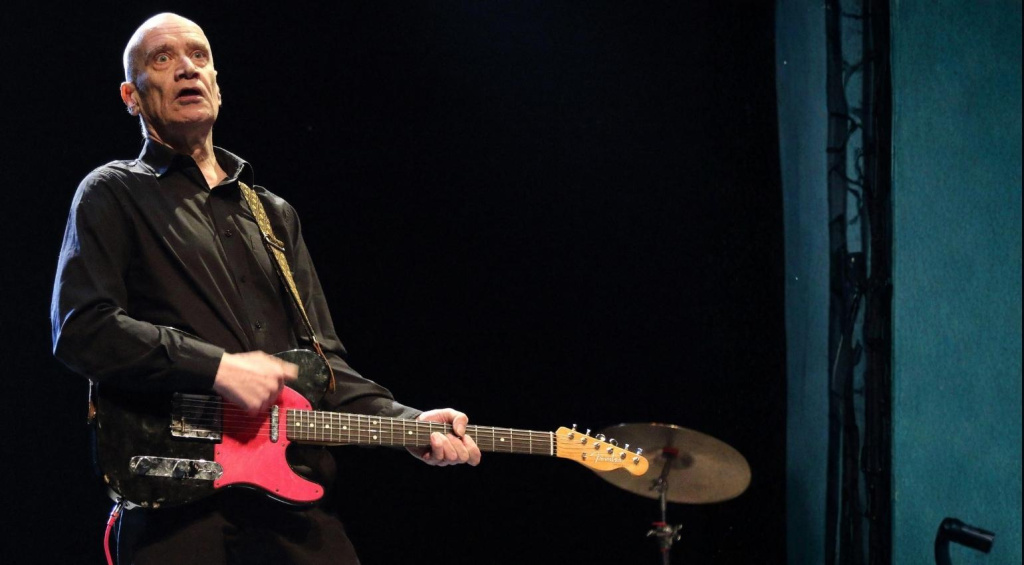
Throughout his career, Johnson remained fiercely loyal to his equipment philosophy. The "Wilko Tele"—distinguished by its black finish and distinctive red pickguard—alongside backup models and occasional exploratory forays into Stratocasters and humbucker-equipped guitars, constituted his entire arsenal. For Johnson, gear was strictly functional, famously remarking that he barely noticed the instrument once the performance began.
Broader Impact and Implications for Modern Guitarists
Wilko Johnson passed away in November 2022 at the age of seventy-five, leaving behind a legacy that continues to resonate across generations of musicians. Musicologists and contemporary guitar historians frequently study his technique as a masterclass in economy, rhythm, and stagecraft. Long before the punk explosion of 1977 codified fast, aggressive, minimalist rock, Johnson proved that technical proficiency did not require virtuosic excess or massive pedalboards.
His influence is directly traceable through the explosion of British punk and new wave acts, many of whom adopted his frantic energy and economic guitar arrangements. By demonstrating that rhythm and lead playing could occupy the exact same physical space simultaneously, Johnson expanded the vocabulary of the electric guitar. Today, his work stands as an enduring blueprint for players seeking maximum sonic impact with minimal apparatus, cementing Wilko Johnson’s status as an immutable titan of modern rock and roll.