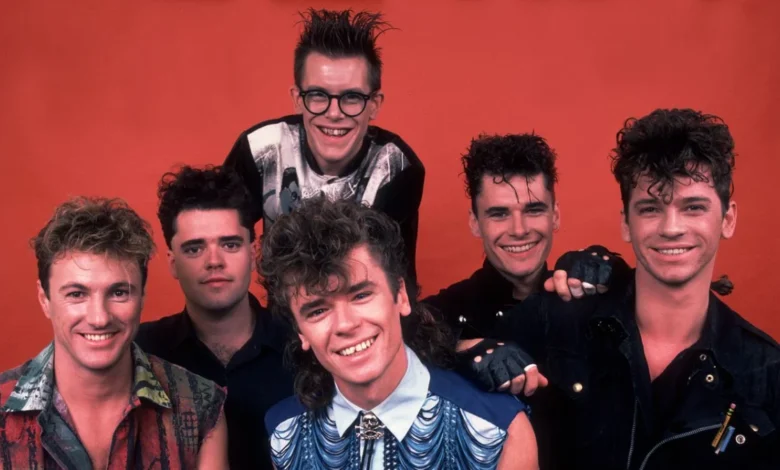
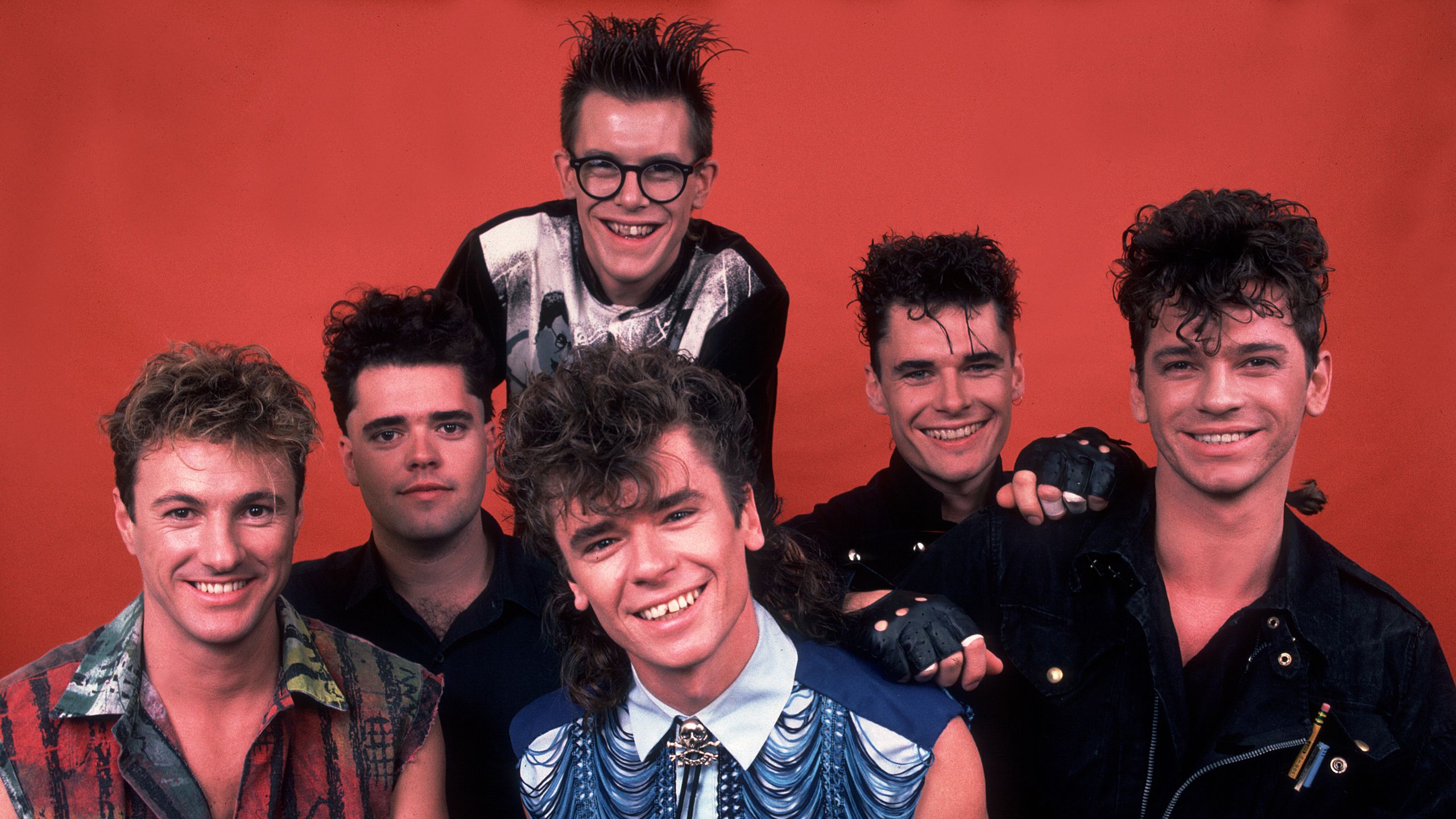
In the bustling metropolis of Los Angeles in 1984, a seemingly mundane performance by the Australian rock band INXS at the iconic Palladium became the unlikely crucible for their most significant global success. While the band had begun to carve out a niche for themselves in the American music scene, with singles like "Original Sin" (produced by the legendary Nile Rodgers) and its parent album, "The Swing," achieving modest recognition, the trajectory of their career was about to be dramatically altered by a chance encounter with a discerning producer. This pivotal moment, born from an unusual on-stage observation, would ultimately pave the way for their magnum opus, "Listen Like Thieves."
Hailing from Australia, INXS had been steadily building momentum in the international music arena throughout the early to mid-1980s. Their distinctive blend of rock, funk, and new wave, fronted by the charismatic Michael Hutchence, had resonated with audiences worldwide. By 1984, they were no longer newcomers, but a band with a growing discography and a solid reputation for electrifying live performances. However, their studio recordings, while well-received, had not yet fully captured the raw energy and sonic power that defined their stage presence. This perceived gap would soon be identified and addressed by a producer whose unconventional methods proved to be remarkably effective.
A Producer’s Unconventional Audition: The 1984 Palladium Incident
Andrew Farriss, the band’s principal songwriter and keyboardist, recounted the peculiar events of that fateful night in Los Angeles to MusicRadar. "In 1984 we played at the Palladium in Los Angeles," Farriss recalled. "It was a good gig. There were 4000 people there. And right in the middle of the gig I see this bloke walking around on the stage as we’re playing."
The sight of an unknown individual casually traversing the stage while INXS was in full performance mode was understandably perplexing and even disconcerting for the band and their crew. "I’m looking around at our crew guys, like, ‘What the hell is going on?’" Farriss continued. "And all the while this bloke is walking around all over the stage, behind our gear, looking at the amps, everything."
This unusual intrusion, though disruptive, was met with a degree of professional restraint by the band, who focused on completing their set. The mysterious figure eventually retreated from the stage, and the concert concluded without further incident. The curiosity, however, lingered.
The Revelation Behind the Intrusion
Backstage, after the adrenaline of the performance had subsided, the man who had so boldly occupied their stage introduced himself. He was Chris Thomas, an esteemed English record producer with an impressive portfolio that included groundbreaking work with artists such as Roxy Music, Pink Floyd, the Sex Pistols, The Pretenders, Wings, Pete Townshend, and Elton John. Thomas was renowned for his ability to capture the essence of a band’s sound and translate it into compelling studio recordings.
Farriss, still intrigued by the earlier events, seized the opportunity to inquire about Thomas’s peculiar on-stage reconnaissance. "When Chris introduced himself to us I said, ‘Why were you walking around on stage?’" Farriss asked. Thomas’s response was direct and insightful: "I don’t think anyone’s actually ever recorded your band properly."
This statement, coming from a producer of Thomas’s caliber, was initially met with a touch of skepticism by the seasoned musicians. Farriss, reflecting on their journey up to that point, retorted, "We were on our fourth album by then. I told him, ‘We’re not exactly on a tricycle here, mate! You know, we’ve done a bit of recording.’"
However, Thomas elaborated on his critique, articulating a nuanced observation that would prove to be the catalyst for INXS’s next evolutionary leap. "But Chris said, ‘When I come and see your band live I’m overwhelmed by what you sound like. You sound just great live. But when I listen to your records there’s something missing. It’s not your songs – it’s the way they’re recorded.’"
Thomas then explained the methodology behind his unconventional "audition." His on-stage perambulation was not an act of disrespect, but a deliberate attempt to dissect the sonic architecture of INXS’s live performance. "So Chris told me what he’d done that night," Farriss explained. "He walked around on stage while we were playing live and he was listening to what we were all doing and looking at what gear we were using, even the monitor speakers."
Farriss acknowledged the unusual nature of this approach, but also recognized its inherent brilliance. "I thought that was a pretty weird thing to do, but that’s part of what makes Chris Thomas so clever. He said to himself, ‘I’m gonna find out what these guys actually sound like.’" This singular insight into the band’s live sound, gained through direct observation and sonic analysis, laid the groundwork for their future collaboration.
The Genesis of "Listen Like Thieves"
Following this pivotal encounter, Chris Thomas was swiftly engaged to produce INXS’s fifth studio album, "Listen Like Thieves," which was recorded at Rhinoceros Studios in Sydney. The recording sessions commenced in August 1985, with a clear mandate from Thomas: to capture the electrifying energy of INXS’s live performances in the studio.
Thomas’s primary concern was replicating the sonic environment that produced their powerful live sound. "When we got in the studio, Chris goes, ‘Where’s the gear that you were using in Los Angeles?’" Farriss recalled. "We said, ‘Well, it’s in Los Angeles.’ And he goes, ‘I want to get that gear here.’" This demonstrated Thomas’s commitment to authenticity, recognizing that the specific equipment played a crucial role in their sound. When direct replication proved impractical, the band and Thomas focused on recreating the sonic landscape as closely as possible.
Thomas’s innovative approach extended beyond mere equipment. He challenged the conventional studio practice of isolating each musician. "Most recording studios try to isolate all the musicians from each other," Farriss explained. "But instead of that he got us all to play together, exactly like we play live." This collaborative recording method was a stark departure from typical studio protocols, which often involved overdubbing individual parts. By having the band perform as a cohesive unit, Thomas aimed to imbue the album with the spontaneity and interplay characteristic of their live shows.
Farriss aptly summarized the unique nature of the recording process: "So in a really weird way, Listen Like Thieves is one of the greatest live albums that wasn’t played live. We just set up our gear with the wedges, like we were playing live, and we recorded everything live as much as possible." This emphasis on live performance dynamics, coupled with Thomas’s production expertise, proved to be a winning formula.
The Album’s Monumental Impact and Critical Acclaim
Released in October 1985, "Listen Like Thieves" was a resounding commercial and critical success, solidifying INXS’s status as a global phenomenon. The album charted at number 11 on the US Billboard 200 and reached the top 50 in the United Kingdom, marking a significant step up from their previous releases. The album’s success was driven by a string of hit singles that showcased the band’s refined sound and undeniable songwriting prowess.
The lead single, "What You Need," was a massive hit, soaring to number 5 on the Billboard Hot 100 and becoming one of the band’s signature songs. Other notable singles lifted from the album included "This Time," "Kiss the Dirt (Falling Down the Mountain)," and the title track, "Listen Like Thieves." These tracks, imbued with the raw energy of their live performances and polished by Thomas’s production, captivated audiences worldwide.
The album’s impact resonated deeply within the music industry. Andrew Farriss proudly shared a testament to its enduring legacy: "Giles Martin, George Martin’s son, said that Listen Like Thieves is his favourite album of all time." This high praise from the son of a legendary producer like George Martin (known for his work with The Beatles) underscored the album’s significant artistic merit and its profound influence on subsequent generations of musicians.
Broader Implications and Legacy

The success of "Listen Like Thieves" marked a crucial turning point for INXS. It propelled them from a respected band with a strong following to a bona fide international act capable of filling stadiums and topping charts globally. The album’s sonic innovation, achieved through Chris Thomas’s unconventional yet brilliant approach, set a new benchmark for live-sounding studio recordings. It demonstrated that capturing the raw energy of a live performance was not only possible but could also be a key ingredient in achieving mainstream success.
The story of "Listen Like Thieves" serves as a compelling case study in artistic collaboration and the importance of embracing unconventional methods. Chris Thomas’s keen ear and willingness to challenge the status quo allowed INXS to tap into their full potential, transforming their powerful live presence into an equally potent studio album. This collaboration not only redefined INXS’s sound but also left an indelible mark on the landscape of popular music, proving that sometimes, the most unexpected detours can lead to the greatest destinations. The album’s enduring popularity and its continued presence in playlists and retrospectives are a testament to its timeless appeal and the remarkable journey that began with a producer’s curious stroll across a Los Angeles stage.