Ed Sheeran Drops B-Stage at Philadelphia Show, Citing Safety Fears After Tumultuous Macklemore Controversy

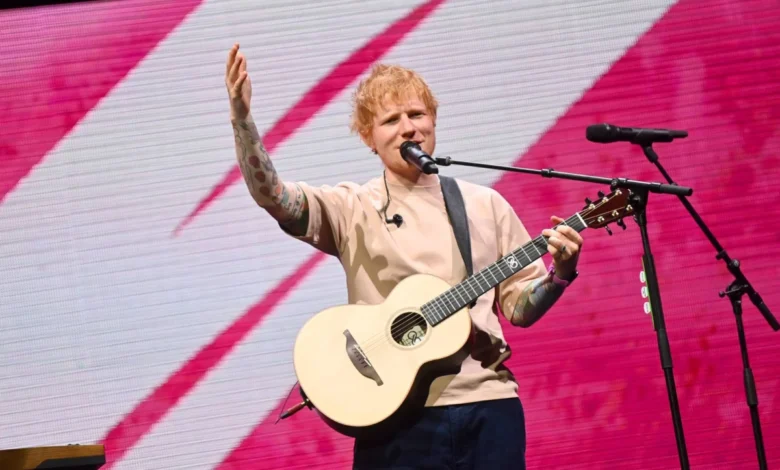
British singer-songwriter Ed Sheeran delivered an emotionally charged performance at Philadelphia’s Lincoln Financial Field, taking the stage for his first live concert since a massive political controversy engulfed his ongoing tour. Addressing a crowd of 50,000 supporters, Sheeran made the unprecedented decision to remove his signature B-stage from the production setup, openly admitting he feared for his safety and was uncertain how the audience would react in the wake of intense public scrutiny, venue cancellations, and widespread industry fallout.
The concert marked a turbulent return to the road for the "Loop" tour following a week defined by fierce debates over freedom of speech, political expression, and the ongoing Israel-Gaza conflict. Standing alone on the main stage, Sheeran reflected on the overwhelming pressure of the preceding days, offering insights into the complex decisions that led to the stripping back of his usual arena-scale production.
The Removal of the B-Stage and Safety Concerns
During a poignant moment in the concert, Sheeran paused his set to address the audience directly regarding the physical layout of the performance. The B-stage, a standard fixture of his current tour, typically allows the artist to travel away from the primary stage and perform from a secondary platform positioned deep within the crowd, creating an intimate, immersive atmosphere surrounded by fans.
However, on this evening, that infrastructure was entirely absent. "At this point in the show, to be honest, I usually go out to a B-stage, and I’m going to be totally honest with you, I didn’t know what this audience would be like tonight," Sheeran told the stadium. "I didn’t know if I’d have things thrown at me. I apologise that today is not the usual show. I took the B-stage out because I was afraid of what might happen if I stood in the middle and I will admit that. So, the show is a little bit different."
The candid admission underscored the palpable tension surrounding the event, highlighting how geopolitical flashpoints and cultural controversies can directly impact the physical security and operational realities of live entertainment.
Genesis of the Controversy: Macklemore at MetLife Stadium
The roots of the current crisis trace back to a preceding tour stop at MetLife Stadium in New Jersey, where American rapper Macklemore appeared as a supporting act. During his set, Macklemore delivered an impassioned "Free Palestine" speech and performed his protest track "Hind’s Hall," accompanied by explicit visual projections depicting footage from Gaza.
The performance immediately triggered widespread polarization across the entertainment industry and political spheres. Prominent figures, including pop artist Pink and representatives from the Israeli American Council, voiced strong condemnation of the speech. Meanwhile, venue stakeholders exerted mounting pressure on tour organizers. Robert Kraft, owner of Gillette Stadium, publicly categorized Macklemore’s remarks as deeply offensive and hurtful to the Jewish community.
Facing intense pushback from venue operators who objected to the rapper’s ongoing participation, the Messina Touring Group—the tour’s promoter—made the executive decision to drop Macklemore from the remaining lineup. Sheeran later clarified his position, emphasizing that he was "not complicit" in the removal and asserting that the ultimate decision rested with the promoters and venues rather than himself.
Cascade of Boycotts and Industry Fallout
Macklemore’s dismissal catalyzed a domino effect across the tour’s ecosystem. In solidarity with the rapper and in protest of the suppression of political speech on stage, a wave of supporting acts announced their withdrawal from the tour. Artists including FINNEAS, Lukas Graham, Aaron Rowe, and Beoga pulled out of their scheduled slots. Simultaneously, members of Sheeran’s own backing band elected to depart, leaving the headliner facing significant logistical and professional hurdles just days before major stadium dates.
The situation drew sharp commentary from across the music community. Veteran British musician Billy Bragg publicly criticized the handling of the affair, suggesting that the controversy threatened to tarnish Sheeran’s long-standing career. Bragg later expressed skepticism regarding subsequent actions taken by Sheeran, dismissing attempts to mitigate the backlash through charitable donations as mere deflection from a deeper systemic crisis. Additional statements and critiques poured in from prominent acts including Massive Attack, Roger Waters, Dropkick Murphys frontman Ken Casey, and Hayley Williams, transforming a tour support slot dispute into a broader industry-wide debate over artistic autonomy, censorship, and political expression.
Financial Repercussions and Humanitarian Donations
In an effort to address the fallout, substantial financial maneuvers were initiated by the principal parties involved. Macklemore announced he would donate his entire $1 million earnings generated from the Ed Sheeran tour to six distinct organizations dedicated to supporting Palestinian humanitarian causes.
Concurrently, Robert Kraft revealed that Sheeran had personally requested that he match a $2 million humanitarian contribution aimed at alleviating civilian suffering. Despite these financial interventions, critics argued that philanthropy could not fully resolve the underlying tensions regarding censorship, venue oversight, and the responsibilities of major global artists navigating geopolitical conflicts.
Sheeran’s On-Stage Address: A Delicate Balancing Act
Taking the microphone during the Philadelphia concert, Sheeran delivered a comprehensive speech addressing the convergence of music, politics, and personal accountability. He acknowledged that while he was accustomed to ordinary artistic criticism, the events of the past week forced him to confront matters of profound global significance.
"I’ve tried in my career to not be a political commentator of any kind because I want my music and shows to be about unity, not division, about humanity, not politics," Sheeran explained to the audience. "Pero this is a humanitarian issue, and I cannot hide how I feel about it anymore."
He characterized the October 7, 2023, Hamas-led attacks at the Nova music festival as "horrific," while simultaneously condemning the military response in Gaza. "What is happening in Gaza is catastrophic, unjustifiable, and disproportionate," he stated. "My heart has been broken by the scale of devastation and loss of civilians’ lives, of children’s lives. And the systemic injustice we’re seeing unfold in the West Bank cannot be overlooked."
Furthermore, Sheeran voiced profound apprehension regarding the precedent set by venues demanding pre-approval of performer content. "I am deeply worried about the idea that venues should pre-approve content for performers," he said. "This happens in so many places that I perform around the world, but it should never happen in the free world."
Emotional Climax and Future Implications
As the concert drew to a close, an visibly emotional Sheeran reflected on the psychological toll of the preceding week, describing it as "one of the worst weeks of my life." He confessed to the stadium that he had seriously contemplated whether to continue the tour or even remain in the music industry.
"I really didn’t know whether this tour would carry on, I really didn’t know whether I’d get on stage again, whether I even wanted to be an artist at all," he shared. However, looking out over the sea of attendees, his tone shifted toward gratitude and resolve. "I look at the end of the week, and I see 50,000 people who haven’t abandoned me. People will say what they want, but I’m doing this for you. I will never stop doing this."
The events in Philadelphia illustrate the precarious intersection where modern commercial entertainment meets complex geopolitical realities. As Sheeran presses forward with his "Loop" tour under heightened security and microscopic public observation, the episode serves as a watershed moment for major touring artists, raising difficult questions about freedom of expression, venue jurisdiction, and the capacity of live performance to transcend global divisions.
Related posts: