Opera UnTouched Brings Menotti Classic The Telephone to London Co-Working Spaces Alongside Youth Education Initiative

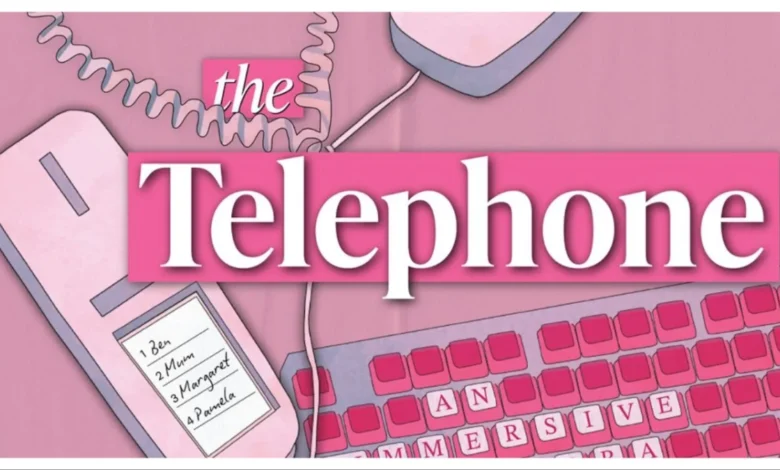
Opera UnTouched, a dynamic contemporary performance company dedicated to redefining classical music boundaries, has announced an innovative upcoming production of Gian Carlo Menotti’s classic comic opera, The Telephone. Scheduled to run this October, the production will break away from traditional theatrical venues, staging performances directly inside shared office spaces and co-working environments across various London neighborhoods. This strategic decision forms the cornerstone of a broader community outreach effort designed to merge modern professional culture with classical lyric theater.
Running at a brisk and engaging 40 minutes, this modern reimagining of Menotti’s 1947 masterpiece aims to resonate with contemporary audiences by highlighting the humorous, often exasperating realities of hyper-connectivity in the digital age. The production features a talented creative team, directed by Valeria Perboni, with musical direction by Adrian Salinero. The intimate cast includes baritone Stephen Whitford in the role of Ben and soprano Grace Watkins, who also serves as the Artistic Director of Opera UnTouched, portraying Lucy.
Beyond the unconventional performance spaces, the autumn tour is heavily anchored by an extensive community education initiative. By partnering with local schools, Opera UnTouched seeks to demystify opera for younger generations, offering students hands-on experience in storytelling, musical composition, and stage performance.
Unconventional Venues: Redefining Where Opera Lives
The choice of venues for The Telephone represents a deliberate effort to reach audiences where they live and work, bypassing the intimidating architecture and often prohibitive ticket pricing associated with traditional opera houses. By transforming everyday corporate and creative co-working spaces into pop-up opera venues, Opera UnTouched is championing accessibility and spatial innovation within the London arts scene.
The tour itinerary includes stops at four prominent London co-working and community hubs:
- Hideaway Streatham
- Patch Twickenham
- Impact Brixton
- Tooting Works
These locations were selected not only for their geographic diversity across South and West London but also for their vibrant community-centric atmospheres. Co-working spaces inherently reflect modern work-life dynamics, making them ideal settings for Menotti’s narrative, which centers on a suitor trying desperately to propose to a woman who is perpetually distracted by her telephone. In an era dominated by smartphones, social media notifications, and constant digital availability, the core themes of The Telephone feel remarkably prescient, translating seamlessly from mid-century satire to contemporary corporate and remote-working environments.
Performance Chronology and Tour Schedule
The London tour is compact, spanning late October, with performances strategically scheduled to capture evening crowds after standard working hours. The chronological lineup for the public performances of The Telephone is as follows:
- October 15: Hideaway Streatham
- October 17: Patch Twickenham
- October 23: Impact Brixton
- October 24: Tooting Works
Doors open in the early evening to allow attendees to transition from their workday environment into a cultural experience without requiring a commute to central London’s West End. This scheduling is intended to attract both regular patrons of the arts and local professionals who might not typically frequent traditional opera houses.
Empowering the Next Generation: The Community Education Project
Running concurrently with the main professional tour is Opera UnTouched’s comprehensive educational outreach program. Designed to foster creativity and artistic confidence among school-aged children, the project embeds professional artists directly into local classrooms.
Participating students are guided through the foundational elements of lyric theater, working collaboratively to write, compose, and stage their own miniature operas. Crucially, these student-led projects are designed to reflect the students’ own lived realities, with narratives typically set within the familiar confines of their school environment.
The educational residency culminates in live performances hosted for an audience of peers, teachers, and family members. This milestone provides young participants with a tangible sense of accomplishment and introduces them to the collaborative nature of the performing arts.
Grace Watkins, Artistic Director of Opera UnTouched and the soprano performing the role of Lucy, elaborated on the philosophy driving the initiative in an official press release issued ahead of the tour.
"Alongside the main tour, Opera UnTouched is delivering an educational project in the communities where we are performing," Watkins stated. "We are working with local schools to lead students in creating their own short operas set within their school environment, culminating in a performance for their peers and families. This initiative introduces young people to opera as an accessible and creative art form, whilst empowering them to tell their own stories through music and performance."
By actively involving students in the creative process, Opera UnTouched hopes to dismantle preconceived notions that opera is an elitist or inaccessible art form. The initiative aligns with broader pedagogical trends emphasizing arts integration, STEAM (Science, Technology, Engineering, Arts, and Mathematics) education, and the development of soft skills such as public speaking, active listening, and teamwork.
Background and Context: Gian Carlo Menotti and The Telephone
Gian Carlo Menotti, an Italian-American composer and librettist renowned for his gift for melodic lyricism and theatrical pacing, originally wrote The Telephone, or L’Amour à trois in 1947. Commissioned by the Ballet Society, the one-act opera premiered at the Heckscher Theater in New York City on February 18, 1947, sharing a double bill with Menotti’s earlier success, The Medium.
The plot of The Telephone is delightfully simple yet rich with comedic potential. Ben visits his beloved Lucy to propose marriage before he catches a train. However, his romantic intentions are repeatedly thwarted by endless interruptions from her telephone calls—ranging from chats with friends to wrong numbers. Realizing he cannot compete with the device for her attention, Ben leaves, only to call her from a payphone outside, successfully using the technology against her to secure her promise of marriage.
While the original mid-century setting featured a rotary telephone attached to a wall, modern adaptations frequently update the technology to smartphones, text messages, and video calls. This adaptability is precisely why The Telephone remains one of the most frequently performed chamber operas in the global repertory. It requires minimal instrumentation—typically a single piano or a small ensemble—and a cast of only two singing actors, making it uniquely suited for touring companies seeking high artistic impact with logistical flexibility.
Fact-Based Analysis: Implications for Urban Classical Music
The strategy employed by Opera UnTouched reflects a wider, necessary evolution within the classical music industry. Post-pandemic arts administration data consistently highlights shifting audience behaviors, with regional and community-based engagement outperforming centralized, large-scale institutional attendance in many urban centers.
By staging productions in co-working spaces, Opera UnTouched achieves several critical objectives:
- Cost-Efficiency and Reduced Overhead: Utilizing existing multi-use commercial spaces eliminates the prohibitive rental costs associated with traditional theaters, allowing the company to allocate more resources toward artist compensation and educational programming.
- Audience Development: Bringing professional opera into neighborhoods where residents might not otherwise encounter it helps break down psychological and geographic barriers to entry.
- Relevance and Modernization: Pairing a 20th-century comedic opera about technological distraction with 21st-century workspaces creates an acute, meta-theatrical resonance that deepens audience appreciation.
- Sustainable Community Integration: The inclusion of school workshops ensures that the production leaves a lasting social footprint rather than simply offering a transient evening of entertainment.
As cultural funding structures face increasing scrutiny and financial pressure across the United Kingdom, grassroots initiatives like those spearheaded by Opera UnTouched serve as a viable model for artistic survival and community relevance. By proving that high-caliber musical performance can thrive outside traditional auditoriums, the company is helping to chart a sustainable path forward for independent opera companies in the modern era.
Summary and Outlook
As Opera UnTouched prepares for its October opening, ticket sales and school partnership registrations indicate strong local interest in the project. Through the combined efforts of director Valeria Perboni, music director Adrian Salinero, and performers Stephen Whitford and Grace Watkins, London audiences will have a rare opportunity to experience a classic operatic work reimagined for the spaces where modern life actually unfolds.
With performances scheduled in Streatham, Twickenham, Brixton, and Tooting, alongside empowering workshops for local students, Opera UnTouched’s autumn tour stands as a testament to the enduring power of music, humor, and community engagement in contemporary British cultural life.