Feral Foster explores the volatile intersection of unrequited love and environmental anxiety on his latest single Be Mine

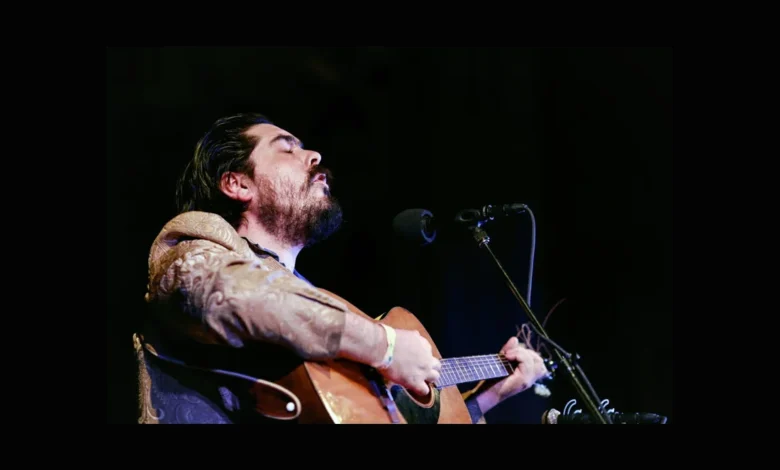
The release of "Be Mine" marks a pivotal moment for Feral Foster, an artist whose career has long been defined by his role as a curator of the American roots tradition rather than his own discography. With a vocal delivery that sits at the intersection of Tom Waits’ gravel-laden storytelling and the soulful intensity of Eric Burdon, Foster’s latest offering is a masterclass in atmospheric folk-blues. The track, which serves as a precursor to his forthcoming studio album New World Blues, arrives as a stark reminder of his ability to weave raw, unvarnished human emotion into the fabric of traditional folk structures.
The Genesis of a Folk-Blues Narrative
"Be Mine" did not emerge from a sterile studio environment; rather, it was born out of the kinetic, often exhausting experience of life on the road. For Foster, the song represents a years-long gestation period. According to the artist, the initial lyrical sketches began during various tours, where the isolation of travel allowed him to process the heavy psychological toll of unrequited desire.
Foster posits that the song is built upon a specific, high-stakes emotional premise. "I had someone in mind when thinking of it," Foster notes regarding the song’s origins. "Unrequited desire that feels like it could manifest itself as catastrophic upheaval in nature." This thematic focus—the idea that internal human turmoil can project itself onto the external environment—is a hallmark of classic folk-blues, a genre that frequently uses nature as a metaphor for existential dread.
Musically, the track relies on a "finely tuned union" of garage rock sensibilities and traditional folk-blues instrumentation. By eschewing the polish often found in contemporary Americana, Foster preserves a "windswept" and "ragged" aesthetic that mirrors the intensity of his lyrical themes.
A Two-Decade Legacy: Roots n’ Ruckus
While New World Blues represents his first studio album in over a decade, Feral Foster’s absence from the recording booth has been anything but a hiatus from music. His influence on the New York City roots scene is profound, anchored by his founding of the "Roots n’ Ruckus" series.
The chronology of this series provides a clear look at his commitment to fostering communal music-making:
- 2005: Foster launches the "Roots n’ Ruckus" series in Manhattan, creating a venue-based collective for musicians specializing in pre-war blues, traditional folk, and Americana.
- 2008: The series moves to the Jalopy Theatre in Brooklyn, a move that solidified the theatre’s reputation as the epicenter of the city’s burgeoning folk-revival movement.
- 2005–2024: Over nearly twenty years, Foster has remained a consistent figurehead, bridging the gap between historical preservation and modern performance.
The decision to release New World Blues through Jalopy Records on October 23 is symbolically significant. Jalopy Records is the label arm of the very institution that Foster helped build into a landmark venue. By aligning his return to recorded music with this specific label, Foster is reinforcing his commitment to the community-driven ethos that has defined his career.
Industry Context: The Folk Revival and Independent Labels
The broader context of Foster’s release is the ongoing, quiet resurgence of independent folk and roots music. In an era dominated by algorithmic playlists and high-gloss pop production, the "ragged edge" championed by artists like Foster represents a growing niche. Industry data suggests that while mainstream pop remains dominant, there has been a steady year-over-year increase in listeners engaging with "authentic" or "organic" sounding genres, often categorized by platforms as "Americana" or "Roots."
For a veteran like Foster, the challenge is balancing a legacy defined by live performance and curation with the demands of the modern digital music market. The hiatus between albums—a span of over ten years—is a double-edged sword. While it allows for a maturation of sound and a deeper well of life experience to draw from, it requires a strategic re-introduction to an audience that may be accustomed to more frequent content cycles.
Analysis of the Sonic Landscape
The vocal performance on "Be Mine" offers a window into the evolution of Foster’s technique. By adopting a "gravel-and-gospel" delivery, Foster leans into the textures of his voice rather than masking them. This aesthetic choice is not merely stylistic; it is a narrative tool. In folk-blues, the "grain" of the voice—to use Roland Barthes’ term—carries the weight of experience.
The integration of garage rock into the arrangement adds a layer of urgency. Where traditional folk might rely on a steady acoustic rhythm, the garage rock influence introduces a sense of volatility. The interplay between the folk-blues lyrical themes and the sharper, more aggressive guitar tones creates a "windswept" atmosphere that feels both timeless and urgent.
Implications for the Upcoming Album
New World Blues is positioned to be a retrospective look at the intervening years since his last studio effort. The title itself suggests a departure from pure traditionalism, implying that the "blues" in question are perhaps those of a new, perhaps more complex, world.
Industry analysts observe that an artist returning after a decade-long absence faces significant hurdles in audience retention. However, Foster’s deep roots in the New York scene provide a built-in infrastructure for support. His credibility within the roots community—a sector of the music industry known for its loyalty to established, authentic practitioners—serves as a safeguard against the volatility of the music industry at large.
Future Outlook
As October 23 approaches, the release of New World Blues will serve as a litmus test for the enduring appeal of the specific brand of folk-blues Foster has cultivated. If "Be Mine" is any indication, the album will lean heavily into the tension between the personal and the environmental, a theme that resonates strongly with contemporary audiences concerned with both emotional health and the state of the planet.
Foster’s journey from a touring performer to a curator and finally back to a recording artist illustrates a full-circle trajectory. By maintaining the "rough edges" of his sound, he avoids the trap of modernization for the sake of marketability, choosing instead to lean into the raw, unpolished sincerity that has defined his two-decade-long career.
The success of New World Blues will ultimately be measured not by chart positions or streaming metrics, but by the extent to which it continues to build upon the community Foster established in 2005. The Jalopy Theatre has long served as a sanctuary for those who value the preservation of American musical heritage; with his new record, Feral Foster is ensuring that this heritage continues to evolve, rather than simply being archived.
For observers of the American folk landscape, Foster remains a critical figure. His ability to distill complex emotions into simple, evocative musical frameworks ensures that even as the world around him changes, his contribution to the genre remains grounded in the same core principles: community, authenticity, and the pursuit of a sound that is as ragged and real as the stories it tells. As he prepares to step back into the spotlight of the recording industry, the music community waits to see if New World Blues will become a new foundational text for the Brooklyn roots scene. Given his track record, the odds are in his favor.