Royal Swedish Opera Triumphs with the Return of Mikael Karlsson and Royce Vavrek’s Cinematic Adaptation of Lars von Trier’s Melancholia

Translating an iconic cinematic masterpiece to the operatic stage is a notoriously perilous endeavor, particularly when dealing with a film as visually and philosophically dense as Lars von Trier’s 2011 apocalyptic drama Melancholia. Yet, composer Mikael Karlsson and librettist Royce Vavrek boldly accepted this creative challenge. Following its highly praised world premiere at the Royal Swedish Opera in 2023, the production has officially returned to the prestigious Stockholm institution for its 2026-27 season. Maintaining a remarkably faithful narrative alignment with the original motion picture, the opera harnesses the profound psychological and atmospheric capacities of live orchestral and vocal performance to reexamine humanity’s psychological responses to inevitable doom.
Narrative Architecture and Chronological Structure
The opera preserves the two-act structure and psychological trajectory of von Trier’s screenplay, charting the final days of two emotionally fractured sisters, Justine and Claire, against the backdrop of an impending planetary collision. The first act unfolds entirely during an elaborate wedding reception hosted at a sprawling rural mansion. Here, Justine, recently married to Michael, systematically dismantles her life through erratic, self-destructive behavior. Plagued by severe, debilitating depression, Justine alienates her new husband, insults her domineering boss Jack—who is concurrently married to her mother, Gaby—and engages in a casual tryst on a golf course. The social gathering disintegrates into chaos, highlighting the stark contrast between Justine’s profound alienation and her sister Claire’s desperate, obsessive compulsion to maintain an immaculate, perfectly ordered domestic reality.
As the narrative transitions into the second act, the domestic discord is entirely overshadowed by a cosmic threat. A rogue planet, designated Melancholia, has entered the solar system and is locked onto a direct collision course with Earth. The psychological dynamic shifts dramatically; Justine, previously incapacitated by her depression, attains a state of calm, tranquil indifference toward the impending apocalypse, finding a strange comfort in the erasure of existence. Conversely, Claire’s meticulous worldview fractures entirely, sending her into a spiral of escalating terror and anxiety. Her husband, John, initially dismisses the scientific models predicting an impact, but upon realizing the collision is mathematically certain, dies by suicide. The opera culminates in a striking, minimalist tableau as Justine, Claire, and Claire’s young son, Leo, face the terminal cataclysm together.
Orchestral Innovation and Sonic Architecture
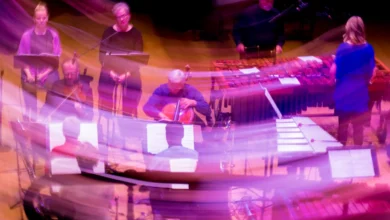
Karlsson’s score serves as the primary structural and emotional pillar of the production, bridging the gap between cinematic realism and abstract theatrical expression. Departing from conventional operatic writing, Karlsson integrates synthesized electronic vibrations directly into the acoustic framework of the Royal Swedish Opera’s orchestra. During performances, low-frequency electronic undulations deliberately reverberate through the auditorium seating, physically immersing the audience in the creeping dread of the rogue planet’s approach.
The orchestration moves fluidly between frantic, highly agitated passages and eerie, stagnant lulls. To convey the psychological fractures of the characters, Karlsson utilizes avant-garde harmonic shifts, atonal phrasing, and extensive glissandi that sonically depict the slippery, unstable nature of human perception. Percussion sections drive hypnotic, primitive rhythms that underscore the manic choreography designed by Charlotta Öfverholm, reflecting a society descending into a collective delirium. Furthermore, the Royal Swedish Opera Chorus functions as an active Greek chorus, utilizing spoken word, synchronized chanting, and uncomfortable physical movements to externalize societal judgment and amplify the inescapable sense of claustrophobia.
Vocal Mastery and Characterization
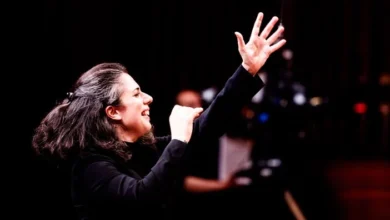
Under the baton of conductor Andrea Molino, the principal cast delivers intensely nuanced performances that successfully avoid operatic cliché while dissecting deeply ingrained psychological pathologies. Soprano Kerstin Avemo anchors the first act as Justine, portraying emotional detachment with striking vocal versatility. Avemo’s upper register projects a chilling clarity, perfectly capturing a protagonist who is psychologically disconnected from her own wedding and social standing. Her performance evolves convincingly from hollow vacancy to grounded authority, culminating in the final scene where she calmly guides young Leo toward the abyss.
Mezzo-soprano Ida Ränzlöv undertakes the demanding role of Claire, charting the character’s psychological disintegration with vocal intensity and emotional exposure. Ränzlöv’s monologues in the second act utilize subtle vocal inflections to map the terrifying realization of absolute doom, moving effortlessly from high-strung obsession to a broken shell of a human being.
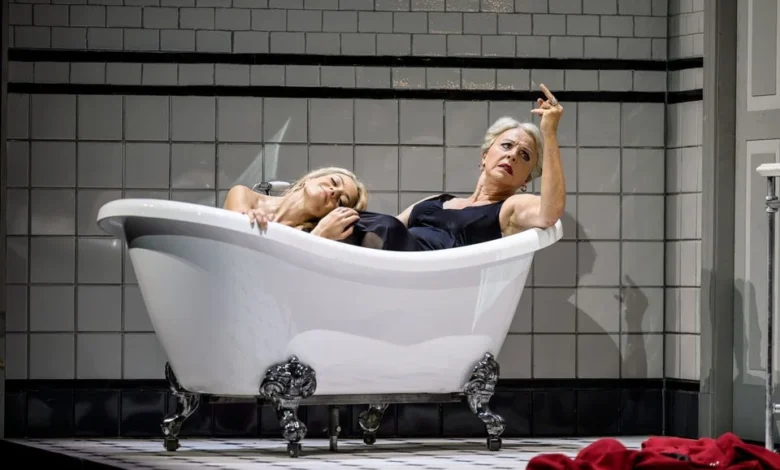
The supporting ensemble brings necessary texture to the familial dysfunction. Mezzo-soprano Anne Sofie von Otter delivers a biting, memorable portrayal of the self-absorbed matriarch Gaby, treating the wedding rituals with caustic disdain. Baritone Jens Persson Hertzman captures the tragic desperation of the abandoned husband Michael through articulate, expressive phrasing, while bass-baritone Markus Schwarz portrays John with an unbending, swaggering arrogance that makes his eventual cowardice and suicide narratively logical. Baritone Johan Edholm commands the stage as the authoritarian boss Jack, and young tenor Andreas Romanitan provides a remarkably assured vocal performance as Leo, holding his own during complex musical exchanges with the adult principals.
Production Design and Visual Aesthetics
Director Sláva Daubnerová, working in collaboration with scenographer Boris Kudlička, costume designer Chrisi Kavronides-Dushenko, lighting designer Tom Visser, and video artist Bartek Macias, establishes a clear aesthetic division between the opera’s two acts. The first act utilizes a realistic, multi-tiered revolving set that mimics the compartmentalized interior of a wealthy estate. This functional architecture allows for simultaneous social gatherings and intimate character flights, underscored by subtle, foreboding video projections of Melancholia appearing intermittently on a transparent front curtain.
In stark contrast, the second act strips away domestic clutter to expose an open, isolated outdoor landscape. The natural world is rendered small and insignificant beneath Bartek Macias’s increasingly dominant, hyper-realistic projections of the rogue blue planet. The visual and musical climax achieves a breathtaking theatrical impact: the stage clears to reveal a single raised platform as Justine, Claire, and Leo stand united. A colossal, jet-black geometric circle expands rapidly against a backdrop of primeval percussion and heavy electronic vibration, ultimately consuming the stage and plunging the narrative into silence.
Critical Implications and Legacy in Contemporary Opera
The successful revival of Melancholia underscores a broader contemporary trend within major European opera houses: commissioning narrative adaptations of critically acclaimed modern cinema to attract new demographics to the art form. By retaining the stark philosophical weight of von Trier’s original script while leveraging the visceral, physical impact of live instrumentation and spatial audio design, Karlsson and Vavrek have managed to construct a theatrical work that stands independently of its cinematic source.
While certain compromises regarding text intelligibility and set scale remain inevitable when moving from film to the stage, the Stockholm production demonstrates that opera possesses unique physiological tools—such as subsonic frequencies and spatial chorus placement—capable of conveying existential dread more acutely than celluloid alone. As the Royal Swedish Opera continues its 2026-27 season, Melancholia stands as a definitive benchmark for modern operatic adaptations, proving that the fusion of classical vocal disciplines with contemporary sound design can successfully interrogate the darkest corners of human psychology.