Kenny Wayne Shepherd: Three Decades of Bridging Blues and Rock and the Enduring Legacy of Ledbetter Heights

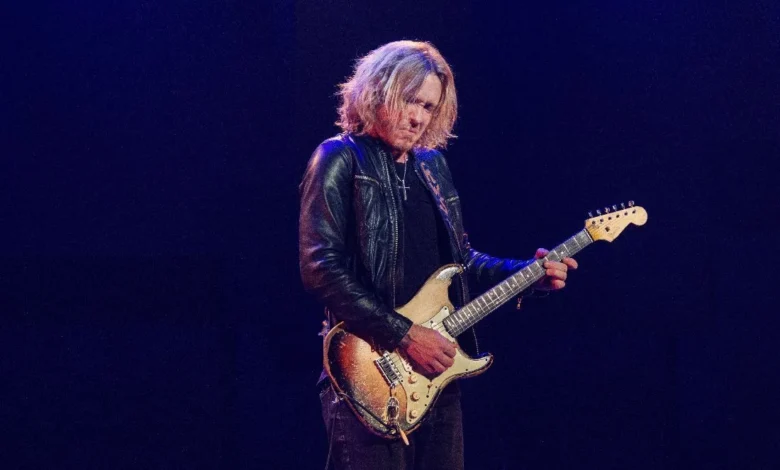
The trajectory of modern blues-rock owes a significant debt to the prodigious emergence of Kenny Wayne Shepherd, a guitarist who arrived on the national stage in the mid-1990s with a precocious technical ability that belied his age. As he commemorates the 30th anniversary of his seminal debut album, Ledbetter Heights, Shepherd remains a fixture of the music industry—a testament to a career built on the foundation of blues tradition while simultaneously rejecting the limitations of genre-based categorization.
A Foundation Forged in Shreveport
Born in Shreveport, Louisiana, Shepherd’s musical education was neither conventional nor academic; it was atmospheric. His father, a professional disc jockey and program director, provided an intimate, lifelong masterclass in the evolution of American roots music. By serving as a bridge between the radio studio and the concert stage, his father granted the young Shepherd access to the inner workings of the industry, allowing him to witness firsthand the raw electricity of legendary blues figures like Muddy Waters and John Lee Hooker.
This upbringing in a regional "melting pot" exposed him to a disparate array of sounds—Cajun, zydeco, jazz, and the foundational blues that would eventually anchor his own sonic identity. By age four, he was already experimenting with plastic, nylon-stringed instruments sourced from local retail promotions. However, the true catalyst for his professional pursuit was witnessing Stevie Ray Vaughan perform live when Shepherd was only seven. That experience shifted his ambition from casual play to a singular focus on the electric guitar.
The Rapid Ascent: A Chronological Progression
Shepherd’s path from bedroom student to professional recording artist was remarkably swift, adhering to a timeline that pushed him into the industry spotlight before he had reached adulthood:
- Age 7: Inspired by Stevie Ray Vaughan, Shepherd commits to mastering the electric guitar.
- Age 13: Makes his formal stage debut, signaling the transition from hobbyist to performer.
- Age 14: Records his first professional studio demos, attracting initial industry attention.
- Age 15: Establishes his own touring band, refining his craft on the road.
- Age 16: Begins the composition process for his debut album, Ledbetter Heights.
- Age 17: Records and completes the debut album, which would eventually launch a global career.
- Age 18: Ledbetter Heights is released, catapulting him into the 1990s blues revival movement.
The Commercial and Cultural Impact of Ledbetter Heights
Released in 1995, Ledbetter Heights achieved significant commercial success, defying the prevailing trends of the mid-90s alternative rock landscape. The album served as a catalyst for a broader blues-rock resurgence, proving that a younger generation was capable of revitalizing legacy genres without stripping them of their authenticity.
Over the past three decades, the album has maintained a steady presence in the blues-rock canon. Its endurance is largely attributed to Shepherd’s conscious decision to avoid the "pop star" trap. By eschewing the pursuit of contemporary trends, he ensured that his early work remained untethered to the specific, often fleeting, production styles of the 1990s. This deliberate approach to songwriting—focusing on timeless structure rather than immediate radio-playability—has allowed his catalog to retain its relevance in the streaming era.
The Anatomy of a Hit: Blue on Black
If Ledbetter Heights established his credentials, the 1997 follow-up album, Trouble Is…, secured his place in the rock pantheon with the track "Blue on Black." The song stands as his most recognizable work, a masterclass in songwriting efficiency that was born from an accidental observation. While collaborating with songwriter Tia Sillers, Shepherd noticed the color scheme of his shirt; the resulting metaphor—the way black and blue blend—became the backbone of the lyrics.
The song’s success, however, is grounded in its interpretative flexibility. Over 29 years of performances, listeners have projected various narratives onto the track, ranging from themes of domestic struggle to the grief associated with loss. Shepherd views this as the ultimate metric of a song’s success: its ability to function as a vessel for the listener’s personal experience. He maintains a rigorous standard for his live performances, insisting that he would never perform a song that he did not personally find compelling—a rule he established after learning of the industry practice where artists are often forced to perform "hit" songs they no longer enjoy.
Evolving the Blues: The Synthesis of Tradition and Modernity
A recurring theme throughout Shepherd’s career has been the tension between traditionalist purists and his own, more expansive interpretation of the genre. Critics have occasionally questioned his status as a "legitimate" blues artist, citing his incorporation of rock, hip-hop, and country elements. Shepherd, however, views these labels as arbitrary.
His approach to evolution is both pragmatic and pedagogical. He argues that if blues music is to remain relevant to modern audiences, it must allow for the infusion of new chord structures, vocal melodies, and production techniques. Yet, he is equally emphatic about the necessity of historical literacy. He insists that any artist working within the blues tradition has a moral and professional obligation to "do their homework"—to study the originators of the sound and acknowledge the historical weight of the genre.
This philosophy is evidenced in projects like his 2007 release, 10 Days Out: Blues From the Backroads, which saw him collaborating with titans of the field such as Pinetop Perkins and Henry Gray. It was a project designed not for commercial dominance, but as a preservation effort—a rare, deep-dive into the roots that sustain his more contemporary, rock-oriented output.
The Modern Industry and the Future of the Genre
Reflecting on the current state of the music industry, Shepherd notes a stark divergence from the era in which he emerged. In the mid-90s, the path to success was paved by physical record sales and terrestrial radio rotation. Today, the dominance of streaming services and the fragmentation of audiences have made the traditional "platinum album" milestone significantly more elusive for blues-based artists.
Despite these industry shifts, Shepherd remains optimistic about the future of the genre. He identifies a new wave of talent—including Marcus King, Christone "Kingfish" Ingram, Samantha Fish, and Ally Venable—as the new stewards of the sound. These artists, he observes, are effectively navigating the space between preservation and innovation, ensuring that the genre continues to evolve.
Conclusion: Mission Accomplished
With six Grammy nominations and thirteen solo albums, Shepherd’s career is defined not by the accolades he has accumulated, but by the sustainability of his creative output. When discussing the pressures of the industry, he frequently pivots back to the initial spark: the feeling of playing in his bedroom at age seven.
For Shepherd, the 30th anniversary of his debut is more than a retrospective of past successes; it is a validation of his original intent. He maintains that his mission was never to achieve fame, but to create music that would stand the test of time. As he continues his anniversary tour, the sight of audiences singing along to tracks recorded three decades ago serves as the primary indicator of that mission’s completion. By refusing to be "walled into a box," Kenny Wayne Shepherd has successfully maintained a thriving, multi-decade career that honors the blues tradition while pushing it firmly into the future.