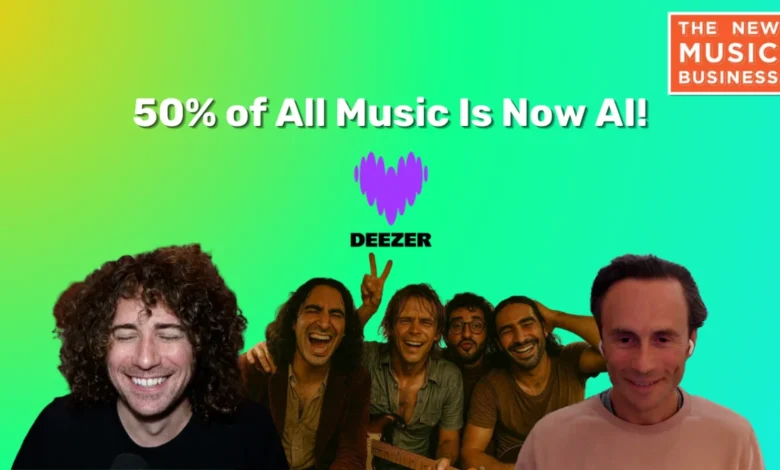
The modern music streaming landscape is undergoing a profound structural evolution, driven largely by the exponential rise of artificial intelligence, automated streaming fraud, and persistent debates over equitable artist compensation. Recently, on an episode of the New Music Business podcast hosted by industry veteran Ari Herstand, Deezer CEO Alexis Lanternier sat down to offer an inside look at how one of the world’s leading global music streaming platforms is confronting these unprecedented challenges. As platforms grapple with millions of newly uploaded tracks, Deezer has positioned itself at the forefront of technological innovation by deploying advanced AI-detection tools, purging fraudulent streams, exploring clear classification tags, and advocating for a transition to user-centric payment systems.
The Genesis of the Streaming Crisis: The AI Flood
The contemporary music industry faces a logistical and economic bottleneck. For decades, the barrier to entry for distributing music was high, requiring physical manufacturing, distribution deals, and significant financial capital. The advent of digital distribution democratized this process, allowing independent creators to upload music directly to digital service providers (DSPs) via aggregators. However, the introduction of generative artificial intelligence tools has accelerated this influx to a staggering degree.
Today, streaming services are inundated with hundreds of thousands of AI-generated tracks daily. Many of these uploads are designed not to find organic audiences, but to game the streaming economy. Bad actors utilize automated bot networks to stream these low-quality, artificial tracks on a loop, siphoning royalties away from human artists who rely on legitimate listener engagement to make a living. During his discussion with Herstand, Lanternier detailed the stark reality of this digital deluge, emphasizing that DSPs can no longer afford to remain passive recipients of open-catalog uploads. Without stringent gatekeeping, the integrity of the global music ecosystem is threatened by a devaluation of genuine artistry.
Deezer’s Technological Defense: Detecting Fraud and Purging Bots
To combat the massive influx of AI-generated spam and streaming manipulation, Deezer has invested heavily in proprietary detection technology. Identifying fraudulent activity requires sophisticated algorithms capable of distinguishing between genuine human listening habits and automated bot behavior.
Streaming fraud typically manifests through abnormal listening patterns: tracks that are played repeatedly in short succession, abnormal spikes in geographically concentrated streams with zero social media footprint, or listening durations that abruptly cut off at the exact minimum threshold required to trigger a royalty payout (typically 30 seconds). Deezer’s detection systems analyze these metadata markers and behavioral anomalies in real time.
When fraudulent bot activity or unauthorized AI tracks are identified, Deezer executes systematic purges from its catalog. By actively removing these malicious uploads, the platform protects the shared royalty pool, ensuring that subscription revenues and advertising dollars are distributed fairly among genuine creators rather than automated accounts operated by bad actors.
Classification, Tagging, and Algorithmic Recommendation
As generative AI blurs the lines between human-made art and machine-generated content, listeners are increasingly demanding transparency. One of the central pillars of Deezer’s modern strategy involves the explicit tagging and classification of AI-generated music.
Tagging serves a dual purpose. First, it respects consumer autonomy by providing clear disclosures regarding the origin of the content they are consuming. Second, it allows Deezer to fine-tune its algorithmic recommendation engines. While machine learning and generative AI can be powerful assistive tools for human producers—such as aiding in mixing, mastering, or generating sonic textures—entirely synthetic tracks require distinct treatment within recommendation algorithms.
By categorizing content effectively, Deezer ensures that its recommendation feeds do not inadvertently drown out independent human artists in favor of optimized, algorithmically generated sound-alikes designed solely to maximize platform engagement metrics. This delicate balance allows the platform to embrace technological innovation while preserving the cultural and emotional value inherent in human-created music.
The Creative Spectrum: Assistive Tools Versus Autonomous Generation
A critical nuance in the current music technology debate is the distinction between generative AI as a creative collaborator versus a complete replacement for human artistry. Lanternier and Herstand explored this spectrum, noting that many modern producers and songwriters utilize AI-driven plugins and software to spark inspiration, streamline workflow, or experiment with novel sonic textures.
However, a distinct line exists between assistive technology and fully autonomous AI composition, where software generates an entire song—lyrics, melody, vocal performance, and instrumentation—without human creative input. While assistive tools empower creators to push artistic boundaries, fully autonomous tracks present complex copyright, ethical, and economic questions. Deezer’s approach seeks to accommodate the former while carefully scrutinizing the latter, ensuring that copyright holders and human performers are protected from unauthorized cloning and uncompensated replication.
Fan Engagement and In-App Remix Tools
Beyond defense and regulation, platforms are increasingly looking toward interactive features to drive user engagement. Deezer has explored innovative in-app capabilities, such as fan-driven remix tools that allow listeners to interact more deeply with their favorite songs.
However, introducing consumer-facing remixing tools requires sophisticated licensing frameworks to ensure that original rights holders are appropriately compensated. If fans are empowered to alter, mash up, or reimagine commercially released music within an application, revenue-sharing models must account for these derivative works. Deezer’s approach highlights a broader industry trend: moving passive listeners into active participants while simultaneously adapting licensing agreements to protect the intellectual property of songwriters and performers.
The Economic Debate: Market-Centric Versus User-Centric Payout Systems
Perhaps the most consequential topic addressed during Lanternier’s podcast appearance is the structural flaw inherent in the traditional market-centric royalty payout model and the promise of user-centric payment systems (UCPS).
For decades, the streaming industry has relied on a market-centric distribution model. Under this system, all subscription and advertising revenue generated globally is pooled together. The total pool is then distributed to rights holders based on their overall percentage of total streams across the entire platform.
The primary critique of the market-centric model is its disproportionate impact on niche and independent artists. For example, if a heavy metal fan subscribes to a streaming service for $10 a month and listens exclusively to underground independent bands, the vast majority of their subscription fee does not go to those independent artists. Instead, a significant portion of their money is funneled toward global superstars, even if the subscriber never plays a single track by those major artists.
Conversely, a user-centric payment system allocates an individual user’s subscription fee directly to the specific artists that individual streamed during that billing cycle. If a user listens to fifty tracks in a month, their subscription fee is divided exclusively among the creators of those fifty tracks, minus platform operating costs.
Advocates argue that UCPS is fundamentally fairer, more transparent, and better equipped to support mid-tier and independent artists who form the backbone of musical diversity. Deezer has been a vocal proponent of transitioning toward user-centric models, partnering with major and independent labels alike to study its feasibility and implement structural changes.
Navigating Major Label Dynamics and Independent Artist Realities
Implementing systemic changes within the global music industry requires delicate negotiations between streaming platforms, major record labels (Universal Music Group, Sony Music Entertainment, and Warner Music Group), and independent distributor networks like Merlin and various aggregators.
Major labels hold immense leverage due to their vast, legacy-catalog rights, which are vital for attracting and retaining mainstream subscribers. However, independent artists represent a rapidly growing share of total uploads and unique listener engagement. Balancing the financial interests of major conglomerates with the economic survival of independent creators remains a central challenge for platform executives like Lanternier.
During the discussion, the conversation also touched upon historical digital milestones, such as Lanternier’s involvement with Winamp, reflecting on how technological platforms have historically shaped music consumption. The modern landscape demands that platforms not only deliver audio efficiently but also redefine what it means to build a sustainable, long-term career in the music business.
Broader Industry Implications and Future Outlook
The insights shared by Deezer’s CEO highlight a critical turning point for the digital audio sector. The convergence of artificial intelligence, streaming fraud, and royalty reform points toward a more regulated, transparent, and accountability-driven future.
As DSPs implement stringent AI-detection filters, refine algorithmic recommendations, and inch closer to adopting user-centric royalty models, the economic realities for artists are shifting. While technological disruption will continue to challenge traditional frameworks, proactive measures by platforms like Deezer suggest a concerted effort to safeguard the value of human creativity.
Ultimately, the future of music streaming will depend on collaboration between streaming executives, independent creators, major rights holders, and policymakers. By addressing fraud head-on, championing fair compensation models, and embracing technological innovation responsibly, the industry aims to build a sustainable ecosystem capable of supporting the next generation of musical talent.