Francesco Meli Steps In for Antonio Poli in La Scala Verdi Requiem Following Last-Minute Illness

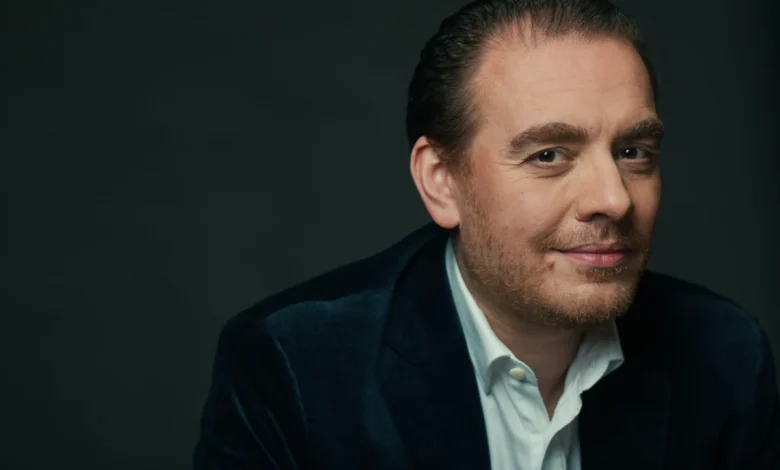
Milan’s legendary Teatro alla Scala has announced a sudden and notable cast alteration for its ongoing presentation of Giuseppe Verdi’s monumental Messa da Requiem. Italian tenor Antonio Poli has been forced to withdraw from the performance due to a sudden illness, prompting a swift and high-profile replacement by fellow acclaimed tenor Francesco Meli. The historic opera house confirmed that Meli will step onto the podium for the evening concert on October 30, joining an already stellar lineup of vocalists and musicians for one of the classical music calendar’s most revered sacred works.
The eleventh-hour substitution highlights the unpredictable nature of live theatrical and symphonic productions, while simultaneously demonstrating the remarkable agility of major opera houses like La Scala in securing world-class talent on short notice.
The Official Announcement and Immediate Adjustments
The management of Teatro alla Scala released a brief yet definitive statement regarding the vocal indisposition of Antonio Poli. The company noted, “Due to sudden illness, Antonio Poli will be unable to perform in this evening’s concert — Oct. 30 — and will be replaced by Francesco Meli.”
While sudden cancellations are an occupational hazard in the high-stakes world of international opera—where vocal cords are subjected to intense physical demands—the ability to seamlessly integrate an artist of Meli’s stature into a complex choral and orchestral work like the Verdi Requiem speaks volumes about the professional network and institutional depth of La Scala.
Poli, who had been heavily anticipated for the tenor solos in Verdi’s dramatic masterpiece, was forced to step down just hours before the baton was set to drop. The administration moved quickly to ensure that ticket holders would experience a performance of uncompromised artistic integrity, turning to Meli, a trusted house favorite whose familiarity with Milan’s acoustics and institutional culture made him the ideal candidate for the emergency call-up.
Francesco Meli: A Stalwart of the Milan Stage
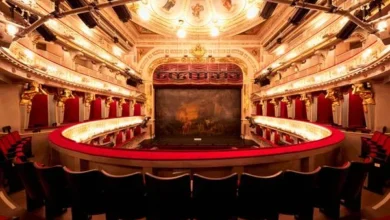
Francesco Meli is far from a stranger to the neoclassical halls of the Teatro alla Scala. Over a career spanning decades, the Genoa-born tenor has established himself as one of the definitive Verdi interpreters of his generation, gracing the Milan stage in a vast array of core repertory roles.
Meli’s deep-rooted history with La Scala encompasses a staggering variety of productions, ranging from dramatic heavyweights to lyrical masterpieces. Audiences at the theater have frequently applauded his performances in such iconic works as Puccini’s Tosca, and Verdi staples including Un Ballo in Maschera, Don Carlo, Macbeth, Nabucco, and Giovanna d’Arco. His operatic footprint in Milan extends beyond Verdi, however, as demonstrated by his acclaimed turns in Donizetti’s Maria Stuarda, among numerous other global engagements.
Known for his gleaming high notes, rich Italianate timbre, and deep stylistic understanding of the bel canto and Verdi traditions, Meli brings a profound sense of authority to the Requiem tenor parts. His capacity to absorb complex musical directions at a moment’s notice underlines his status as a consummate professional who maintains his readiness for the unexpected demands of the global stage.
A Star-Studded Ensemble and Maestro at the Helm
Meli enters a formidable artistic ecosystem for this specific performance of the Verdi Requiem. He joins a vocal quartet featuring some of the most celebrated names in classical music today.
At the head of the vocal ensemble is legendary Russian soprano Anna Netrebko, whose commanding stage presence and soaring vocalism have made her a permanent fixture on the world’s most prestigious stages. Complementing Netrebko is the acclaimed mezzo-soprano Caterina Piva, whose rich lower register brings profound emotional gravity to sections like the Liber scriptus. Rounding out the quartet is veteran Italian bass Michele Pertusi, a singer revered for his dignified phrasing, deep resonance, and decades of mastery in sacred and operatic repertoire.

Guiding this powerhouse constellation of soloists, along with the world-renowned Teatro alla Scala Chorus and Orchestra, is musical director and principal conductor Riccardo Chailly. Maestro Chailly’s interpretive vision for Verdi’s masterwork emphasizes both the terrifying apocalyptic scale of the Dies irae and the hushed, deeply personal supplication of the Requiem aeternam. Chailly’s familiarity with Meli’s vocal capabilities ensures that despite the lack of extensive rehearsal time, the musical collaboration will be intuitive, cohesive, and deeply expressive.
Background and Context of the Verdi Requiem at La Scala
Giuseppe Verdi’s Messa da Requiem, composed in memory of the revered Italian writer and poet Alessandro Manzoni, premiered on the first anniversary of Manzoni’s death on May 22, 1874, at the Church of San Marco in Milan. While cast in a sacred liturgical mold, the work is frequently described as "Verdi’s greatest opera in ecclesiastical robes" due to its sweeping theatricality, towering emotional peaks, and dramatic contrasts.
For La Scala, programming the Requiem is both an artistic statement and a nod to local heritage. The piece demands immense stamina not only from the four vocal soloists but equally from the chorus and the massive orchestral forces. The tenor role, in particular, requires a unique blend of lyrical tenderness and heroic projection, most notably in the soaring, exposed phrases of the Ingemisco and the serene supplications of the Hostias.
When a disruption occurs in a production of this magnitude, the ripple effects can be felt across the entire administrative and artistic apparatus. The swift engagement of Francesco Meli mitigated what could have been a logistical crisis, preserving the integrity of the concert series for both international music tourists and local patrons.
Chronology of Events
The unfolding of the cast change followed a tightly managed timeline typical of top-tier European opera houses:
- Pre-Production Phase: Antonio Poli is scheduled and rehearsed as the principal tenor for the Teatro alla Scala’s run of the Verdi Requiem, working alongside Maestro Riccardo Chailly and fellow soloists Anna Netrebko, Caterina Piva, and Michele Pertusi.
- Morning of October 30: Poli falls suddenly ill, rendering him physically incapable of meeting the vocal and theatrical demands of the evening’s performance.
- Late Morning / Early Afternoon: Theater management is notified. The artistic direction initiates emergency contingency protocols, assessing the availability of local and regional tenors capable of performing the demanding Requiem score without prior staging or orchestral rehearsals.
- Early Afternoon: Francesco Meli is contacted. Given his extensive history with La Scala, his deep familiarity with Maestro Chailly’s conducting style, and his mastery of Verdi’s idiom, Meli agrees to step into the role.
- Mid-Afternoon: Teatro alla Scala officially issues a public press release announcing the cast change, ensuring ticket holders are informed of the alteration prior to the evening’s curtain time.
- Evening of October 30: Francesco Meli takes the stage alongside Netrebko, Piva, and Pertusi, performing the Verdi Requiem under the direction of Riccardo Chailly.
Logistical and Artistic Implications of Last-Minute Replacements
The seamless substitution of a principal soloist in a major symphonic-operatic work like the Verdi Requiem is a testament to the high-pressure environment of professional classical music administration. Unlike standard theatrical plays, where understudies often rehearse for weeks, opera soloists frequently fly from city to city, performing complex scores with minimal rehearsal time based solely on their shared musical training and stylistic fluency.
For Francesco Meli, stepping into a performance on mere hours of notice is a demonstration of absolute technical preparedness. Because the Requiem is a concert piece rather than a fully staged opera—meaning performers stand before the orchestra rather than acting out complex blocking—the primary hurdles involve musical synchronization, tempo adjustments with the conductor, and blend with the other three soloists. Given Meli’s decades-long professional relationship with both La Scala and Maestro Chailly, these musical conversations happen almost telepathically, minimizing the friction inherent in emergency replacements.
Moreover, the presence of artists of the caliber of Anna Netrebko and Michele Pertusi provides a stable anchor for the performance. In an ensemble work, a strong support system among the soloists allows a replacement tenor to integrate fluidly, relying on the collective momentum of the orchestra, chorus, and colleagues to carry the performance through its most demanding dramatic arcs.
Audience Reception and Institutional Resilience
Patrons attending the October 30 performance experienced a rare event: a high-stakes emergency substitution that ultimately yielded an all-star collaboration. While initial disappointment regarding Poli’s sudden absence is natural for ticket holders who specifically anticipated his interpretation, the announcement that Francesco Meli was stepping in generally transformed apprehension into heightened anticipation.
For Teatro alla Scala, successfully navigating unexpected hurdles of this nature reinforces its reputation as a resilient institution capable of maintaining world-class standards under pressure. In the realm of international performing arts, crises are inevitable, but the measure of an opera house lies in its speed, transparency, and the quality of its roster. By calling upon an artist of Meli’s pedigree, La Scala not only safeguarded the artistic quality of its Verdi Requiem presentation but also rewarded its audience with a masterclass in professional adaptability.
As the final chords of the Libera me resonated through the auditorium on the evening of October 30, the swift administrative pivot and Meli’s heroic eleventh-hour delivery became part of the enduring, unpredictable tapestry of live performance history at Milan’s most illustrious theater.