The digital audio workstation (DAW) software market continues to expand with accessible, high-grade tools for music producers, sound designers, and audio engineers. In this week’s comprehensive overview of standout freeware releases, developers Full Bucket Music, Fruitless Research, and dBdone have introduced three distinctive plugins. These releases bridge the gap between vintage hardware emulation, acoustic physical modeling, and experimental multi-band signal processing. Catering to both retro enthusiasts and modern electronic music producers, these plugins offer professional-grade sound manipulation without financial barriers.
A Deep Dive into Vintage Hardware Emulation
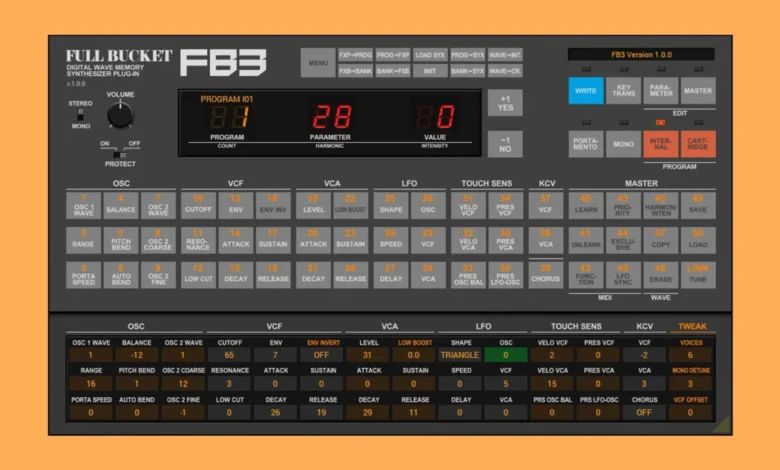
The revival of vintage hardware through software emulation has been a dominant trend in music production technology for over two decades. As aging electronic components become increasingly scarce and expensive to maintain, software developers play a critical role in preserving classic sonic signatures. Full Bucket Music has established a stellar reputation in this niche, consistently delivering meticulously coded emulations of rare synthesizers. Their latest offering, the FB3 plugin, brings the 1986 Kawai K3 hybrid synthesizer directly into modern digital environments.
Released during an era when synthesizer architecture was transitioning from purely analog circuits to digital waveforms paired with analog filters, the original Kawai K3 occupied a unique market space. Alongside contemporaries like the Korg DW-8000, it offered producers the best of both worlds: the stability and digital harmonic variety of sampled or generated digital waves, combined with the warmth and character of analog filtering. While it lacked the complex wavetable scanning capabilities of the legendary PPG Wave—earning it the affectionate moniker of the "poor man’s PPG Wave"—the K3 carved out its own identity through glassy digital pads, robust bass tones, and distinctive mid-80s atmospheric textures.
Full Bucket Music FB3: Technical Specifications and Integration
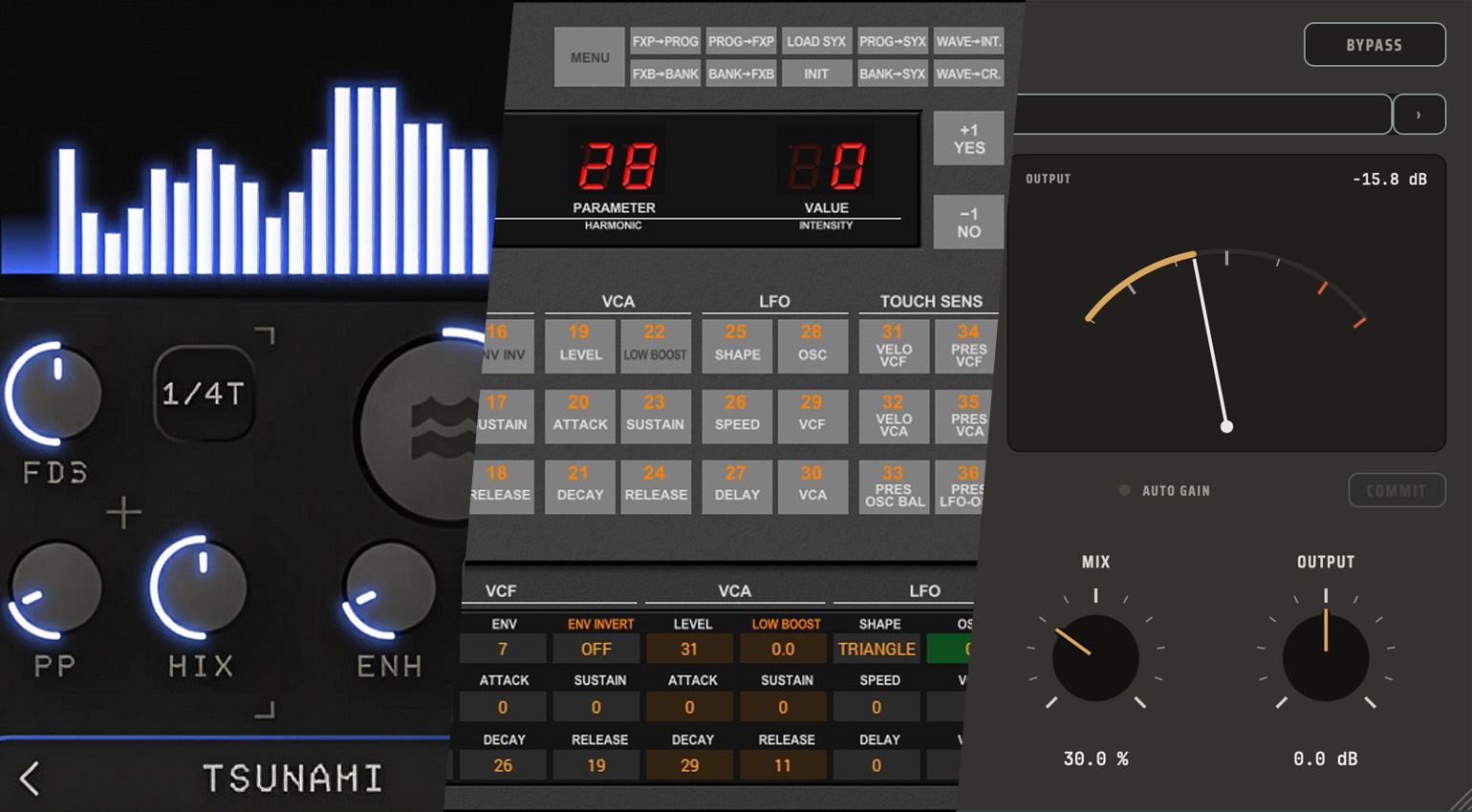
The newly released FB3 software recreation captures the essence of the original Kawai K3 and K3m rackmount modules. At its core, the plugin accurately models the original wave generator unit alongside the classic analog SSM2044 low-pass filters, which are celebrated for their musical resonance and creamy cutoff sweeps.
Designed for contemporary production workflows, the FB3 boasts up to 64 voices of polyphony, vastly expanding upon the hardware’s original limitations. Furthermore, Full Bucket Music has ensured seamless compatibility by including the complete set of original factory patches. Producers seeking authentic integration can also import and export K3 System Exclusive (SysEx) data and user wave data. Remarkably, the plugin can even function as a software editor for hardware K3 units, providing a modern visual interface for vintage gear owners.
The FB3 is available across multiple operating systems, supporting both macOS and Windows platforms. It accommodates virtually all standard plugin architectures, including VST, VST3, AU, CLAP, and AAX formats, ensuring compatibility with major DAWs such as Ableton Live, Logic Pro, Pro Tools, and Reaper.
Physically-Modelled Spring Reverbs: The Innovation of Clew
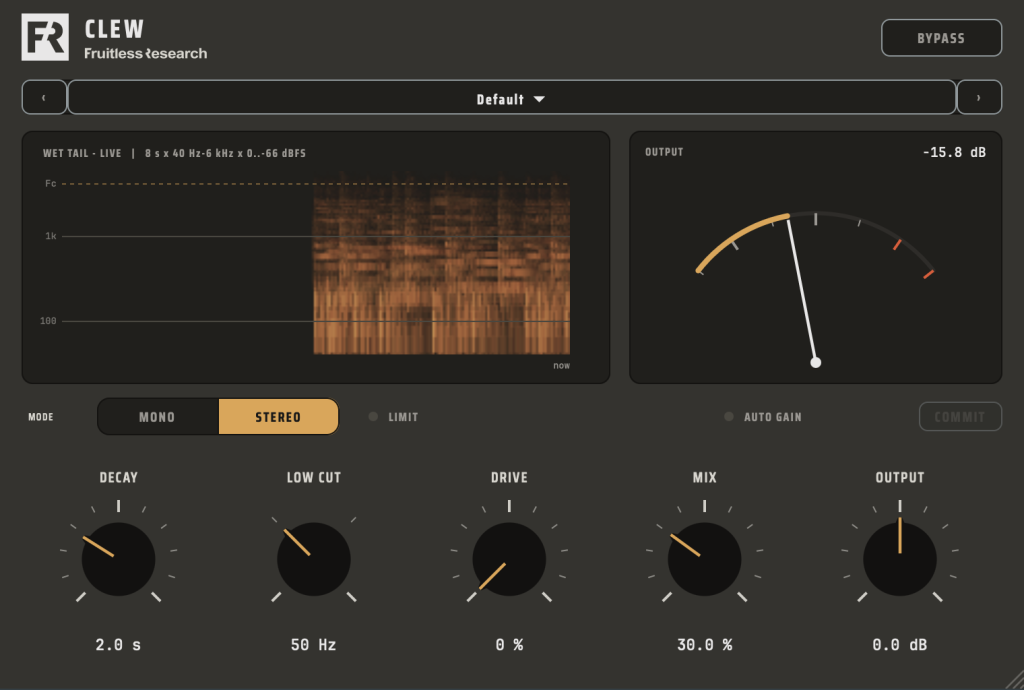
Reverb is one of the foundational effects in audio engineering, shaping the spatial depth and emotional resonance of a mix. While algorithmic and convolution reverbs dominate modern studios, spring reverbs occupy a distinct sonic territory characterized by metallic tension, drip, and characteristic flutter. Fruitless Research has tackled this acoustic challenge with the release of Clew, a physically modeled spring reverb plugin.
Unlike traditional convolution reverbs that capture static impulse responses of physical spaces or hardware units, physical modeling uses mathematical algorithms to simulate the physical behavior of materials—in this case, vibrating metal coils. According to Fruitless Research, Clew is specifically designed to replicate the dual-spring reverb tanks traditionally embedded within guitar amplifiers.
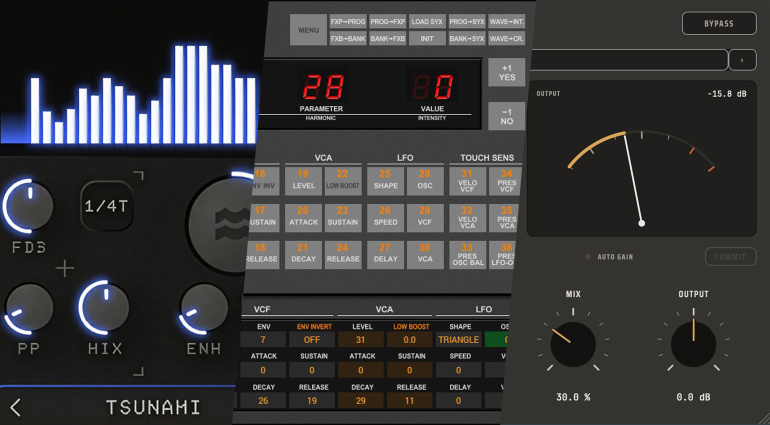
By operating in a stereo configuration, Clew routes audio signals through two subtly varied physical models. This approach preserves the integrity of the original stereo image while imparting width and dimensional depth to mono sound sources. The plugin features an intuitive control set, including a Decay parameter to adjust the physical damping of the springs, a dedicated low-cut filter to manage low-frequency accumulation, an input Drive knob for saturation, and a wet/dry Mix control. Additionally, Clew incorporates a real-time spectral view of the reverb tail, offering visual feedback on how the virtual springs react to incoming transients. Clew is compatible with macOS and Windows, supporting VST3, AU, and AAX formats.
Exploring Experimental Sound Design with dBdone Wasser
As electronic music genres evolve, producers continually seek innovative tools to manipulate rhythm, frequency, and space. Addressing this demand, developer dBdone has introduced Wasser, a unique audio effect described as a "liquid multiband delay."
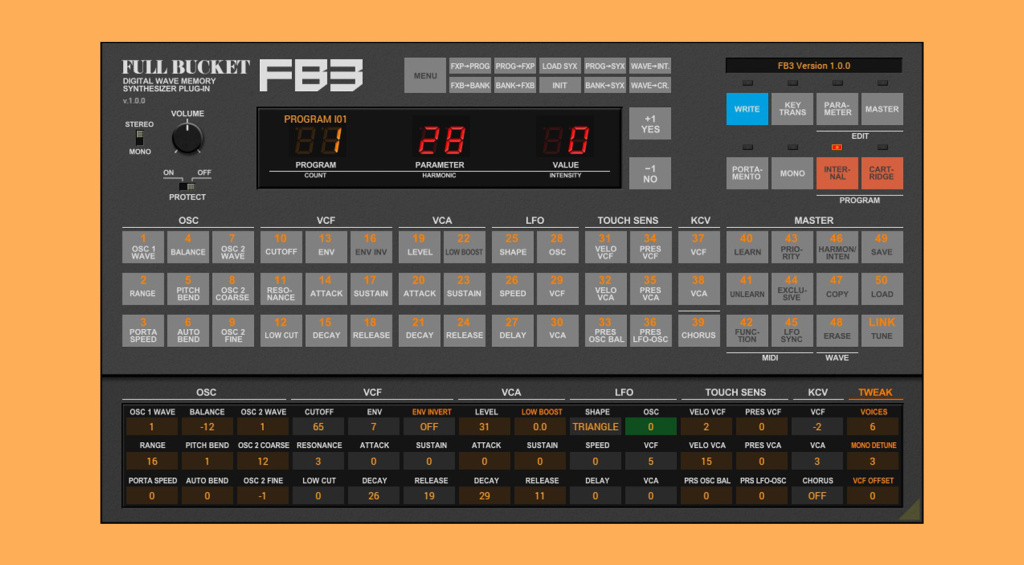
Wasser redefines traditional delay processing by segmenting incoming audio into discrete frequency bands, enabling users to apply independent delay times to different parts of the audio spectrum. This architecture allows for complex, rhythmic delay patterns that dynamically respond to the frequency content of the source material. For instance, high-frequency transients can echo at rapid subdivisions, while low frequencies maintain a longer, more stable delay rhythm.
The plugin features a streamlined, graphic-driven interface designed to simplify a potentially complex routing process. Each vertical column represents a specific frequency band, with its height corresponding to a multiple of the selected beat subdivision. Producers can manually adjust individual columns or draw fluid curves across the interface with a mouse, translating frequency-dependent delay shaping into an intuitive visual task.
According to the developers, Wasser yields optimal results when applied to drums, percussion, and rhythmic elements, adhering to the fundamental mixing principle that "a delay needs gaps to land in." By keeping the dry transients clear while filling the spectral spaces with frequency-tailored echoes, Wasser offers producers a fresh approach to rhythmic enhancement. Wasser is available for macOS and Windows in VST3, AU, and AAX formats.
Broader Implications for the Freeware Audio Plugin Market
The simultaneous release of these three diverse plugins highlights the maturation of the freeware audio development community. Historically, free plugins were often associated with stability issues, limited feature sets, or rudimentary graphical user interfaces. However, independent developers and boutique operations like Full Bucket Music, Fruitless Research, and dBdone increasingly rival commercial software companies in both technical execution and creative innovation.
For independent artists and bedroom producers, the availability of professional-grade tools like the FB3 synth, the Clew spring reverb, and the Wasser multiband delay removes significant financial barriers to entry. As digital audio workstations continue to support diverse plugin formats such as CLAP and universal architecture for both Apple Silicon and Windows processors, the democratization of music production tools accelerates. These releases demonstrate that high-end sound design, historical synthesis emulation, and cutting-edge audio processing are no longer restricted to high-budget commercial studios, permanently altering the landscape of modern music creation.