Inside the Classroom Chaos: Exploring the Music, Plot, and Production of Saoirse Ronan Psychological Drama Bad Apples

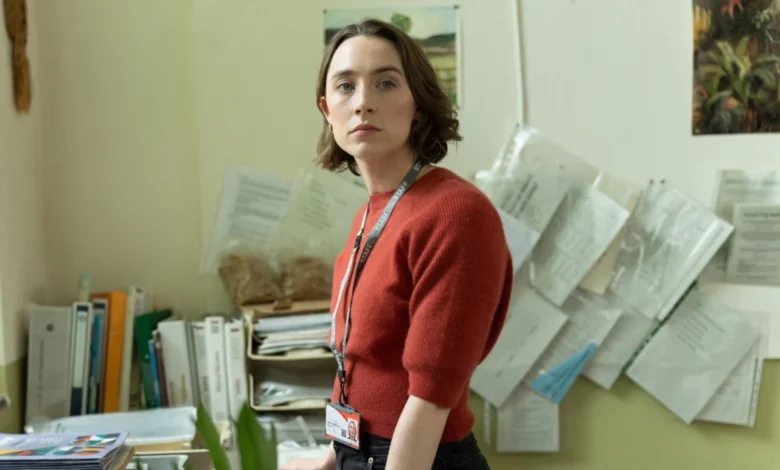
The psychological drama Bad Apples, starring four-time Academy Award nominee Saoirse Ronan as a struggling primary school teacher who makes a catastrophic sequence of poor decisions, arrived in theaters worldwide on September 18, 2026. Directed and adapted with a tense, atmospheric lens, the film explores the dark underbelly of modern education, institutional pressure, and psychological unraveling. Loosely inspired by Rasmus Andersson’s acclaimed novel De Oönskare, the narrative centers on Maria, an idealistic educator pushed to the absolute brink while attempting to manage a deeply troubled, chaotic, and unruly student in her classroom. As professional boundaries dissolve and panic sets in, Maria’s desperate choices spiral into a gripping thriller that has quickly become one of the most talked-about releases of the autumn cinema season.
Alongside Ronan’s commanding lead performance, the film features an impressive ensemble cast including Eddie Waller, Nia Brown, Jacob Anderson, Rakie Ayola, Robert Emms, Sean Gilder, Kerry Howard, and Jaye Jacobs. Yet, beyond the tense narrative and standout performances, a crucial element driving the film’s atmospheric dread is its carefully curated sonic landscape. From an intricate original score composed by Chris Roe to a nostalgic and haunting selection of needle-drops, the music of Bad Apples serves as an active participant in Maria’s psychological descent.
The Plot and Literary Origins of Bad Apples
The journey of Bad Apples to the silver screen began with Rasmus Andersson’s novel De Oönskare, a book praised for its unflinching look at marginalization, societal expectations, and the hidden fractures within public institutions. In adapting the material, filmmakers sought to translate the suffocating claustrophobia of the source text into a visual and auditory medium. Maria, portrayed with brittle vulnerability and escalating panic by Saoirse Ronan, represents the archetype of the overburdened civil servant. Tasked with molding young minds under conditions of systemic neglect, she finds herself isolated when confronted with a student whose disruptive behavior defies standard disciplinary frameworks.
What begins as a series of professional missteps gradually escalates into morally ambiguous territory. The narrative refuses to offer easy answers, instead forcing audiences to question the safety nets available to both educators and children in crisis. As Maria’s grip on her classroom—and her sanity—slips away, the tension is amplified by pacing that mimics a slow-burning thriller. Critics have noted that the film succeeds largely because it grounds its more extreme dramatic turns in the recognizable, everyday exhaustion of modern teaching environments.
The Original Score by Chris Roe
At the heart of the film’s auditory architecture is composer Chris Roe, whose previous credits include acclaimed independent and dramatic features such as The Salt Path, Blue Jean, and After Love. Roe’s contribution to Bad Apples is central to maintaining the psychological unease that permeates every frame. Rather than relying on traditional, overt horror tropes or melodramatic orchestral swells, Roe employs a minimalist, texture-heavy approach.
The score utilizes dissonant string arrangements, low-frequency hums, and unsettling ambient soundscapes that mirror Maria’s internal fragmentation. When Maria is attempting to maintain a calm facade in front of her pupils, the score hums with a restrained, anxious pulse. As her decisions become increasingly erratic, Roe’s compositions expand into discordant, chaotic crescendos that disorient the viewer. Industry analysts and soundtrack enthusiasts have lauded Roe’s ability to turn silence and space into musical instruments, allowing the ambient tension of the classroom to bleed directly into the musical cues. The full original score has been made available across major streaming platforms, allowing listeners to experience Roe’s intricate sound design independently of the cinematic narrative.
Curated Needle-Drops: Soundtracking the Descent
While Chris Roe’s original score provides the psychological foundation of Bad Apples, the film’s licensed needle-drops offer poignant, ironic, and sometimes jarring counterpoints to the onscreen chaos. The selection of pre-recorded tracks bridges the gap between everyday banality and the extraordinary tension of Maria’s unfolding crisis.
The most prominent licensed track utilized in the film is The Five Stairsteps’ 1970 soul classic "O-o-h Child." Known for its uplifting message of hope and reassurance ("Things are gonna get easier"), the song is deployed within the narrative with a chilling, ironic twist. Hearing the reassuring chorus play out against scenes of mounting professional disaster and moral compromise highlights the widening gulf between the idealized world of childhood education and the grim reality Maria faces.
Other carefully selected tracks featured in the film include:
- "On Saturday Afternoons In 1963" by Rickie Lee Jones
- "Appalachian Spirit" by Roy Edwin Williams
- "Give It All You Got" by Mark and Helen Johnson
- "Happy Feet" by Janne Schaffer
Each of these selections serves a distinct narrative purpose. From the melancholic, reflective folk-pop stylings of Rickie Lee Jones to the upbeat, almost mocking buoyancy of Janne Schaffer’s "Happy Feet," the needle-drops act as auditory flashbacks to a normalcy that Maria is rapidly losing. They ground the character in a recognizable world before pulling her—and the audience—further into the psychological abyss.
Production Background and Cast Dynamics
The road to the September 18, 2026 worldwide theatrical release involved rigorous casting sessions and meticulous location scouting to capture the institutional authenticity required for the story. Director and producers prioritized an ensemble cast capable of supporting Ronan’s powerhouse performance while maintaining the gritty realism of a functioning, if strained, primary school ecosystem.
The inclusion of versatile television and film talent such as Jacob Anderson, Rakie Ayola, and Robert Emms adds layers of institutional bureaucracy and social pressure to the narrative. Characters representing school administration, parental figures, and fellow faculty members create a closed-loop pressure cooker around Maria. Every interaction is fraught with unspoken expectations and the looming threat of professional ruin. Behind the scenes, cast members reportedly underwent workshops on modern educational environments to ensure their interactions and classroom management techniques mirrored contemporary realities, lending an authentic documentary-style weight to the fictionalized drama.
Chronology of Production and Release
- Literary Foundation: Rasmus Andersson publishes De Oönskare, setting the thematic groundwork for psychological exploration of institutional stress.
- Development and Casting: Filmmakers secure Saoirse Ronan for the lead role of Maria, followed by the announcement of supporting cast members including Eddie Waller, Nia Brown, and Jacob Anderson.
- Principal Photography: Production takes place across tightly controlled studio sets and location shoots designed to evoke the claustrophobia of an underfunded school system, accompanied by composer Chris Roe developing the minimalist score.
- Global Theatrical Release: Bad Apples officially opens in cinemas worldwide on September 18, 2026, accompanied by the simultaneous rollout of Chris Roe’s original score on streaming platforms.
Industry Implications and Audience Reception
As Bad Apples continues its theatrical run, early box office returns and critical reviews suggest that the film is carving out a distinct niche in the post-summer cinematic landscape. In an era dominated by high-budget franchise spectacles, mid-budget psychological dramas anchored by major A-list talent like Saoirse Ronan rely heavily on word-of-mouth, atmospheric immersion, and critical discussion of their artistic merits—including sound design and score composition.
The film’s exploration of burnout, institutional failure, and ethical compromise strikes a chord with contemporary audiences navigating their own professional pressures. By refusing to paint its protagonist as a simple hero or villain, Bad Apples invites intense debate among viewers regarding accountability, empathy, and the limits of human patience. Furthermore, the strong integration of Chris Roe’s score and the strategic deployment of tracks like The Five Stairsteps’ "O-o-h Child" underscore the vital role that music plays in elevating modern psychological thrillers from standard genre exercises into enduring works of cinematic art.