New Music Friday Delivers Heavyweight Hip-Hop Collaborations and Long-Awaited Returns Despite Lacking a Blockbuster Album Release

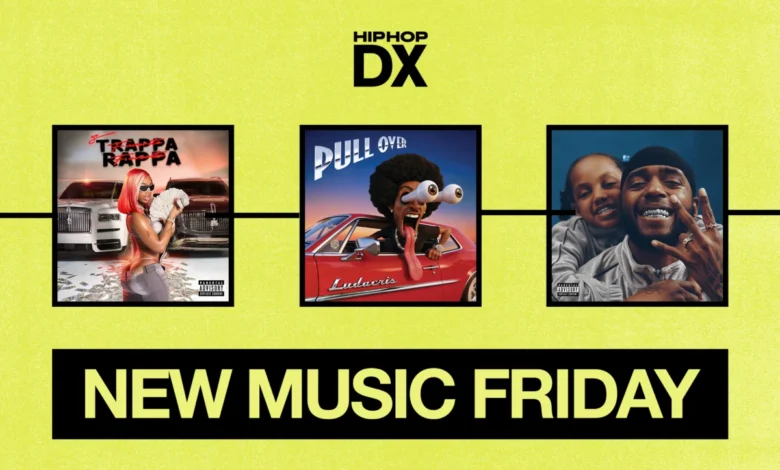
The latest installment of New Music Friday proves that a lack of traditional blockbuster full-length releases from mainstream superstars does not preclude a deeply impactful week for the hip-hop landscape. Instead of relying on a single dominant macro-release, the global streaming ecosystem has been flooded with a diverse array of foundational singles, collaborative EPs, and strategic genre cross-pollination. This week’s drop schedule uniquely bridges generational divides, pairing foundational architects of 1990s and 2000s hip-hop with contemporary viral sensations and critical darlings. Industry analysts note that this fragmented release strategy allows for deeper niche engagement, giving specialized projects room to breathe on streaming charts without being instantly overshadowed by mega-album rollout blitzes.
Main Facts and Major Releases
The focal points of the current release cycle are anchored by landmark comebacks and powerhouse producer-rapper pairings. Most notably, Southern rap icon Ludacris has broken a dry spell lasting over a decade with the release of his playful new single, "Pull Over." The track benefits from the trunk-rattling production of fellow Southern pioneer DJ Toomp, signaling a return to the visceral, bass-heavy aesthetic that defined the Atlanta rap explosion of the early 2000s.
Concurrently, the release calendar features high-profile collaborations that span various sub-genres of hip-hop and R&B. Yasiin Bey, formerly known to global audiences as Mos Def, has joined forces with legendary producer Pete Rock for "Amethyst Rock Salt," a masterclass in boom-bap lyricism and intricate jazz-sampled production. Further enriching the underground landscape, the trio of Blu, Exile, Black Thought, and Mach-Hommy have delivered "TSOD," showcasing a masterclass in dense, multi-syllabic rhyme schemes over Exile’s intricate instrumentation.
In the realm of joint projects and full-length releases, Sexyy Red continues her commercial momentum with the drop of Your Favorite Trappa Favorite Rappa, reinforcing her position as a dominant force in high-energy, twerk-friendly trap anthems with major features from Metro Boomin, Key Glock, and ATL Jacob. Meanwhile, veteran New York fixture Tony Yayo has catered to the counter-culture demographic with The 4:20 Tape, featuring appearances from Wiz Khalifa and Berner. In a poignant historical crossover, late Bad Boy Records icon Black Rob (RIP) and G. Dep are slated to drop a collaborative joint album titled Black & Depper, preceded by their single "Count On It," keeping the legacy of the quintessential East Coast golden era alive.
Chronology and Historical Context
To understand the weight of this week’s musical offerings, one must examine the temporal gaps and historical trajectories represented in the tracklists. Ludacris’s decade-long absence from the traditional solo album market reflects a shifting industry landscape where the multi-platinum artist pivoted successfully toward Hollywood acting franchises, television hosting, and entrepreneurial ventures. His reunion with DJ Toomp—the mastermind behind monumental beats for T.I., Kanye West, and Jay-Z—places this release in a lineage dating back to the golden era of Southern hip-hop dominance in the mid-2000s.
Similarly, the collaboration between Black Rob and G. Dep brings full circle a narrative rooted in Sean "Diddy" Combs’s Bad Boy Entertainment empire of the late 1990s and early 2000s. Both artists achieved commercial success during an era when New York radio dictated national trends. The posthumous and retrospective nature of Black & Depper serves as both a historical archival project and a testament to the enduring bonds forged during hip-hop’s physical-media golden age.
On the contemporary side, artists like 6LACK—who is priming audiences for his upcoming studio album Love is the New Gangsta, scheduled for release on May 22—demonstrate the modern strategy of rolling out projects via strategic single drops. By tapping 2 Chainz (who famously rose through Ludacris’s Disturbing Tha Peace imprint) for the track "Sunday Again," 6LACK bridges the gap between modern dark R&B and foundational Southern trap lyricism, illustrating an evolving intergenerational dialogue within Atlanta’s music ecosystem.
Supporting Data and Cross-Genre Collaborations
The breadth of this week’s output is underscored by a sprawling list of cross-genre and regional partnerships that highlight the health of independent and major-label ecosystems alike:
- Stove God Cooks & Conductor Williams: The duo delivers "Brick After," featuring Chello and Nigel Sylvester, showcasing the continued dominance of cinematic, soul-sampled coke-rap that has captivated elite hip-hop purists.
- Jay Worthy & 9th Wonder: Bringing together West Coast narrative street rap with the soulful, warm percussion of North Carolina producer 9th Wonder on "I Can’t Relate."
- *Tezzus & diamond:* The rising Atlanta duo secured a massive co-sign from Young Thug for their collaborative project UY SCUTI BÎYZ*, nodding directly to Thug’s own 2025 conceptual output and drafting features from Rylo Rodriguez, Bslime, and others.
- Benny The Butcher & Black Soprano Family: Continuing Griselda’s relentless work ethic with "Warehouse 4," featuring Fuego Base, Rick Hyde, and OT The Real, produced by High Honors.
- BNYX & Quavo: A high-octane intersection of boundary-pushing trap production and veteran Migos cadence on "HunchO STEP!"
Official Responses and Industry Reception
While traditional press releases for individual singles are frequently minimalist, the industry reception across digital streaming platforms and social media channels has been overwhelmingly positive regarding the sheer quality of production on display. Producers such as Conductor Williams, Pete Rock, and 9th Wonder have received widespread critical praise from trade publications and fan communities alike for maintaining analog warmth and organic instrumentation in an era dominated by hyper-compressed digital loops.
Artists have similarly utilized digital platforms to contextualize their releases. Ludacris’s return has been heavily discussed across lifestyle and automotive platforms, playing into his well-documented passion for car culture. Meanwhile, the emergence of younger acts like Tezzus and diamond* securing structural support from established heavyweights like Young Thug underscores a deliberate passing-of-the-torch mechanism within the Atlanta recording community. Industry insiders note that this collaborative validation helps emerging acts bypass traditional gatekeeping models, leveraging direct-to-fan streaming ecosystems to build sustainable listener bases.
Broader Impact and Economic Implications
The structural composition of this week’s New Music Friday highlights a broader economic shift within the global music industry. Without a single, multi-format blockbuster album consuming all marketing dollars and streaming bandwidth, independent distributors, boutique labels, and legacy catalogs are experiencing a rare window of elevated visibility.
When foundational figures like Yasiin Bey and Pete Rock release material simultaneously with high-velocity streaming acts like Sexyy Red and The Kid LAROI ("I Condemn"), it creates a multi-tiered economic ecosystem. Major DSPs (Digital Service Providers) benefit from balanced engagement across diverse demographics, ensuring that Gen-Z listeners, millennial purists, and older Gen-X hip-hop enthusiasts all find curated entry points on algorithmic playlists.
Furthermore, the prevalence of producer-led tracks and collaborative EPs points to a sustainable economic model for artists navigating the complexities of modern streaming payouts. By focusing on high-impact, low-overhead collaborative singles and concise thematic EPs—such as Tony Yayo’s The 4:20 Tape or Flee Lord’s Everything I Never Said—artists can maintain a consistent release cadence, retain higher ownership percentages, and mitigate the massive financial risks associated with traditional, multi-million-dollar major label album rollouts.
As the calendar moves closer to the summer release cycle, this week’s varied output establishes a blueprint for modern music distribution: tactical collaborations, deep-rooted regional alliances, and a relentless focus on quality over sheer scale ensure that hip-hop’s creative engine remains robust, dynamic, and economically viable across all generations.