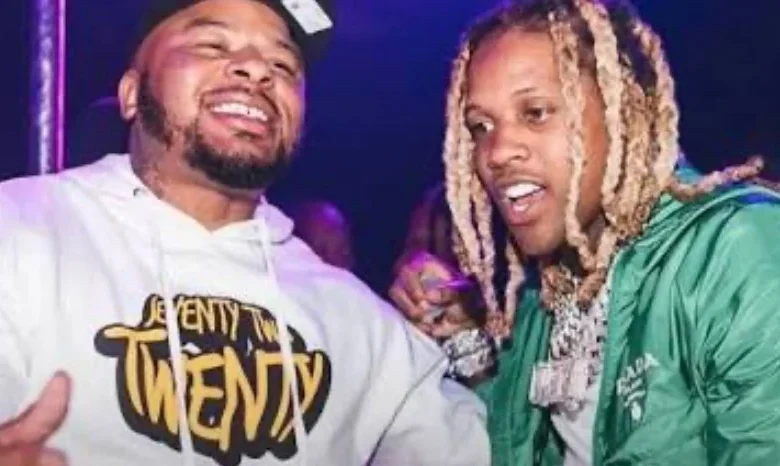
As a federal jury deliberates the fate of Grammy-winning rapper Lil Durk, the high-profile murder-for-hire trial has exposed the staggering legal and personal collateral damage borne by the prosecution’s star witness. Kacey Hester, widely known within hip-hop circles as OTF Jam, entered federal custody facing a relatively minor legal infraction that carried a maximum sentence of approximately three years. However, through a series of sweeping courtroom admissions and a decision to cooperate with federal prosecutors, Hester has effectively traded a manageable prison term for a potential life sentence, while simultaneously destroying his personal life and drawing intense public scrutiny.
The federal case centers on a deadly August 2022 shooting in Los Angeles that claimed the life of Saviay “Lul Pab” Robinson, the cousin of rival rapper Quando Rondo. Federal prosecutors maintain that the targeted attack was a calculated act of retaliation orchestrated by Lil Durk, whose legal name is Durk Banks, following the high-profile November 2020 killing of Chicago rapper King Von. While Banks has maintained his innocence and pleaded not guilty to all charges, the prosecution’s case relies heavily on the inside testimony of accomplices like Hester, whose stunning admissions on the witness stand have upended conventional courtroom dynamics.
A Deep-Rooted History and the Road to Los Angeles
During intense testimony, Hester mapped out his decades-long relationship with Banks, telling the court that the two men had known each other since approximately 2007, long before Banks ascended to global superstardom. Hester detailed how their bond weathered significant hardships, including a 12-year prison sentence that Hester served. According to Hester’s testimony, Banks maintained regular contact throughout the incarceration, routinely accepting phone calls, placing money on his commissary books, and providing him with upward of $50,000 in financial support following his release from custody.
The relationship took a dark and fateful turn approximately six months after Hester’s release. Hester testified that Banks summoned him to travel to Los Angeles. While Hester initially claimed he was unaware that the out-of-state trip involved a lethal assassination plot, he ultimately confessed from the witness stand to being one of the masked gunmen who carried out the fatal ambush on Robinson.
Prosecutors presented evidence and testimony asserting that Banks not only orchestrated and financed the California expedition but also discussed lucrative financial incentives and rewards connected to the elimination of Quando Rondo or Lul Timm. The prosecution has framed these actions as part of a broader, organized conspiracy funded by the Chicago-born artist to settle old scores on the West Coast.
The Defense Counteroffensive and Character Assassination
Faced with devastating insider testimony, Banks’s defense team, led by prominent attorney Brian Steel, mounted an aggressive counteroffensive aimed at completely dismantling Hester’s credibility before the jury. During closing arguments, Steel did not mince words, painting Hester as a dangerous "serial killer," a "coward," and a career criminal who possessed every imaginable incentive to fabricate a narrative that would appease federal prosecutors and secure his own freedom.
Defense attorneys hammered home the sheer magnitude of Hester’s legal pivot. Legal analysts following the trial noted the extraordinary gamble Hester took by choosing cooperation. While cooperating witnesses typically secure reduced sentences or immunity for past crimes in exchange for valuable assistance, Hester’s legal strategy produced the exact opposite effect. By opening up about violent acts and murders that federal investigators were not even actively probing, Hester managed to expose himself to a mandatory minimum or maximum sentence of life imprisonment, effectively wiping out any light at the end of his legal tunnel.
The Toll Beyond the Courtroom: Public Backlash and Family Alienation
The fallout from Hester’s decision to cooperate with federal authorities has extended far beyond the confines of the courtroom, bleeding into his personal life and the public sphere. In a dramatic and emotional moment for the defense, Hester’s own wife took the stand to testify against him. She revealed to the court that their 15-year-old son had formally disowned his father, motivated by deep shame and anger over Hester’s role as a government informant.
Simultaneously, the digital landscape erupted with condemnation. Social media platforms were flooded with harsh critiques, memes, and commentary labeling Hester’s legal maneuver as one of the most self-destructive choices in modern criminal history. Monikers such as "Dumbass of the Year" and phrases highlighting the irony of "snitching his way into more time" trended across digital networks, illustrating the profound social stigma attached to cooperation within the subculture surrounding the case.
Broader Implications for the Rap Industry and Federal Conspiracies
The trial of Lil Durk and the trajectory of Kacey Hester highlight a growing trend in federal prosecutions targeting prominent figures in the music industry. In recent years, federal agencies have increasingly utilized Racketeer Influenced and Corrupt Organizations (RICO) statutes and murder-for-hire charges to dismantle groups connected to prominent rap labels and collectives. By leveraging severe federal sentencing guidelines, prosecutors frequently pressure lower-level associates to turn against their leaders, creating high-stakes environments where loyalty is tested against the threat of decades behind bars.
For Hester, the legal road has reached its conclusion. His testimony is finished, and he must now await the downstream consequences of a sentencing phase that will likely reflect the totality of his admitted crimes. Meanwhile, the ultimate responsibility rests with the federal jury. As deliberations continue, the jurors must weigh the dramatic, high-risk testimony of a self-admitted killer against the presumption of innocence for one of rap music’s most recognizable artists. The verdict will not only determine Lil Durk’s future but will also serve as a definitive judgment on the credibility of a witness who gambled everything—and ultimately lost.