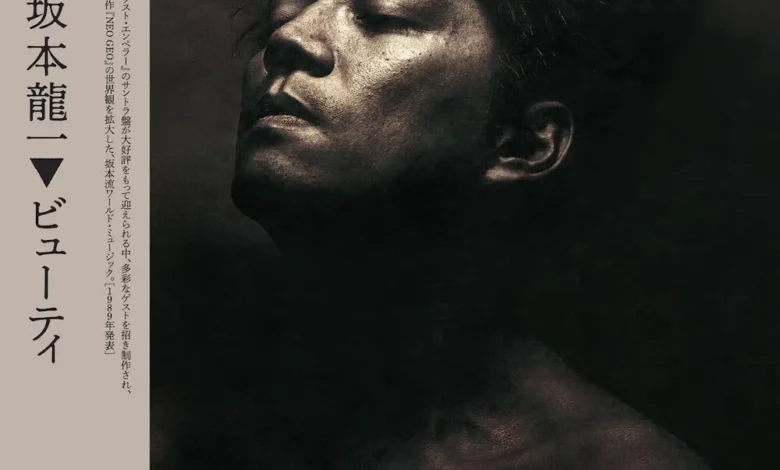
In the late 1980s, a period marked by increasing globalization and burgeoning cross-cultural artistic exchange, Japanese composer Ryuichi Sakamoto released Beauty, a sprawling and ambitious album that defied easy categorization. Released in 1989, the record stands as a testament to Sakamoto’s lifelong commitment to "outernationalism," a philosophy that advocates for artistic creation that transcends geographical and cultural boundaries. More than just an album, Beauty is an intricate audio patchwork, a vibrant tapestry woven from diverse musical traditions and collaborations, firmly establishing its place as a pivotal work in Sakamoto’s transnational discography. The album’s reception, while perhaps not reaching the commercial heights of some of his more widely recognized works, has solidified its status among critics and aficionados as a profoundly influential and deeply rewarding listening experience.
The Genesis of a Global Soundscape
The conceptualization and creation of Beauty occurred during a transformative decade for Sakamoto. Following his international success with the Yellow Magic Orchestra in the late 1970s and early 1980s, Sakamoto embarked on a prolific solo career, increasingly drawn to projects that fostered collaboration and explored a wider sonic palette. The late 1980s saw him deeply engaged in film scoring, notably for Bernardo Bertolucci’s The Last Emperor (1987), which earned him an Academy Award for Best Original Score. This period also witnessed a growing interest in "world music" as a burgeoning genre, though Sakamoto’s approach to incorporating global sounds was always more organic and less conventional than typical genre conventions.
Beauty was conceived as a deliberate departure from the more narrowly defined sounds of the era. Sakamoto envisioned an album that would act as a "cultural map," a sonic exploration of his own eclectic influences and a celebration of the interconnectedness of global musical languages. This ambition necessitated a vast array of collaborators, drawn from disparate corners of the musical world. The album’s liner notes, though not explicitly detailed in the provided excerpt, would undoubtedly read like a who’s who of influential artists from various genres and nationalities. The mention of Brian Wilson, the visionary behind The Beach Boys, alongside Sly Dunbar, the legendary Jamaican drummer, and Robert Wyatt, the idiosyncratic British vocalist and multi-instrumentalist, immediately signals the album’s eclectic ambition. The inclusion of Senegalese vocalist Youssou N’Dour, a prominent figure in West African music, and Arto Lindsay, a New York-based guitarist known for his experimental and avant-garde leanings, further underscores Sakamoto’s intent to bridge musical divides.
A Sonic Tapestry Beyond Borders
The album’s strength lies in its ability to seamlessly integrate these diverse elements without succumbing to a disjointed or superficial pastiche. Sakamoto’s compositional genius allowed him to find common ground between seemingly disparate musical traditions. The "audio patchwork tapestry" described in the excerpt accurately reflects the album’s construction, where Okinawan folk songs might find themselves juxtaposed with the raw energy of a Rolling Stones cover. This juxtaposition is not merely for novelty; it reflects Sakamoto’s deep appreciation for the universality of melody, rhythm, and emotional expression across cultures.
The inclusion of Okinawan folk songs is particularly significant. Okinawa, a prefecture of Japan with a distinct cultural heritage and musical tradition, has long been a source of inspiration for Japanese artists. Sakamoto’s incorporation of these elements speaks to his desire to explore the regional nuances within his own national identity, further challenging monolithic definitions of "Japanese music." Similarly, covering a Rolling Stones track, a band synonymous with Western rock and roll, demonstrates Sakamoto’s willingness to engage with and recontextualize iconic pieces of global popular culture.
The album’s title, Beauty, itself suggests a focus on aesthetic appreciation and the inherent appeal of diverse sounds. It implies a search for universal truths and harmonies that resonate regardless of origin. Sakamoto’s philosophical stance of "outernationalism" provided the guiding principle, encouraging him to look outward, to embrace the foreign, and to find beauty in the unfamiliar. This was a courageous stance in 1989, a time when the concept of "world music" was still solidifying, and artists often faced pressure to conform to genre expectations.
The Collaborative Spirit of Beauty
The sheer scope of the collaborative effort behind Beauty is remarkable. While the excerpt lists a few key contributors, the full roster of musicians and engineers involved would undoubtedly paint an even richer picture of the album’s global reach. Brian Wilson’s contribution, for instance, likely brought a signature melodic sensibility and vocal arrangement expertise, reminiscent of his groundbreaking work with The Beach Boys. Sly Dunbar’s rhythmic prowess would have provided a foundational groove, capable of underpinning diverse musical styles. Robert Wyatt’s unique vocal delivery and experimental approach would have added an element of introspection and unconventional artistry.
Youssou N’Dour’s presence is particularly noteworthy. As a globally recognized artist in his own right, his involvement would have lent an authentic and powerful African voice to the album, showcasing his distinctive vocal style and contributing to the rich tapestry of sounds. Arto Lindsay, with his experimental background, would have brought a spirit of sonic exploration and perhaps a willingness to push the boundaries of traditional song structures.
The process of corralling such diverse talent would have required immense organizational skill and artistic diplomacy from Sakamoto. It speaks to his reputation as a composer and collaborator capable of fostering an environment where artists from different backgrounds could connect and contribute meaningfully to a shared vision. This collaborative approach not only enriched the musical content but also embodied the very philosophy of "outernationalism" that the album championed.
Beauty in the Context of Sakamoto’s Career and the Music Industry
Beauty emerged at a time when the music industry was beginning to grapple with the implications of globalization. The rise of digital technology and the increasing ease of international travel and communication were facilitating unprecedented cross-cultural artistic exchange. However, the concept of "world music" itself was often criticized for its potential to exoticize and homogenize diverse musical traditions. Sakamoto’s Beauty actively worked against these tendencies by focusing on genuine artistic collaboration and a deep respect for the individual contributions of each artist.
Compared to Sakamoto’s earlier, more commercially successful albums, such as Merry Christmas Mr. Lawrence (1983), Beauty might be considered a more niche project. However, its enduring appeal lies in its artistic integrity and its willingness to explore complex musical ideas. For fans and critics alike, the album represents a significant moment in Sakamoto’s artistic development, showcasing his maturation as a composer and his unwavering commitment to pushing the boundaries of musical expression.
The album’s impact can be seen in its influence on subsequent generations of artists who have embraced global collaborations and experimented with diverse sonic palettes. It serves as a precedent for how artists can engage with the world’s musical heritage in a way that is respectful, innovative, and deeply personal. Beauty is not merely a collection of songs; it is a statement about the potential for music to connect people, to foster understanding, and to reveal the shared beauty that exists across all cultures.
Legacy and Ongoing Relevance
While the original excerpt notes that Beauty requires membership to continue reading, the excerpt itself provides enough substance to understand its significance. The phrase "Only the good shit" used by Aquarium Drunkard to promote their platform speaks to a curatorial approach that prioritizes quality and depth, suggesting that Beauty is considered a prime example of such artistic merit.
The album’s enduring relevance lies in its prescient exploration of themes that continue to be vital today: globalization, cultural exchange, and the search for universal human connection through art. In an era where borders are increasingly fluid and the internet connects us instantaneously, Sakamoto’s "outernationalism" feels more relevant than ever. Beauty remains a powerful reminder of the richness that can emerge when artists dare to look beyond their immediate surroundings and embrace the vast, interconnected world of sound. It is a work that continues to reward listeners with its complexity, its beauty, and its profound humanity. The fact that such an album, released over three decades ago, still necessitates a discussion about its importance and requires patrons to maintain its visibility speaks to its lasting impact and its status as a vital piece of musical history. The "spectacle to behold" that Beauty represents is one that continues to unfold with each listen, revealing new layers of sonic and cultural richness.