Memphis Grizzlies Part Ways with Veteran Guard DAngelo Russell in Surprise Roster Shakeup Ahead of NBA Season

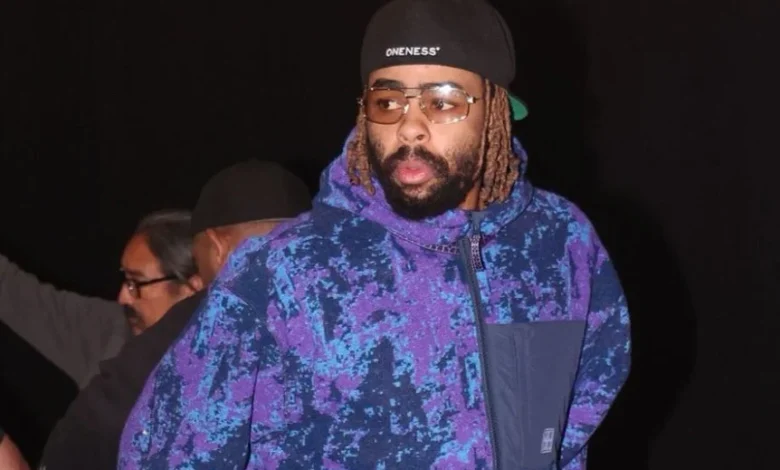
The Memphis Grizzlies have officially parted ways with veteran guard DAngelo Russell, releasing the 30-year-old playmaker before he ever stepped onto the hardwood for the franchise. The decision, first reported by ESPN NBA insider Shams Charania, stems from an increasingly congested roster crunch as the Grizzlies finalize their personnel configurations for the upcoming regular season. By executing this move ahead of opening night, the front office has given Russell an unobstructed path through the waiver wire, theoretically allowing him to evaluate his options and secure a contract with a new organization before training camps kick into high gear across the league.
This unexpected development marks yet another chapter in a turbulent and nomadic stretch for the former All-Star. Russell now finds himself navigating the waiver process for the second time in a matter of months, thrust back into an unsettled free-agent market where teams are constantly scouring for backcourt depth, veteran leadership, and bench scoring. As league executives weigh their options regarding the remaining talent pool, the focus shifts to how Russell fits into the modern NBA ecosystem and which franchises might step forward to utilize his decade-long reservoir of professional experience.
The Chronology of a Disrupted Offseason: From Dallas to Washington to Memphis
To fully understand how Russell arrived at this crossroads with the Grizzlies, one must retrace a dizzying timeline of transactions that began during the opening bell of the NBA summer trading window. Russell’s journey to the Bluff City was initially engineered as a minor component of a massive, multi-team blockbuster deal completed in July. At the time, the multi-team trade involved six different franchises orchestrating a complex exchange of assets, draft capital, and expiring contracts.
In the wake of that initial deal, Russell found himself initially packaged away by the Dallas Mavericks and dispatched to the Washington Wizards. In Washington, his stay proved to be nothing more than a brief administrative layover. Before he could establish roots in the nation’s capital or participate in any meaningful organizational activities, the Wizards redirected him to the Memphis Grizzlies. This subsequent transaction carried an expiring contract valued at approximately $6 million for the 2026-27 NBA campaign.
Throughout this dizzying series of flights and medical evaluations, Russell remained a valuable financial chip due to his expiring salary, which offered luxury-tax relief and future roster flexibility to the teams holding his rights. However, luxury and flexibility ultimately gave way to roster arithmetic. The Grizzlies, possessing a deeply entrenched core of young talent alongside established rotation pieces, simply ran out of available roster spots. With training camp commitments looming and front offices forced to trim their numbers down to the league-mandated regular-season limits, Memphis leadership made the difficult choice to absorb the financial implications of waiving the veteran guard rather than forcing an unsustainable logjam at the guard positions.
Statistical Breakdown: Analyzing Russell’s Recent Production and Career Trajectory
For any prospective front office evaluating whether to place a claim on Russell—or wait for him to clear waivers and sign a veteran minimum contract—the decision ultimately hinges on a cold, analytical assessment of his recent production on the court. Evaluating a player entering his eleventh NBA season requires looking beyond the prestige of his past accolades and diving straight into the tracking data from his most recent campaign.
During the 2025-26 season split and his subsequent stint with the Dallas Mavericks, Russell appeared in 26 games, logging consistent minutes primarily as a secondary playmaker and tertiary scoring option. Across those appearances, he posted averages of 10.2 points and 4.0 assists per contest. While those figures represent a noticeable regression from his peak offensive output during his prime years, they still highlight a player capable of orchestrating an offense and distributing the basketball efficiently within a controlled system.
However, lingering questions persist regarding his shooting efficiency, which will undoubtedly form a core component of any team’s internal scouting report. Last season, Russell converted just 29.5 percent of his attempts from beyond the three-point arc. This exterior shooting dip represents a stark departure from the stellar perimeter accuracy he demonstrated during earlier career stretches, where he was consistently feared as a lethal pull-up shooter and pick-and-roll marksman.
Front offices will therefore be forced to project whether his perimeter shooting numbers were an anomaly born of turbulent role changes and system adjustments, or if they signal a permanent downward trend in his spacing value. For a player whose defensive limitations have often required him to compensate with elite offensive gravity, regaining a reliable outside stroke will be paramount in convincing a new coaching staff to carve out a nightly rotation spot for him.
Evolution of a Playmaker: Transitioning from Franchise Core to Bench Catalyst
The overarching narrative of DAngelo Russell’s career has undergone a profound metamorphosis since he entered the league as the second overall pick in the 2015 NBA Draft. During his formative years and his subsequent All-Star campaign, expectations demanded that Russell shoulder the immense responsibility of serving as the primary offensive engine for his franchise. He was tasked with dominating possession, breaking down defenses off the dribble in isolation, and shouldering the scoring load during high-leverage fourth-quarter possessions.
As the NBA has evolved into a hyper-athletic, pace-and-space laboratory prioritizing switch-heavy defenses and multi-positional versatility, Russell’s role has similarly shifted. Entering his thirties, the reality of his career arc points toward a transition from a foundational starting centerpiece to a high-IQ, steadying presence off the bench.
In this newly defined role, Russell’s value lies in his ability to command the second unit. He remains exceptionally skilled at running the pick-and-roll, utilizing his high basketball IQ to manipulate coverage, find rolling big men, and pick apart drop coverages with pocket passes or midrange pull-ups. When second-quarter offensive possessions inevitably stall out and standard ball movement breaks down, having a seasoned orchestrator who can stabilize the tempo, draw fouls, and create his own shot from intermediate areas remains a coveted commodity for contending teams.
Scouting Potential Fits: Where Might Russell Land Next?
As the basketball world processes the sudden opening of Russell’s free agency, league analysts and fan bases have already begun speculating about his next landing spot. While any new contractual agreement must be forged from scratch once he officially clears the mandatory 48-hour waiver period, several franchises emerge as logical fits based on roster construction, positional needs, and financial flexibility.
Among the most frequently mentioned destinations in league circles are the Miami Heat and the Philadelphia 76ers. Both organizations possess established cultures and championship aspirations, yet both have experienced lingering questions regarding their secondary playmaking depth behind their respective star guards.
In Miami, Erik Spoelstra’s system famously thrives on maximizing the talents of veteran guards who possess high basketball character and floor-spacing capabilities. A player of Russell’s pedigree could conceivably slide into a bench role, absorbing minutes when the offense requires a steady hand to navigate zone defenses or late-clock situations. Similarly, Philadelphia has routinely sought cost-effective backcourt upgrades that can alleviate the offensive burden placed on their primary superstars during the grueling winter months of the regular season.
Nevertheless, any suitor will need to carefully weigh the defensive ramifications of inserting Russell into their rotation. Modern playoff basketball demands defensive switchability and perimeter containment—areas where Russell has historically faced scrutiny. Consequently, any prospective coach who signs him will likely need to construct specific defensive coverages or defensive pairings to mask his vulnerabilities while maximizing his offensive orchestration.
Broader Implications: Roster Crunch Realities and the Modern NBA Waiver Market
The timing of Russell’s release from the Memphis Grizzlies underscores a broader, systemic reality across the modern NBA landscape. As front offices increasingly utilize multi-team trades as financial instruments to manage salary caps, luxury tax thresholds, and future draft capital, veteran players with modest expiring salaries frequently find themselves treated as movable assets rather than long-term cultural centerpieces.
In this era of hyper-optimized roster building, every single roster spot is treated as a precious commodity. Teams are constantly balancing the upside of younger, cost-controlled developmental players on two-way or minimum contracts against the immediate, steady floor that a 30-year-old veteran provides. For Memphis, clearing Russell off the books was an exercise in rigorous arithmetic—a necessary sacrifice to ensure the active roster aligned precisely with coaching staff rotations and front-office financial planning.
For Russell himself, this juncture represents a critical audition. Having spent over a decade traversing some of the league’s most high-profile markets, his resilience and adaptability will once again be tested. Whether he elects to sign with a championship contender looking for insurance policy playmaking or chooses an environment with a clearer path to consistent minutes, his next contract will be dictated by how strongly general managers believe in the enduring value of his veteran skill set.
As the waiver wire clears and the opening night of the regular season draws rapidly closer, the immediate future of DAngelo Russell remains one of the compelling subplot lines of the late-summer NBA calendar. The skills that enabled him to sustain a productive career at the highest level of professional basketball for more than ten years have not vanished overnight. It now falls upon the rest of the league to determine which franchise is ready to capitalize on them.