The Collision of Music and Geopolitics: Ed Sheeran, Industry Boycotts, and the Mounting Pressures on Modern Artists

The intersection of modern entertainment and international politics has rarely been as volatile as it is in 2026, a reality underscored by a turbulent week for global pop superstar Ed Sheeran. Taking the stage at the Lincoln Financial Field stadium in Philadelphia this past weekend, Sheeran addressed a storm of controversy that has threatened to derail his ongoing United States tour. The performance, which faced significant delays after all of his scheduled support acts abruptly withdrew in protest, highlighted an increasingly precarious environment for artists navigating the modern socio-political landscape. The events in Philadelphia encapsulate a broader, industry-wide reckoning over freedom of expression, corporate alignment, and the heavy toll that global conflicts are exacting on the business of live entertainment.
Chronology of the Crisis: From Macklemore’s Ouster to the Philadelphia Show
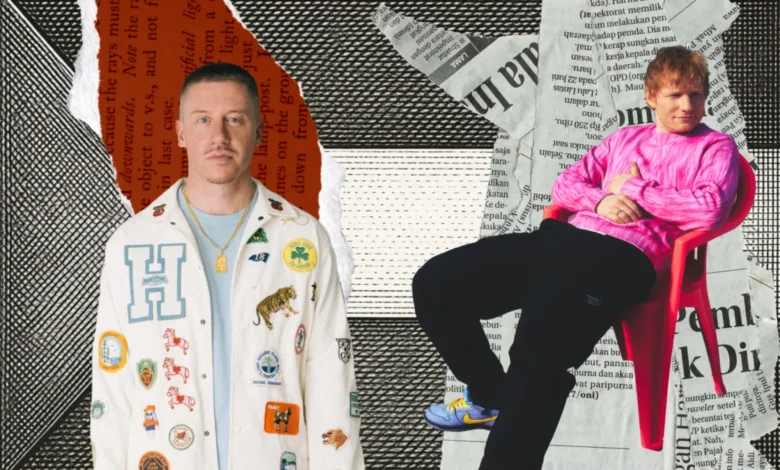
The sequence of events leading up to Sheeran’s Philadelphia concert began weeks earlier when rapper Macklemore was removed as a support act from the tour. The decision to drop the rapper followed intense pressure from billionaire venue owners and stakeholders—spearheaded by New England Patriots owner and Gillette Stadium operator Robert Kraft—who objected to Macklemore’s vocal on-stage support for Palestine during earlier tour stops.
Rather than standing by his opening act, Sheeran’s team chose to remove Macklemore to ensure the continuation of the stadium dates. This decision triggered immediate backlash from fans, industry peers, and the tour’s remaining support roster. In solidarity with Macklemore, every single opening act on the bill, including Aaron Rowe and Sheeran’s long-standing traditional backing band, Beoga, pulled out of the tour just days before the Philadelphia performance.
Despite frantic behind-the-scenes scrambling, the sudden departures left the production severely under-resourced. A newly assembled backing band, featuring violinist Alicia Enstrom, was given a mere three days to learn the entire setlist under the immense pressure of performing alongside an artist currently facing severe public censure. The show ultimately went forward, delayed by logistics, but marked a profound shift in the tone of Sheeran’s massive commercial enterprise.
Sheeran’s On-Stage Defense and Balancing Act
Addressing the stadium crowd in Philadelphia, Sheeran delivered a carefully scripted statement designed to walk a tightrope between acknowledging the gravity of global crises and preserving his long-held stance of remaining an apolitical entertainer.
"I’ve had to take and make difficult decisions in the last week, and I am making mistakes," Sheeran told the audience, reading from a prepared text. He admitted that while he was accustomed to critiques regarding his music, the recent wave of criticism centered on matters of far greater consequence. "I’ve never wanted to be an activist musician, but this week has put me in the middle of an important and passionate argument about freedom of speech and the most complex political issue on the planet."
Sheeran voiced deep concern over the precedent set by venue owners pre-approving or censoring the content of touring performers. He noted that while such restrictions are common in authoritarian regions globally, they "should never happen in the free world." However, he stopped short of directly calling out Robert Kraft or the other stadium executives responsible for Macklemore’s censorship.
Turning to the geopolitical core of the controversy, Sheeran attempted a meticulously balanced statement regarding the Israel-Hamas conflict. He characterized the events of October 7 at the Nova music festival as "horrific and compounded centuries of Jewish pain," while simultaneously condemning the military campaign in Gaza as "catastrophic and unjustifiable and disproportionate." He added that his heart was broken by the scale of civilian casualties and stated that the systemic injustices unfolding in the West Bank could not be overlooked.
Later in the evening, speaking more informally to the audience, Sheeran revealed the personal fallout of the past week, noting that numerous long-time acquaintances and colleagues had distanced themselves from him, with many urging him to cancel the tour entirely.
Aaron Rowe and the Debate Over Accountability
While public anger has largely focused on Sheeran’s compliance with venue owners, departing support act Aaron Rowe used social media ahead of the Philadelphia concert to redirect public scrutiny toward the industry’s corporate leadership.
In a pointed statement, Rowe argued that fans were misdirecting their anger by fixating on Sheeran rather than the powerful figures enforcing censorship within American stadiums. "I think you are all focusing on the wrong person here," Rowe wrote. "All I keep hearing is Ed Sheeran this, Ed Sheeran that. When you really should be focusing on the likes of Robert Kraft."
Rowe pointed directly to the influence of pro-Israel lobbying networks and billionaire venue operators who, in his view, weaponized their financial leverage to silence dissenting voices speaking out against civilian casualties in Gaza. He urged activists to channel their energy toward exposing figures who suppress free speech rather than attacking artists caught in the systemic machinery of the live touring industry.
The Broader Artist Landscape: Zara Larsson and Sylvan Esso Face Political Realities
The pressures facing Ed Sheeran are symptomatic of a broader climate where musicians across genres find themselves forced to take stances, often at significant professional cost. Swedish pop star Zara Larsson recently made headlines by withdrawing from a scheduled performance at the Abu Dhabi Grand Prix. The cancellation followed intense public pressure on social media regarding the United Arab Emirates’ alleged support of the Rapid Support Force—a paramilitary group implicated in severe human rights violations and civilian atrocities during the ongoing civil war in Sudan.
Although Larsson initially signaled her exit in direct response to a fan urging her to research the UAE’s actions, she later issued a more nuanced statement. She emphasized her desire to bring music to people globally while asserting that citizens should not be conflated with their governments. Ultimately, she concluded that withdrawing from the lucrative performance aligned most closely with her personal values, independent of strict political calculations.
Meanwhile, the recorded music sector is witnessing its own battles over corporate ethics and commercial viability. Amelia Meath of the indie-pop duo Sylvan Esso announced to fans that the group was reluctantly returning their catalog to Spotify. The duo had previously joined a wave of prominent acts removing their music from the platform in protest of investments made by Spotify co-founder and Executive Chairman Daniel Ek into Helsing, a European artificial intelligence and defense technology firm.
Meath detailed the severe economic friction of the boycott, noting that while maintaining the protest "felt really, really good," the platform’s dominance of the digital streaming market—accounting for roughly 82 percent of all audio streaming—made the boycott financially unsustainable. To preserve the livelihoods of their support staff and crew, the duo felt compelled to return, despite their ongoing opposition to the business of modern warfare. "I don’t like it, and I’m really frustrated by this reality," Meath told fans. "But the financial reality is the reality right now."
Implications for the Music Industry in 2026
The convergence of these events signals a challenging new era for artists, management agencies, and promoters alike. The illusion of the strictly apolitical pop star is rapidly dissolving under the weight of hyper-connected global audiences and polarized stakeholders.
For live performance promoters, the willingness of venue owners to exercise veto power over artists’ political speech introduces a chilling precedent. When billionaire operators can unilaterally dictate touring lineups based on geopolitical stances, the live entertainment market risks becoming subject to private censorship. Conversely, artists who attempt to navigate these waters by seeking neutral ground increasingly find themselves abandoned by both progressive peers demanding solidarity and corporate backers demanding conformity.
As Sheeran’s tour continues under the watch of a newly assembled backing band and heightened security, the music industry is left grappling with foundational questions about autonomy, expression, and the economic dependencies that dictate where art can—and cannot—be performed.