Macklemore challenges Robert Kraft to match million dollar donation amid ongoing controversy surrounding his removal from Ed Sheeran’s Loop Tour

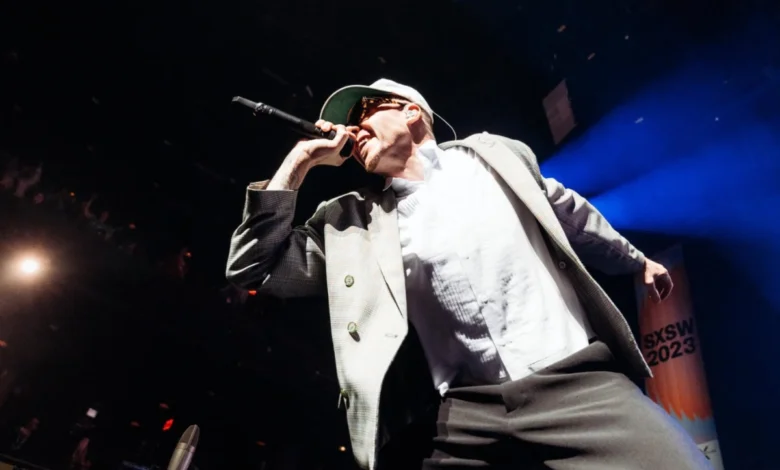
The intersection of celebrity activism, geopolitical tensions, and the corporate management of live music reached a boiling point this week as rapper Macklemore publicly challenged New England Patriots owner and businessman Robert Kraft to match a $1 million donation to Palestinian aid organizations. The challenge comes in the wake of the Seattle-based musician’s high-profile removal from Ed Sheeran’s "Loop" tour, a decision that has sparked a broader industry conversation regarding the role of political speech in the commercial concert circuit.
The Catalyst: Protest and Removal
The conflict originated on September 4 and 5 during Ed Sheeran’s performances at MetLife Stadium in New Jersey. Macklemore, who was serving as a supporting act for the tour, utilized his stage time to perform his protest anthem, "Hind’s Hall." The track, released earlier in 2024, explicitly accuses the Israeli government of committing genocide against the Palestinian people, a position that has been the subject of intense international debate since the onset of the Israel-Hamas conflict following the October 7, 2023, attacks.
During these performances, the rapper showcased graphic visuals of the ongoing violence in Gaza. The imagery and the lyrical content of the performance drew immediate backlash from various stakeholders, including prominent venue owners. According to reports, the situation escalated when Robert Kraft, whose company, The Kraft Group, owns Gillette Stadium—a key venue on the tour—allegedly threatened to cancel the upcoming performances at his facility unless Macklemore was removed from the bill.
Chronology of the Dispute
The timeline of the fallout illustrates the rapid escalation of the controversy:
- September 4-5: Macklemore performs "Hind’s Hall" at MetLife Stadium in New Jersey, incorporating explicit criticism of Israeli military actions and direct support for the Palestinian cause.
- September 14: Messina Touring Group, the promoter for the U.S. leg of the tour, officially announces that Macklemore will no longer perform on the remaining dates. The promoter cites "discussions with stakeholders" and the potential for tour-wide cancellations as the primary drivers for the decision.
- September 15: Ed Sheeran issues a statement clarifying that the decision to remove Macklemore was made by the promoter and venue stakeholders, not by him personally. He emphasizes his commitment to fulfilling contractual obligations to fans and his touring crew.
- September 16: In a significant escalation, Macklemore publishes a public response on social media. He pledges to donate $1 million—representing his entire net earnings from the tour—to six humanitarian organizations, including the Palestine Children’s Relief Fund and UNRWA USA. He simultaneously challenges Robert Kraft to match this contribution.
Official Responses and the Corporate Stance
Robert Kraft addressed the incident shortly after the announcement of the tour lineup changes. In a statement, Kraft framed the decision as a necessary measure to prevent Gillette Stadium from becoming a "platform for hate speech." He acknowledged the suffering of innocent Palestinians, noting that their "pain and loss are real," but maintained that advocacy for one side should not come at the expense of the Jewish community. He further expressed a desire to engage in a direct dialogue with the rapper to discuss "the facts" and find common ground on the broader goal of peace.
Ed Sheeran’s position reflects the precarious balance between artist agency and the massive logistical machinery of stadium touring. By stating that his contract with the promoter necessitated the adherence to venue mandates, Sheeran highlighted a recurring issue in the modern concert industry: the degree of control venue owners and promoters exert over the content of live performances.
The situation triggered a domino effect among other support acts. Following the announcement of Macklemore’s removal, artists Aaron Rowe, Finneas, and Lukas Graham withdrew from their scheduled appearances. Each act cited solidarity with Macklemore’s political stance and the broader humanitarian crisis in Gaza as the motivation for their departure, effectively creating a protest movement within the tour’s own roster.
Supporting Data and Humanitarian Context
The organizations selected by Macklemore to receive his $1 million donation are actively involved in providing relief in a region where the infrastructure is severely compromised. According to data provided by the Gaza Health Ministry as of July 2024, the conflict has resulted in more than 73,000 fatalities, with hundreds of thousands more displaced, suffering from acute food insecurity, and lacking access to basic medical care.
The humanitarian crisis has been the subject of multiple resolutions and reports from the United Nations. While the UN has characterized the scale of the destruction and loss of life in terms that some experts argue meet the threshold of genocide, the United States government and the State of Israel have consistently denied these allegations. This divide in international opinion underscores the gravity of the rhetoric employed by artists like Macklemore, who are increasingly using their platforms to force these global issues into the domestic mainstream discourse.
Implications for the Music Industry
This incident serves as a bellwether for how the music industry handles political polarization. In an era where fans and corporations alike are increasingly demanding that public figures take definitive stances on global conflicts, the "apolitical" model that historically protected major pop stars is becoming difficult to maintain.
- Contractual Autonomy: The fact that a tour promoter could unilaterally remove an artist based on the demands of venue owners raises questions about the "morality clauses" often buried in touring contracts. These clauses, originally designed to protect promoters from scandals, are increasingly being applied to political speech.
- The Economic Cost of Advocacy: Macklemore’s act of donating his earnings highlights a growing trend of "impact-driven" touring. By framing the check as "one of the least costly forms of solidarity," he shifts the focus from the loss of revenue to the tangible impact the money can have on the ground.
- Venue Power Dynamics: The role of entities like The Kraft Group demonstrates that stadium owners have become de facto censors in the live entertainment ecosystem. As venues consolidate under fewer ownership groups, the potential for "content filtering" based on the personal or political beliefs of the owners is likely to remain a contentious issue.
Analysis of the Public Debate
The reaction to this event has been predictably split along the lines of the broader debate surrounding the Middle East. Supporters of the move to remove Macklemore argue that concerts are intended to be neutral spaces for entertainment, and that the nature of his performance was divisive and offensive to a significant portion of the audience and local communities. They argue that venue owners have a right to manage their property in accordance with their own standards of conduct.
Conversely, free speech advocates and proponents of the artist’s stance argue that the removal constitutes a dangerous precedent of corporate censorship. They contend that the suppression of political speech—particularly regarding humanitarian crises—violates the spirit of the arts as a medium for social commentary. The fact that other artists walked away from the tour in solidarity suggests that the creative community is increasingly willing to prioritize collective values over individual commercial success.
As of the current news cycle, there has been no formal response from the offices of Robert Kraft regarding the challenge to match the donation. Whether this public confrontation results in a dialogue or remains a stalemate, it has cemented the event as a landmark moment in the ongoing intersection of pop culture and international relations. For the fans of the Loop Tour, the impact is tangible: the loss of several high-profile acts has fundamentally altered the experience of the tour, turning a series of concerts into a focal point for a debate that shows no signs of resolution.
Related posts: