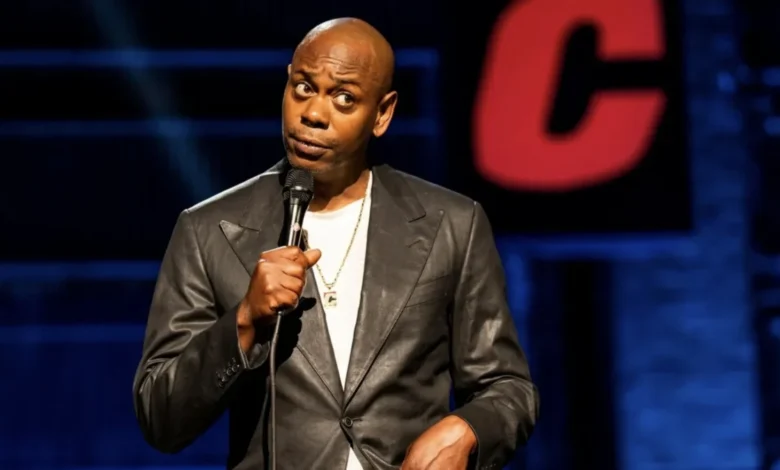
The comedy world and the political sphere have collided in a volatile intersection of free speech, public safety, and cultural commentary following a series of remarks made by comedian Dave Chappelle during his appearance at the New York Comedy Festival this past weekend. Performing at the prestigious Madison Square Garden, Chappelle allegedly offered candid—and controversial—sentiments regarding the 2025 assassination of conservative activist Charlie Kirk. The comments have sparked a fierce debate across social media platforms, drawing public rebukes from high-profile figures and raising questions about the boundaries of satire in an increasingly polarized climate.
Chronology of the Controversy
The incident occurred during a set that was strictly governed by the comedian’s signature phone-free policy, which typically requires attendees to secure their mobile devices in locked pouches upon entry. Despite these rigorous measures, a low-quality, secondary recording of a screen displaying the set began to circulate on social media platforms late last week.
In the audio captured from the clip, Chappelle can be heard addressing the audience with an air of internal conflict. "I feel fucked up saying this," the comedian stated. "It’s scary being a public speaker… Ever since that guy Charlie Kirk got murdered, and I shouldn’t say this publicly, but, I feel better."
Following a moment of hesitant, nervous laughter from the audience, Chappelle reportedly doubled down on the sentiment, adding, "I know I shouldn’t say that. But, it’s just a feeling."
The claims were corroborated by Rob Henderson, a writer and senior fellow at the Manhattan Institute, who was present at the show. Henderson took to social media to report that Chappelle’s remarks went further than the leaked clip suggested, alleging the comedian stated, "I’m so happy Charlie Kirk was killed. I can’t help it, it’s involuntary." The dissemination of these reports and the accompanying video footage has garnered nearly 7 million views, prompting a firestorm of commentary.
Context: The Assassination of Charlie Kirk
Charlie Kirk, a prominent conservative commentator and founder of Turning Point USA, was killed in 2025 during an appearance at a university in Utah. The assassination sent shockwaves through the American political landscape, highlighting the rising volatility surrounding public intellectuals and figures who operate within the digital media ecosystem.
Kirk’s death has frequently served as a touchstone for cultural commentary. Prior to this weekend’s events, Chappelle had incorporated the tragedy into his 2025 Netflix special, The Unstoppable. In that set, Chappelle addressed his own personal anxieties, noting that the killing of Kirk—who was well-known for his provocative, often anti-transgender rhetoric—left him feeling vulnerable. At the time, Chappelle suggested that because he, too, had been a vocal critic of gender ideology, he feared he might be targeted next.
Furthermore, Chappelle’s previous set served as a critique of those who sought to elevate Kirk to the status of a civil rights icon. During The Unstoppable, Chappelle explicitly rejected comparisons between Kirk’s death and the assassination of Dr. Martin Luther King Jr. "That’s a reach," Chappelle remarked. "They both got murdered in a terrible fashion. They both got shot in the neck, but that’s about where those similarities ended."
He further deconstructed the nature of modern digital celebrity, arguing that Kirk’s public persona was engineered for engagement rather than discourse. "Charlie Kirk’s an internet personality—by design. Fundamentally, he can’t function like Dr. King. Internet [personalities] are negative because they have to be. No one will engage them unless they say shit that makes them upset."
Official Reactions and Digital Outcry
The fallout from the Madison Square Garden set has been swift, characterized by a mix of condemnation and defense of comedic license. Perhaps the most notable reaction came from Elon Musk, the owner of X (formerly Twitter). Despite his public stance as a "free speech absolutist," Musk responded to a viral post detailing Chappelle’s comments with a sharp rebuke: "Shame, shame, shame on Chappelle."
Musk’s involvement highlights the shifting allegiances in the "culture wars." While many in the conservative media sphere have denounced Chappelle for celebrating the death of a prominent right-wing voice, others have pointed to the inherent nature of standup comedy as a space where "involuntary" or dark thoughts are processed and performed.
The tension underscores a deeper sociological shift: as political polarization intensifies, the distance between private thought and public performance continues to shrink. For comedians like Chappelle, who have built long-standing careers on testing the limits of acceptable discourse, the pressure to maintain "sanitized" viewpoints is often at odds with the mandate of their craft.
The Implications of Comedic Satire in a Violent Era
The discourse surrounding this incident involves two primary analytical threads: the ethics of speech regarding the deceased and the responsibility of public figures in a climate of political violence.
Critics of Chappelle argue that regardless of one’s political alignment, expressing satisfaction over an assassination represents a moral failure. They contend that in an era where political violence is a tangible threat, such rhetoric from a major cultural influencer can normalize or even incite further hostility.
Conversely, supporters of the comedian argue that the stage has historically functioned as a "sacred" space for the expression of transgressive, dark, or deeply personal feelings. They argue that Chappelle’s use of the word "involuntary" suggests that he is not making a political endorsement of violence, but rather articulating a visceral, human reaction to a figure whose rhetoric he viewed as harmful.
From a media analysis perspective, the event also raises questions about the "phone-free" environment. Chappelle’s commitment to preventing audience recordings is designed to protect the intimacy of the performance, allowing for the nuance of a set to be understood within its specific context. The leak of the clip—and the subsequent reliance on truncated social media posts—risks stripping the comedian’s words of their performative frame, potentially leading to a misinterpretation of his intent.
Broader Societal Impact
The longevity of the outrage surrounding this incident points to a broader trend in the American public square. The death of high-profile media figures in the last two years has fundamentally altered how audiences consume political satire. In the past, comedy was often viewed as a "safe" distance from reality; today, the lines are blurred.
Data from the past 18 months suggest that audiences are increasingly likely to conflate a comedian’s stage persona with their personal political advocacy. This has created a high-stakes environment for entertainers who tackle sensitive topics. As noted by media researchers, the "viral" nature of modern social media means that a single, out-of-context snippet of a set can generate more public engagement than the entirety of the performance itself.
For the New York Comedy Festival, the situation is a logistical and public relations challenge. While the festival has not issued a formal statement regarding the specific comments, the incident serves as a case study for event organizers in managing the fallout of high-profile, potentially incendiary performances.
Conclusion
As of this writing, Dave Chappelle has not provided a secondary comment or clarification regarding his MSG remarks. The situation remains a point of intense interest, not merely because of the comedian’s stature, but because of what it reveals about the fragility of public discourse. Whether the outcry will lead to a broader re-evaluation of what is considered "off-limits" in comedy remains to be seen. However, one thing is clear: in an age of instantaneous digital reporting and deep-seated political divides, the traditional boundaries of the comedy club are being tested as never before. The legacy of Charlie Kirk, and the way in which his death is processed by the cultural elite, continues to serve as a lightning rod for a nation still grappling with the consequences of its own hyper-partisan reality.