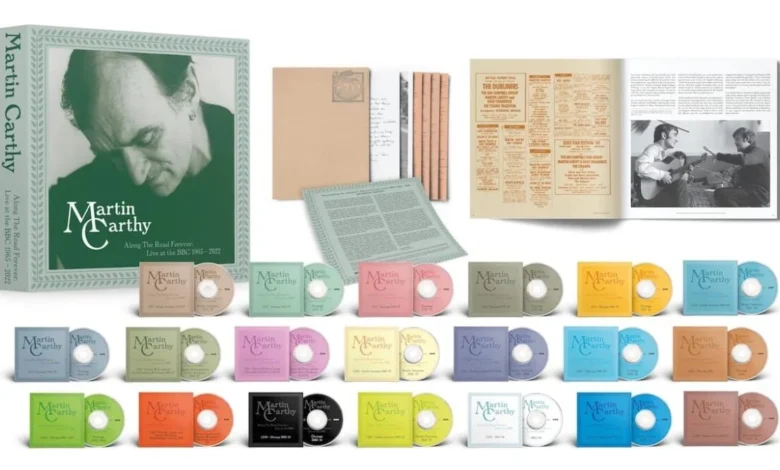
The Definitive Archival Collection of Martin Carthy
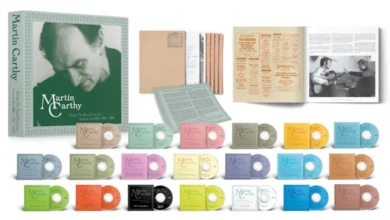
The scale of "Along The Road Forever" is nearly unprecedented for a solo folk artist. While many archival releases are condensed into standard jewel-case dimensions, this release arrives as a large, vinyl-sized box set containing 20 CDs. The collection encompasses 328 live and session recordings, totaling approximately 22.5 hours of music. These recordings span from Carthy’s earliest appearances in 1965 through to 2022, providing a chronological map of his artistic development.
A critical aspect of this release is the audio provenance. Two-thirds of the recordings have been sourced directly from master tapes, ensuring a level of fidelity that often eludes historical folk archives. For a musician like Carthy, whose intricate, percussive guitar style and nuanced vocal delivery are central to his work, this high-quality restoration is vital. The collection includes 237 unique repertoire performances, some of which have never been commercially available before. This includes early ABC TV recordings that predate his more famous BBC sessions, offering a rare glimpse into the formative years of a musician who would go on to influence global icons such as Bob Dylan and Paul Simon.
Accompanying the music is an 80-page book, matching the large dimensions of the box set. This volume features a new biographical essay by Clinton Heylin, a renowned music historian known for his extensive work on Bob Dylan and the history of the folk-rock movement. Furthermore, the book includes detailed session notes by Kevin Boyd, alongside a wealth of visual history including rare photographs, posters, tickets, and advertisements from throughout Carthy’s career.
Historical Context: Martin Carthy and the British Folk Revival
To understand the significance of this release, one must look at Martin Carthy’s role in the English folk revival of the 1960s and 70s. Carthy was a central figure in the movement that sought to reclaim and revitalize traditional English music. His work with The Watersons, Steeleye Span, and his long-standing partnership with Dave Swarbrick helped define the sound of modern folk.
The 1970s, in particular, represented a period of immense creative output and experimentation for Carthy. The new box set highlights this era with specific tracks that have been featured in recent broadcasts, including a 1977 performance at the Cambridge Folk Festival, a 1976 John Peel Session, and a 1973 recording from the St Albans Folk Club. These venues and programs were the lifeblood of the folk scene. The John Peel Sessions, in particular, were prestigious opportunities that allowed folk artists to reach a wider, more alternative audience, bridging the gap between traditional music and the burgeoning underground rock and punk scenes.
Carthy’s influence on the 1970s folk landscape was characterized by his rigorous approach to traditional songs. He didn’t merely "cover" old tunes; he researched their origins, understood their social contexts, and rearranged them with a complex, percussive guitar tuning that became his signature. This archival release documents that process in real-time, showing how his interpretations of standards like "Scarborough Fair" or "Lord Franklin" evolved over decades of live performance.
A Bridge to the Modern Era: The Contemporary Mixtape
While the Carthy box set looks back at a legendary career, it is being launched alongside a curated selection of new music that demonstrates the enduring vitality of the folk and alternative genres. This modern "mixtape" serves as a testament to the artists currently pushing the boundaries of the tradition that Carthy helped build.
Among the featured contemporary artists is Jake Xerxes Fussell, whose new single, a reimagining of the traditional "Rock Island Line," has garnered significant critical attention. Fussell is often viewed as a spiritual successor to the archival-minded folk singers of the 20th century, bringing a scholarly yet deeply soulful approach to Southern American traditional music. His inclusion alongside Carthy emphasizes the transatlantic dialogue that has always existed within folk music.
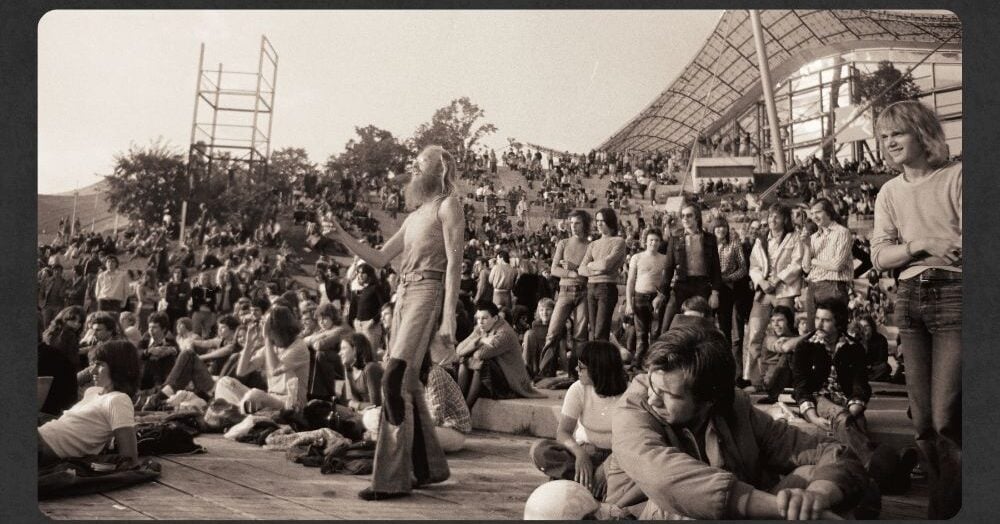
Other notable contributors to the current musical landscape highlighted in this release cycle include:
- Elanor Moss: An emerging voice known for her evocative songwriting and distinctive vocal clarity.
- Max Subar: His debut album, Anything Could Be, released via Merge Records, was recorded over ten days in a secluded Wisconsin home. His work is described as a journey toward radical stillness and self-awareness.
- Biita Houdei: Her debut album, This Bed Was Made For Me, was produced by Haley Heynderickx. Houdei’s music is anticipated to be a fixture on year-end critical lists, blending traditional folk sensibilities with modern indie-folk production.
- Seu Jorge and Beck: The collaboration features a cover of Nick Drake, further illustrating how the folk lineage continues to influence contemporary pop and world music icons.
- Sairie and Trá Pháidín: These acts represent the more experimental and atmospheric side of the modern folk scene, incorporating ambient and alternative elements into their soundscapes.
Technical Restoration and Curatorial Excellence
The production of "Along The Road Forever" was handled by Madfish, a label that has established a reputation for high-end, comprehensive box sets. The technical challenge of compiling 22.5 hours of audio from over five decades of BBC archives cannot be overstated. The BBC’s archives, while vast, have historically suffered from varying degrees of preservation; in the 1960s and 70s, tapes were frequently wiped or recorded over to save costs.
The fact that two-thirds of this collection comes from master tapes suggests a meticulous "archeological" effort by the curators. For the remaining tracks, the team likely relied on high-quality off-air recordings and private archives, which have been digitally restored to meet modern listening standards. This attention to detail ensures that the box set is not just a commercial product, but a historical document of record.
The inclusion of session notes by Kevin Boyd provides essential context for researchers and fans alike. These notes detail the specific dates, personnel, and broadcast history of each track, allowing for a deep dive into the "who, what, and where" of Carthy’s BBC tenure.
Implications for the Folk Genre and Music Industry
The release of such an extensive box set in a digital-dominant era reflects a specific trend in the music industry: the "super-deluxe" physical edition. While streaming services provide accessibility, they often lack the context, artwork, and superior audio quality that serious collectors and historians crave. By releasing a 20-CD set, Madfish is catering to a dedicated audience that views music as a physical and intellectual artifact.
Furthermore, this release reaffirms Martin Carthy’s status as a cornerstone of British culture. At 83 years old, Carthy remains an active performer, and this box set serves as a living monument to his contributions. It also highlights the BBC’s historical role as a patron of the arts. Without the corporation’s commitment to recording live music, much of the material in this box set would have been lost to time.
From a broader perspective, the intersection of Carthy’s archival recordings with new music from artists like Hana Stretton, Midori Jaeger, and Luluc shows that folk music is not a static museum piece. Instead, it is a continuous thread. The "wild patience" described in Max Subar’s work or the "quiet isolation" of Luluc’s Sweet Thief are modern echoes of the same introspective, storytelling tradition that Carthy championed in the 1960s.
Conclusion: A Treasure for the Archives
"Along The Road Forever: Live at the BBC (1965-2022)" is more than just a collection of songs; it is a comprehensive history of a man and a movement. For fans of Martin Carthy, it offers an exhaustive look at his technical mastery and his unwavering commitment to the folk tradition. For the broader music community, it stands as a reminder of the importance of archival preservation and the role of public broadcasting in fostering artistic excellence.
As the box set hits the shelves today, July 17th, it is expected to set a new standard for folk music retrospectives. The combination of rare audio, scholarly writing, and high-quality production makes it a definitive resource. Whether listening to a 1973 performance in a small folk club or a 2022 studio session, the listener is invited to travel "along the road forever" with one of the greatest practitioners the genre has ever known. Simultaneously, the inclusion of contemporary voices in the surrounding discourse ensures that the road continues to move forward, paved by the legends of the past but traveled by the innovators of the present.