The Evolution and Preservation of North Mississippi Hill Country Blues: A Legacy of Resilience and Rhythm

The North Mississippi Hill Country blues tradition stands as one of the most distinctive and resilient cultural expressions in American music history. Unlike the structured, chord-heavy blues of the Mississippi Delta or the electrified urban stylings of Chicago, the Hill Country sound is defined by hypnotic, trance-like repetition, rhythmic persistence, and a deep, communal integration that has survived despite the encroaching forces of commercialization and demographic shift. Ethnomusicologist David Evans, who has spent decades documenting this scene, provides a vital window into the lives of the architects of this genre—figures like Junior Kimbrough, Robert Belfour, and Napoleon Strickland—whose music functioned not merely as entertainment, but as the heartbeat of a community.
The Architect of Sound: Junior Kimbrough
Junior Kimbrough emerged as a singular force within the Hill Country landscape. While he debuted in 1968 with the single "Tramp" on the Philwood label, it was not until 1979 that he gained significant exposure to the academic and broader blues community through Sylvester Oliver, a graduate student of Evans. Upon witnessing Kimbrough’s performance in a rural club on the outskirts of Holly Springs, Evans was struck by the radical originality of his work.
Kimbrough’s compositions were rarely complex in the traditional sense; they eschewed the standard twelve-bar blues structure in favor of looping, repeated riffs and odd, asymmetrical rhythmic structures. These pieces were designed specifically for dance, serving the needs of the local patrons who frequented the juke joints. Despite his prowess, Kimbrough remained a reluctant traveler. While he eventually achieved international renown, Evans noted that the artist was always most comfortable on his own porch, performing for local crowds. Unlike the more performative R.L. Burnside, Kimbrough possessed a reserved, almost stoic demeanor that belied the internal power of his music. His legacy remains defined by a nearly 90% original repertoire—a rarity in a genre often reliant on the circulation of traditional standards.
The Sonic Innovation of Robert Belfour
Robert Belfour represented a different facet of the Hill Country ethos. First encountered by Evans in the late 1980s at Memphis’s Handy Park, Belfour’s approach was rooted in the traditional but transformed by his idiosyncratic technical choices. Belfour’s sound was characterized by a distorted, raw amplification—a result of running his microphone and guitar through a single, low-fidelity amplifier. To the uninitiated, the sound might have seemed unrefined; to Evans, it was the embodiment of "greatness through awfulness."
Belfour’s true ingenuity lay in his guitar tuning. By manipulating standard tuning—specifically by raising the G string and leaving it open—he created a permanent "blue note" that allowed him to produce the bent, tonal variations that defined his signature style. Heavily influenced by the likes of John Lee Hooker and Lightnin’ Hopkins, Belfour utilized pentatonic scales that felt both ancient and immediate. Before his successful European tours in the 1990s and 2000s, his music was largely confined to house parties and street performances, reinforcing the notion that this genre thrived on intimacy rather than grand stages.
The Rhythmic Power of Napoleon Strickland
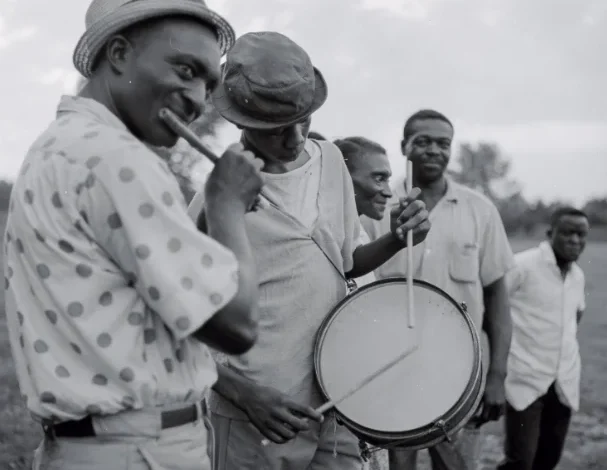
If Kimbrough was the master of the riff and Belfour the master of tone, Napoleon Strickland was the titan of rhythm. Often described as a complex figure, Strickland’s musical output was marked by extreme variance; he could be erratic, yet when his performance coalesced, he possessed a rhythmic power that arguably eclipsed even the legendary Fred McDowell. Strickland was a multi-instrumentalist, proficient on guitar, harmonica, the one-string "diddley bow," and, perhaps most significantly, the fife.
His contributions were essential to the fife-and-drum tradition, a genre that predates the guitar-based blues of the region. Evans, who documented Strickland extensively, noted that while Strickland lacked the consistent output and expansive repertoire of his contemporaries, his capacity for on-the-spot improvisation was unparalleled. His ability to lead a fife-and-drum ensemble provided the foundation for the picnics that served as the primary social and musical infrastructure of the Hill Country.
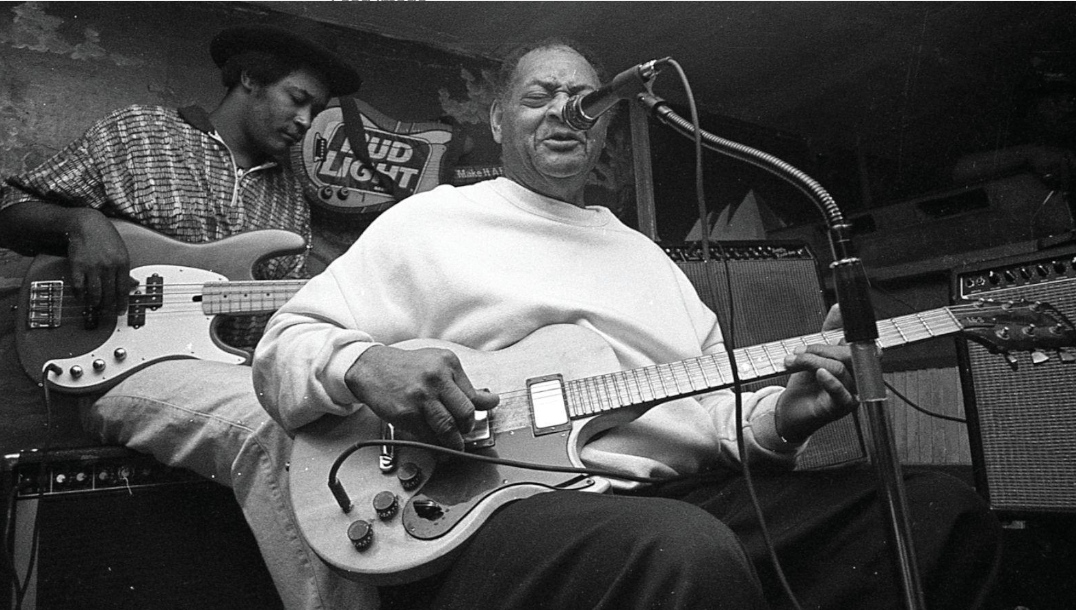
The Commercialization Dilemma: From Local Tradition to Global Brand
The transition of Hill Country blues from local community tradition to an international commodity was a gradual process that accelerated in the 1990s. In the 1970s and 1980s, the tradition was "viable"—it was not a relic of the past, but a living, breathing activity maintained by regular community picnics. Evans’s early documentation, including recordings for the High Water label, aimed to capture this authentic, community-based sound.
The landscape shifted significantly with the arrival of Fat Possum Records. While the label was instrumental in bringing artists like R.L. Burnside and Junior Kimbrough to global pop and rock audiences, the methods employed were not without controversy. Fat Possum often utilized remixing and branding strategies that favored an "outlaw" aesthetic—marketing Burnside as a dangerous, violent figure. Evans, who had attended Burnside’s parties and witnessed him as a hardworking, family-oriented man, found this branding both distasteful and historically inaccurate.
The implications of this shift were profound. While the commercial success of the label generated revenue for the musicians and brought the genre to a broader demographic, it also fundamentally altered the presentation of the music. The "outlaw" image created a dissonance between the artist’s reality—working a day job, driving a tractor, and navigating a community-based life—and their public persona. Furthermore, the focus on rock-inflected, produced blues created a standard of "marketability" that arguably overshadowed the raw, unadorned versions of the music that Evans and others had documented decades earlier.
The Current State of the Tradition
Today, the Hill Country blues scene exists in a state of revival and consolidation. The spontaneous, informal picnic culture of the 1970s has largely given way to formal, ticketed festivals like the GOAT Picnic and the Hill Country Picnic. While these events have successfully preserved the music’s visibility, they have also fundamentally changed the audience demographic, which is now predominantly white and international.
This shift presents a challenge for the future of the genre. Evans observes that while younger generations within the community respect the accomplishments of their forebears, they are not adopting the music as their own. The genre’s lack of alignment with current mainstream Black musical trends—such as hip-hop, R&B, and soul—combined with the perception of the scene as a "white-interest" space, has created a barrier to entry for potential young Black musicians.
Despite these pressures, the core of the Hill Country sound remains remarkably intact. The geographic isolation that once protected the region from outside influence has weakened, but the deep-rooted nature of the music persists. Sharde Thomas continues to maintain the fife-and-drum legacy, ensuring that the foundational elements of the genre do not disappear.
Conclusion: An Enduring Legacy
The work of David Evans serves as a crucial counterbalance to the commercial narratives that have dominated the blues discourse since the late 20th century. By prioritizing the preservation of the musicians’ existing styles and documenting their role within their own communities, Evans has provided a comprehensive record of a genre that refused to conform to the commercial dictates of the music industry.
As the tradition moves forward, it faces a crossroads. It remains a powerful testament to the creativity of a community that found deep, artistic satisfaction in repetition, rhythm, and the blues. Whether it can transcend its current status as a "revival" music depends on whether the next generation finds resonance in its sounds. For now, the legacy of Junior Kimbrough, Robert Belfour, and Napoleon Strickland endures not just in recordings, but in the structural DNA of the music itself—a sound that remains, in the words of those who lived it, deeply, unmistakably of the Hill Country. The longevity of this music, persisting through decades of social and economic change, is perhaps the ultimate testament to its quality and the strength of the community that birthed it.