The Soul in the Machine: Why Progressive House Producer Yeadon Warns Against the Rise of Generative AI in Music Production

The rapid evolution of generative artificial intelligence, automated mixing plugins, and instantaneous arrangement software has fundamentally altered the modern music production landscape. As these technologies become more sophisticated, promising to eliminate creative friction and streamline workflows, the electronic music industry finds itself grappling with an existential dilemma: at what point does technological assistance cross the line into substitution, rendering the human artist a mere prompter rather than a creator? This question has sparked intense debate among producers, labels, and fans alike, prompting a critical reevaluation of the value we place on the human struggle inherent in art.
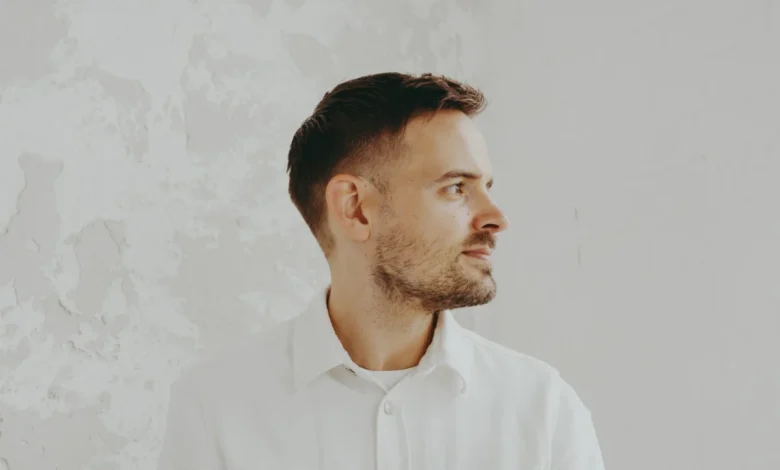
For Manchester-based progressive and melodic house producer Adam Yeadon, who records simply as Yeadon, the distinction between technology as an enabling tool and technology as a surrogate decision-maker is absolute. Having established a respected international profile with releases on premier imprint heavyweights such as Anjunabeats, Stress Records, Global Underground, UV, and his own independent label 10 Steps North, Yeadon’s artistic philosophy is deeply rooted in patience, subtle detail, and delicate emotional tension. His latest single, "Don’t Forget," arrives as a timely artistic statement and a conceptual reminder of the foundational elements that make electronic music resonate on a human level. In a genre defined by atmospheric evolution and deliberate pacing, Yeadon argues that genuine emotional connection cannot be synthetically generated by an algorithm.
The Integration of Technology in Modern Music Production: A Chronology
To understand the current anxiety surrounding generative artificial intelligence in the studio, it is necessary to examine the historical trajectory of technology in electronic music production. The relationship between musicians and machinery has always been symbiotic, dating back to the introduction of the Minimoog synthesizer in the 1970s, the Roland TR-808 rhythm composer in the early 1980s, and the advent of MIDI protocols that allowed hardware to communicate seamlessly.
In the 1990s and early 2000s, the digital audio workstation (DAW) revolutionized production by moving physical studios into software environments. While traditionalists initially decried the democratization of music-making through cracked plugins and software synthesizers, the industry adapted, recognizing that tools like EQ, compression, and digital delay still required human taste, vision, and ear training to yield compelling results.
The mid-2010s introduced machine learning to audio engineering, primarily in the form of intelligent mixing and mastering assistants like iZotope’s Neutron and Ozone, or automated vocal tuning suites. These tools were largely embraced by producers as efficiency enhancers—automating tedious, repetitive tasks such as spectral masking correction and gain staging.
However, the landscape shifted dramatically between 2022 and 2026 with the explosive growth of generative neural networks capable of writing chord progressions, generating full melodic loops, arranging entire song structures, and synthesizing hyper-realistic instrumentation from simple text prompts. This technological leap moved the needle from tools that assist the engineer to systems that author the creative content itself, precipitating the current crisis of authorship.
The Problem with Bypassing the Creative Struggle
In a recent comprehensive interview with Magnetic Magazine, Yeadon addressed the systemic dangers of allowing generative plugins to usurp artistic decision-making. While firmly clarifying that he is not anti-technology, he draws a sharp boundary when software begins to formulate the core composition of a track.
"From my point of view, no significant parts of an artist’s work should be outsourced to a generative plugin or AI, at least when it comes to the creative side of things such as writing music," Yeadon explained during the interview. "I don’t really understand why we would want to outsource something so personal, rewarding, and enjoyable as writing music to AI."
Yeadon emphasizes that the true value of music production lies not just in the final audio file, but in the psychological journey of overcoming creative obstacles, navigating happy accidents, and learning from technical mistakes. This friction is what allows an artist to develop a distinct voice over years of practice.
"I believe that when you’re in the flow, making music or creating art, you’re putting a piece of yourself into it," he noted. "Handing this over to a generative plugin or AI is always going to mean the end result is less you."
This philosophy challenges the Silicon Valley ethos of frictionless productivity, which often frames creative struggle as a bottleneck to be eliminated. Yeadon warns that bypassing this internal process strips the resulting art of its psychological footprint.
"When AI is used as a shortcut to get to the end result without going through the creative process, I think we risk bypassing the whole point of making art in the first place: the chance to connect with something and express it," he stated.
Polished Perfection Versus Raw Emotional Resonance
Another critical theme in the contemporary AI debate is the illusion of technical perfection. Modern generative tools and automated mixing suites are capable of producing pristine, frequency-balanced, radio-ready mixdowns in a matter of seconds. Yet, industry veterans frequently observe that technical flawlessness does not automatically equate to emotional impact.

Yeadon points out that the records that historically define eras in electronic music are rarely revered for mathematical perfection. Instead, they derive their power from human vulnerability, analog warmth, and intentional idiosyncrasies.
"For me, the records that speak to me are often less about whether they’re mixed well or technically perfect, and are more about the emotion and energy in the record," Yeadon observed. "A track can be super polished, perfectly balanced, mixed in the best studio, and still not say anything, or make the listener feel anything."
This critique extends directly to early encounters with generative audio models. According to the Manchester producer, artificial intelligence often produces music that triggers a sense of cognitive dissonance in perceptive listeners.
"When I hear AI-generated music, this is often the feeling I get from it," he said. "The tracks sound too perfectly made, too perfectly mixed, and very often don’t have the emotion or energy to make me feel something, other than that something feels off."
Industry Data and Market Implications
As generative tools saturate the digital ecosystem, market data reflects a growing polarization within the consumer and streaming markets. According to recent reports from music intelligence platforms, platforms like Spotify, Apple Music, and YouTube are receiving tens of thousands of AI-assisted or fully synthetic tracks daily. This unprecedented influx has intensified the noise-to-signal ratio, making it increasingly difficult for independent human producers to achieve organic discovery.
Furthermore, economic analyses of the music licensing and synchronization markets indicate a downward pressure on royalty rates for background music, ambient soundscapes, and stock audio. As corporate buyers adopt generative models to slash production budgets, human composers working in commercial and functional genres face severe income compression.
However, within the underground and club-oriented electronic music sectors—specifically genres like progressive house, deep techno, and minimal—audiences and independent tastemakers continue to place a premium on authentic provenance. Vinyl sales, intimate club culture, and artist-driven narratives remain resilient precisely because fans seek communal experiences rooted in human expression and shared vulnerability.
Defining the Boundary: Administrative Efficiency Versus Creative Subcontracting
To navigate this transitional era sustainably, Yeadon advocates for a pragmatic framework that delineates between administrative utility and creative surrender. He encourages modern producers to leverage technology for utilitarian tasks—such as file management, sample organization, and technical routing—while strictly safeguarding taste and sonic identity as human domains.
"There’s a difference between letting technology influence or inspire you and letting it develop your taste for you," Yeadon concluded. "If you increasingly rely on generative tools to decide what sounds good or what should come next, you risk allowing the technology to shape your taste."
This distinction addresses a subtle psychological trap for emerging producers: by letting algorithms dictate arrangement choices, chord progressions, and sound selection, artists risk homogenizing their output to match the mathematical average of their training data. In doing so, they trade their unique artistic signature for algorithmic conformity.
Broader Industry Impact and the Future of Authorship
The implications of Yeadon’s commentary extend far beyond individual studio practices, touching upon legal, ethical, and cultural dimensions of intellectual property. Copyright offices globally, including the United States Copyright Office, have repeatedly ruled that works generated entirely by artificial intelligence without substantial human creative input are ineligible for copyright protection. This legal reality creates significant liability for commercial entities utilizing fully automated generative workflows.
At the same time, artist cooperatives, labor unions, and advocacy groups are pushing for mandatory metadata labeling of AI-generated content across streaming services. Such transparency measures aim to empower listeners to make informed choices about the provenance of the music they consume.
Ultimately, Yeadon’s single "Don’t Forget" serves as both a creative offering and a conceptual manifesto for the electronic music community. Its title functions as a direct imperative to the current generation of producers: do not forget the value of human agency, do not willingly transform into a customizable template, and do not replace the irreplaceable essence of personal experience with a generic algorithm designed to appeal to the lowest common denominator. As the boundary between artist and machine grows increasingly porous, voices like Yeadon’s provide a necessary anchor, reminding the industry that the soul of electronic music has always resided in the human heart, not the hard drive.
Related posts: