C. Tangana Reflects on Loss and Fatherhood as He Returns to Rap With Milko Freestyle

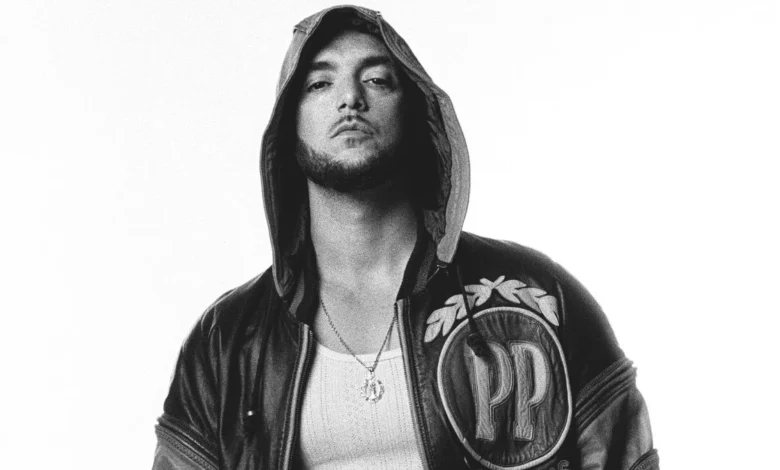
The landscape of contemporary Spanish music shifted significantly this week as C. Tangana, born Antón Álvarez Alfaro, made an unexpected and potent return to his hip-hop origins with the release of Milko Freestyle. While the artist has spent the better part of the last four years cementing his status as an avant-garde fusionist—blending flamenco, bolero, and pop—this latest release serves as a stark, lyrical pivot back to the aggressive, introspection-heavy rap that defined his early career. Produced by the acclaimed duo KevD and Jambo, the track is less a commercial single and more a meditative confessional, addressing the profound personal shifts the artist has navigated since the global success of his 2021 magnum opus, El Madrileño.
A Career Defined by Evolution
To understand the weight of Milko Freestyle, one must analyze the trajectory of C. Tangana’s career, which has been characterized by a relentless desire to subvert expectations. Rising to prominence in the mid-2010s as a pillar of the Spanish underground rap scene, Tangana was a founding member of the collective Agorazein. Alongside Sticky M.A., Jerv.AGZ, I-Ace, and Fabianni, he helped define a new era of urban music in Madrid, characterized by nihilism, technical precision, and a rejection of traditional industry gatekeepers.
The 2016 album Siempre stands as the definitive marker of that era. It was an exercise in stylistic purity, establishing the group as the vanguard of Spanish rap. However, following that project, Tangana began a systematic deconstruction of his own persona. By the time he reached the zenith of his popularity with El Madrileño, he had moved entirely away from the bars and beats of his youth, opting instead for a panoramic exploration of Hispanic heritage. This transition, while commercially successful, drew criticism from purists within the hip-hop community who viewed his abandonment of traditional rap as a betrayal of his foundational ethos.
The Personal Narrative of Milko Freestyle
Milko Freestyle functions as a direct response to this history. The song’s title is a tribute to Milkman, a close friend and collaborator whose passing deeply affected the artist. In the track, Tangana recounts the harrowing experience of traveling to Mexico to be by his friend’s side during his final days, a journey that underscored the fragility of life and the transience of success.
The narrative shifts from the sorrow of loss to the complexities of fatherhood. Tangana addresses the duality of his life—balancing the public persona of a high-profile musician with the private, grounding responsibilities of raising a child. By grounding the track in these two poles—grief and legacy—he effectively strips away the artifice of his recent pop-star image. The production, sparse and rhythmic, harkens back to the 2010s era of the genre, allowing his flow to take center stage without the atmospheric production flourishes that characterized his recent work.
The Agorazein Reunion: A Decade of Influence
The release of Milko Freestyle serves as a tactical prelude to a landmark event: the 10th-anniversary celebration of the album Siempre. Agorazein is scheduled to hold a four-night residency at Madrid’s Movistar Arena, running from November 15th to November 18th. These concerts are widely expected to be among the most significant cultural events in Madrid this year, marking not just a reunion of a group, but a retrospective of a decade that saw Spanish urban music transition from the underground to the mainstream.
For fans, the reunion represents a closure of the loop. The collective’s influence on the current generation of Spanish rappers cannot be overstated; they were instrumental in proving that a domestic Spanish rap identity could be both authentic and globally viable. The return to the Movistar Arena, a venue that symbolizes the scale of his current success, juxtaposed against the raw, early sound of Agorazein, provides a unique lens through which to view the last ten years of Spanish music history.
Financial and Artistic Implications
Tangana’s lyrics in Milko Freestyle also offer a rare, candid look at the costs of his artistic pivot. He discusses the immense financial strain associated with his ambitious touring cycles, acknowledging that the pursuit of a global, high-production sound often comes at a significant personal and economic price. This transparency is a departure from the usually polished, curated image of modern music icons.
Analysts note that this return to rap may also be a strategic move to reclaim his narrative. By acknowledging the criticism from his peers—who labeled his departure from rap as a "sell-out" move—Tangana is engaging in a process of re-legitimization. In the hip-hop ecosystem, acknowledging one’s roots while simultaneously navigating personal tragedy is a classic method of solidifying one’s legacy. He is not merely returning to rap; he is integrating the lessons learned from his pop success back into the more austere format of the freestyle.
Industry Context and Reception
The reception to the track has been largely positive, with industry observers noting the technical agility Tangana displays. Despite his years of singing and melodic experimentation, his ability to execute complex, multi-syllabic rhyme schemes remains sharp. This suggests that the "rap muscle" has not atrophied, but has perhaps been refined by his exposure to more traditional musical structures.
Furthermore, the involvement of KevD and Jambo as producers highlights a commitment to maintaining the integrity of the sound. By choosing producers who understand the historical context of the scene, Tangana avoids the pitfalls of "tourist rap," where artists return to the genre with a sound that feels outdated or misaligned with current standards.
The Broader Impact
As the music industry continues to favor shorter, high-rotation singles, the release of a track that carries such heavy emotional and biographical weight is significant. It signals a shift toward a more narrative-driven model of rap, where the artist’s life experiences—rather than just the aesthetic appeal of the music—are the primary driver of engagement.
Looking forward, the Agorazein reunion concerts will likely serve as the definitive final chapter for that era of the group, allowing Tangana to move forward with a cleaner slate. Whether this signifies a permanent return to his rap roots or merely a temporary exploration remains to be seen. However, the success of Milko Freestyle proves that there is a substantial, hungry audience for the version of Tangana that prioritized the pen over the production, and the truth over the trend.
The intersection of his personal growth, the upcoming concert series, and this new musical output suggests that C. Tangana is currently in a phase of integration. He is synthesizing the pop star he became with the rapper he once was, creating a more holistic artistic identity. For a musician who has spent his career in a state of constant flux, this latest move is perhaps his most grounded and, by extension, his most compelling. As the industry watches the lead-up to the Madrid shows, the focus remains firmly on how the artist will continue to bridge the gap between his history and his future. The, at times, polarizing nature of his evolution has ultimately led to a more nuanced understanding of what it means to be a modern artist: a figure who must constantly negotiate the demands of the market with the imperatives of the self. Milko Freestyle is the evidence of that negotiation, played out in real-time.