Fender and Loog expand their child-friendly collection with the debut of a 21.6-inch scale Precision Bass and a classic Butterscotch Blonde Telecaster

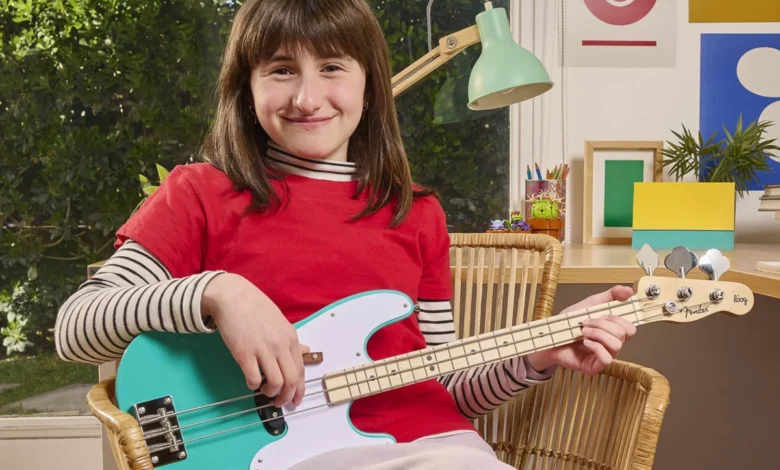
The collaboration between iconic guitar manufacturer Fender and the educational instrument brand Loog has reached a significant milestone with the release of their latest range of beginner-focused instruments. This expansion marks the first time a bass guitar has been introduced to the Fender x Loog lineup, accompanied by a new, scaled-down version of the legendary Telecaster. By distilling the DNA of 75-year-old industry staples into compact, three-string form factors, both companies are aiming to lower the barrier to entry for children and novice players eager to explore the world of music.
The Evolution of the Fender x Loog Partnership
The Fender x Loog partnership was established to solve a perennial problem in music education: the physical size and complexity of standard-scale instruments. Traditional electric guitars and basses are often too large for younger children, and the cognitive load of learning six strings simultaneously can prove discouraging. Loog, known for its patented three-string design, simplifies the learning process by using the same intervals as the first three strings of a standard guitar or bass.
By leveraging Fender’s massive historical catalog and aesthetic appeal, the partnership has managed to create a product that functions both as a legitimate training tool and as a collector’s item for enthusiasts. The recent introduction of the Precision Bass (P-Bass) and the Telecaster is timed to coincide with the 75th anniversary of these two instruments, which remain arguably the most influential designs in the history of popular music.
A Closer Look at the New Hardware
The newly released Precision Bass is perhaps the most ambitious piece of hardware in the collection to date. Featuring a 21.6-inch scale length, it is specifically designed to be ergonomic for smaller hands. Despite its reduced size, it maintains the fundamental design features that defined the original 1951 P-Bass, including the characteristic body shape and the inclusion of a functional thumb rest—a detail that underscores the brand’s commitment to historical accuracy, even at a student-grade scale.
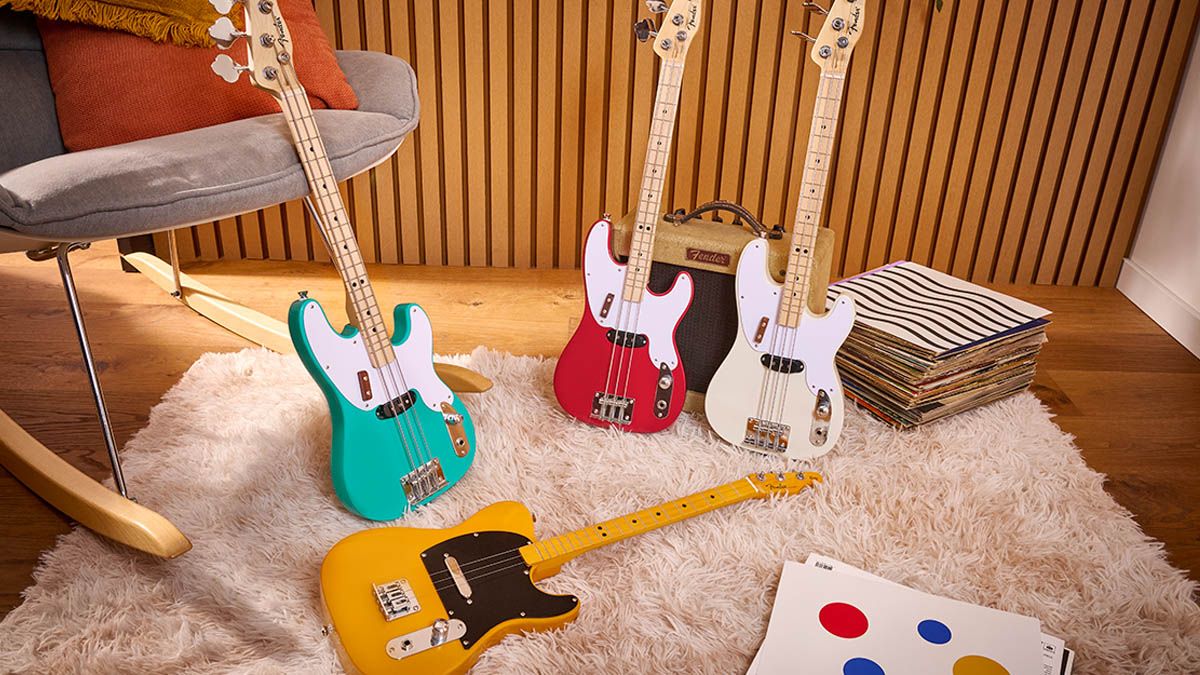
The bass is available in a variety of traditional finishes, including Sea Foam Green, Candy Apple Red, and White Blonde. Additionally, the collection features a limited-edition Black Hello Kitty model, which incorporates the brand’s signature red dot inlays and stylized cartoon aesthetics. This continues the successful branding strategy previously employed by Fender and Squier to capture the attention of a younger, pop-culture-conscious demographic.
Simultaneously, the release of the Telecaster in a classic Butterscotch Blonde finish serves to introduce young players to the instrument that essentially launched the mass-production era of electric guitars. Like its bass counterpart, this three-string model is constructed from real wood and utilizes standard-quality components rather than "toy-grade" materials, ensuring that the intonation and playability meet the standards expected of an introductory musical instrument.
Historical Context: The 75th Anniversary Milestone
The significance of these releases cannot be overstated within the context of musical history. The Fender Telecaster, originally introduced as the Broadcaster in 1950 and renamed shortly thereafter, was the first mass-produced, commercially successful solid-body electric guitar. The Precision Bass followed in 1951, effectively replacing the upright bass in popular music and allowing bassists to play with greater precision and portability.
For these designs to remain central to the Fender catalog 75 years later is a testament to their utility and design efficiency. By reissuing these models through the Loog collaboration, Fender is not merely selling a toy; it is inducting a new generation into a legacy that spans rock, country, jazz, and soul. The "Blackguard" aesthetic of the new Telecaster, in particular, pays homage to the original mid-century models that helped define the sound of the 20th century.
Educational Philosophy and Methodology
At the heart of the Loog design philosophy is the "three-string" methodology. By removing the three higher strings (or the strings beyond the first three), the instrument allows beginners to master basic chord shapes and rhythm techniques without the distraction of complex fingering.
The instruments are integrated into a broader educational ecosystem. Each purchase includes an instructional book, access to a dedicated learning app, and a series of guided exercises designed to build finger strength and muscle memory. The goal is to provide a seamless transition from the three-string Loog instrument to a full-sized six-string guitar or four-string bass.
Rafael Atijas, the founder and CEO of Loog Guitars, has noted that this project is deeply personal. Having started his own musical journey on the bass at age 13, Atijas designed these instruments with the specific needs of a young student in mind. "Bringing the iconic Butterscotch Blonde Telecaster to life as a small, three-string guitar lets kids experience a piece of music history in a way that feels playful and authentic," Atijas stated in a recent press release.
Market Implications and Future Outlook
The collaboration between Fender and Loog occupies a unique niche in the musical instrument industry. While major competitors often focus on "mini" versions of full-size guitars, which can sometimes suffer from poor build quality or tuning instability, the Fender x Loog approach prioritizes durability and playability.
Industry analysts observe that this strategy creates a "pipeline" effect. By capturing the loyalty of young players early with high-quality, approachable gear, Fender ensures that these students are more likely to migrate to full-sized Fender or Squier instruments as they progress in their skills. This is a vital strategy in a market where instrument manufacturers are constantly looking for ways to engage younger audiences who are increasingly exposed to digital production tools.
Furthermore, the price point—set at £199/$229—positions these instruments as accessible entry-level products that offer better value than many generic "beginner kits" found in big-box retail stores. The inclusion of real bass strings and the specific attention to construction materials signal to parents and educators that these are viable tools for serious study.
Official Responses and Industry Support
The reception from the music community has been largely positive, with educators praising the move to include the bass guitar in the collection. James Chippendale, Fender’s senior director of lifestyle and licensing, emphasized the long-term vision behind the partnership. "For 75 years, the Telecaster and Precision Bass have helped shape the sound of music," Chippendale noted. "Our partnership with Loog brings these iconic instruments to a new generation of players. Together with Loog, we’re inspiring young musicians to discover the joy of playing, express themselves and begin a lifelong connection with music."
The focus on the P-Bass specifically is also seen as a positive development for rhythm sections, as there has historically been a shortage of high-quality, short-scale bass options for children. By providing a bridge to the bass guitar, Fender and Loog are encouraging the next generation of bassists to develop the foundational timing and technical skills required for ensemble playing.
Conclusion: A New Standard for Beginners
The launch of the Fender x Loog Precision Bass and the Butterscotch Blonde Telecaster represents a fusion of heritage and innovation. By respecting the legacy of 75 years of musical development while embracing the necessity of modern, size-appropriate design, the partnership has established a new benchmark for what a beginner’s instrument can be.
As these instruments reach the hands of young musicians, the real impact will be measured in the number of students who stick with their practice long enough to graduate to professional-grade equipment. In a digital age where attention spans are fleeting, providing a tangible, historically resonant, and ergonomically sound instrument may be the most effective way to ensure the future of guitar-driven music. Whether it is a budding bassist discovering the groove or a future lead guitarist learning their first power chords on a miniature Telecaster, the impact of this collaboration is likely to be felt in music classrooms and home studios for years to come.
Related posts: