Latin Grammys 2026 Spotlight: Meet Four Rising Contenders Vying for the Coveted Best New Artist Award

The road to the Latin Grammy Awards is paved with rigorous competition, artistic reinvention, and the relentless pursuit of cultural authenticity. As the Latin Recording Academy prepares for its 2026 flagship ceremony scheduled for November 12 in Las Vegas, the spotlight has turned intensely toward one of the evening’s most prestigious and career-defining categories: Best New Artist. This once-in-a-lifetime designation has historically served as a crystal ball for the future of Latin music, having previously crowned visionary disruptors and global icons such as Puerto Rico’s Calle 13, Colombian powerhouse Karol G, and Mexican poetic force Silvana Estrada. More recently, the trophy has launched the international trajectories of Venezuelan prodigy Joaquina, Bogotá pop sensation Ela Taubert, and Mexico City’s avant-garde alt-star Paloma Morphy.
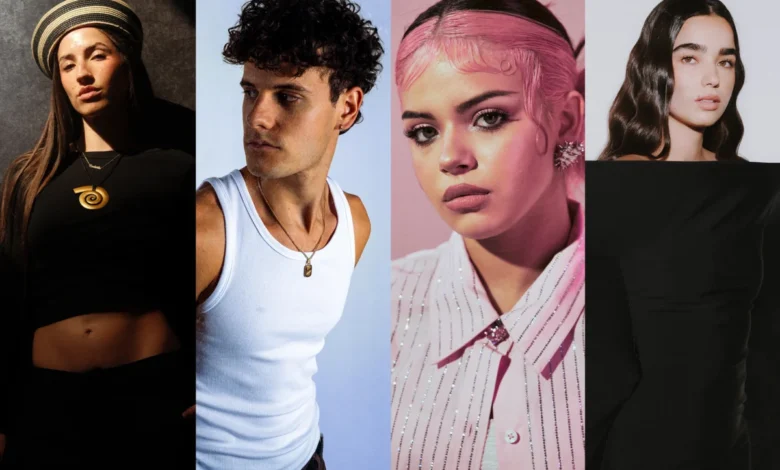
For the upcoming 2026 gala, the Academy has expanded the category to 11 nominees—up from the traditional ten—heightening the stakes for an eclectic pool of rising stars hailing from Latin America, the United States, and Spain. Amid this expanded field, four distinct voices have captured the attention of critics and peers alike: Aria Vega, a herald of Colombia’s Caribbean coastal rhythms; Delilah, a genre-fluid Mexican-American singer bridging two distinct cultural landscapes; Fabian, an emerging Latin pop songwriter and son of Peruvian music royalty Gian Marco; and Sofia Monroy, a Mexican-Swedish maverick redefining the boundaries of introspective alternative music. Ahead of the Las Vegas ceremony, these four contenders reflect on their journeys, their cultural identities, and the heavy expectations accompanying a Best New Artist nomination.
The Evolution and Significance of the Best New Artist Category
To understand the weight of a Best New Artist nomination at the Latin Grammys, one must examine the category’s storied legacy within the broader music industry. Established to recognize breakthrough performers who have released their first recordings establishing public identity during the eligibility year, the award functions as a crucial institutional validator. Unlike genre-specific categories that reward a single track or album, Best New Artist evaluates an act’s overall artistic viability, potential for longevity, and cultural resonance.
In recent years, the profile of the category has shifted dramatically in tandem with the globalization of Latin music. Driven by streaming platforms, cross-border collaborations, and a more fragmented, eclectic consumer base, the Academy’s voting members have increasingly rewarded artists who defy easy categorization. From urban innovators to indie folk purists, the nominees reflect a modern Latin music ecosystem that refuses to be boxed into a singular sonic identity. The inclusion of 11 nominees for the 2026 cycle underscores a broader trend: the sheer volume of high-caliber debut projects making waves across the Spanish- and Portuguese-speaking markets has made narrowing the field increasingly difficult for the Academy’s nominating committees.
Aria Vega: Bringing the Caribbean Soul of Barranquilla to the Global Stage
Among the class of 2026, Aria Vega stands out as a vibrant ambassador for Colombia’s Caribbean coast. Hailing from Barranquilla—a city globally renowned for its rich artistic lineage and cultural syncretism—Vega’s music merges traditional coastal percussion and folklore with modern mainstream pop production. For Vega, the Best New Artist nomination is not merely a personal milestone, but a collective validation.
"It means a lot because it represents more than just me," Vega reflects. "It represents my family, my people, my team, Barranquilla, and everybody who’s believed in me along the way. It also feels like an invitation to bring my world to a bigger audience."
Vega’s cultural pride is deeply ingrained in her artistic DNA. Rather than manufacturing an aesthetic tailored for international consumption, she draws directly from her immediate surroundings. "It’s already in my accent, my humor, my music, my personality, and the way I see the world," she explains. Her goal is to dismantle reductionist stereotypes associated with Colombia’s Caribbean coast, offering audiences a nuanced window into the region’s boundless creativity.
This rising momentum was recently punctuated by a surreal encounter with fellow Barranquillera and global icon Shakira during her residency in Madrid. Reflecting on the meeting, Vega acknowledges the trailblazing path Shakira carved for generations of Colombian women. "She’s someone who has represented Colombia and Latin culture on a global level for so many years… Of course I’d love to work with her one day! Imagine two Barranquilleras in the studio together."
Vega is currently channeling this momentum into her upcoming debut studio album, Costeñita Core. Described by the artist as her "baby," the project is designed as an immersive, highly visual universe that synthesizes her multifaceted identity—playful, colorful, feminine, and unapologetically bold.
Delilah: Charting a New Path for Mujeres en la Música Mexicana
The landscape of música mexicana has undergone a monumental renaissance over the past half-decade, traditionally dominated by male performers in regional subgenres like corridos and banda. Rising Mexican-American singer Delilah is actively reshaping that demographic reality. Earning a Best New Artist nod is the culmination of years of quiet dedication and genre-blending experimentation.
"It’s honestly a dream come true," Delilah shares. "To be recognized by my peers, fellow musicians, and members of the Latin Recording Academy is such a huge honor. It means that the music I’m putting out into the world is being heard."
Growing up in a bilingual, binational household deeply influenced her artistic framework. For Delilah, navigating both Mexican and American cultures is not an identity crisis, but a creative superpower. "You can hear it in the way I mix English and Spanish, in different touches throughout my songs, and even in the way I express myself," she notes.
Her burgeoning status was further solidified when she secured opening slots for superstar Natanael Cano at Mexico City’s massive Estadio GNP Seguros—a milestone made even more significant by the fact that she stood as the sole female presence on the bill for those high-profile dates. Embracing her role as both a genre innovator and an older sister, Delilah hopes to set a precedent for young women entering the industry. "I take that responsibility seriously because I know how important it is for young girls to see women being themselves, having a voice, and making their own choices."
Fabian: Honoring a Musical Dynasty While Forging an Independent Path
For Peruvian singer-songwriter Fabian, the transition from local dreamer to Latin Grammy contender is a journey steeped in both familial legacy and cross-cultural discovery. As the son of Peruvian music icon Gian Marco and the younger brother of 2022 Best New Artist nominee Nicole Zignago, Fabian grew up immersed in the realities of a professional music career.
Yet, rather than leaning solely on his surname, Fabian has deliberately carved out a distinct sonic lane. Moving from Lima to Los Angeles at the age of nine exposed him to a vast spectrum of Anglo-American alternative and pop music festivals, a sonic palette that he later sought to fuse with Spanish-language lyricism.
When the Academy announced the 2026 nominees, the family reaction was emotional. "Nicole actually cried when I called her, which was really sweet," Fabian recalls. Sharing the Grammy ecosystem with his sister—who enters the 2026 ceremony with multiple nominations of her own—adds a deeply personal layer to the milestone.
Fabian approaches his craft with a reverence instilled by his upbringing, prioritizing the integrity of the full-length album format. Currently wrapping up his debut album—with writing having commenced in mid-2025 and production concluding in late 2026—he remains an advocate for cohesive body-of-work storytelling in an era dominated by singles and streaming algorithms.
Sofia Monroy: Embracing the Contradictions of Identity on Morena
Rounding out the quartet of featured contenders is Mexican-Swedish alternative artist Sofia Monroy. Monroy’s path to the Best New Artist nomination has been defined by non-linear artistic exploration, trial, and self-discovery.
"I’ve spent years figuring out who I am as an artist, experimenting, making mistakes, and finding my own voice," Monroy reflects. "I think being nominated is a beautiful reminder that there’s space for different perspectives and ways of making music."
Monroy’s dual heritage as a person of Mexican and Swedish descent manifests as a study in fruitful contrasts. Rather than attempting to reconcile these disparate cultural touchstones into a tidy, homogenous narrative, she embraces the friction. "I’m a walking contradiction in many ways… I’ve stopped trying to make all those different parts of myself fit together into one coherent picture. They’re all equally me."
Her critically praised album Morena, which anchors her Best New Artist campaign, serves as a profound psychological and emotional excavation. Born out of a period of personal searching, the project grapples with themes of identity, belonging, grief, and a spiritual reconnection with her late father. Through Morena, Monroy invites listeners into an intricate sonic world designed to provoke visceral emotional resonance rather than passive consumption.
Broader Implications for the 2026 Latin Grammys
The inclusion of Vega, Delilah, Fabian, and Monroy—alongside their seven fellow nominees—illustrates the Academy’s ongoing commitment to highlighting regional diversity and non-traditional career arcs. As the Latin music market continues its unprecedented global expansion, the Best New Artist category acts as a vital barometer for where the culture is heading next.
Whether these artists take home the golden gramophone on November 12 in Las Vegas, their presence on the ballot ensures that the future of Latin music will be defined by boundary-pushing production, fiercely personal storytelling, and a refusal to pander to stale commercial formulas. For Aria Vega, Delilah, Fabian, and Sofia Monroy, the nomination is merely the opening chapter of what promises to be enduring contributions to the global musical landscape.
Related posts: