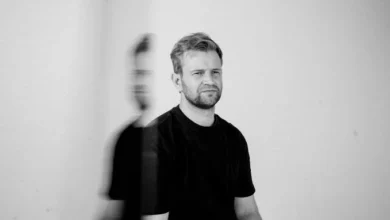
Charlotte de Witte has released Azadi, a three-track EP featuring the AI-generated singer NAVA to support global women’s rights.


The convergence of cutting-edge artificial intelligence and high-stakes social advocacy has reached the global electronic music stage through a new collaborative project from Belgian techno titan Charlotte de Witte. Her latest release, the Azadi EP, arrives on her KNTXT imprint as more than just a dancefloor-oriented collection; it serves as a digital conduit for human rights discourse, specifically centering on the struggle for freedom and equality in the Middle East, North Africa, and Asia. Featuring the AI-generated vocal persona NAVA, the three-track project represents a sophisticated intersection of sound design, technological innovation, and humanitarian activism.
The Genesis of a Digital Voice
NAVA is not merely a synthesized voice but an intricate artificial intelligence character conceptualized by London-based artist Farbod Mehr. Rooted in the rich cultural tapestry of Iran, Mehr’s work is a deliberate fusion of ancient Persian heritage and contemporary digital engineering. The visual identity of NAVA reflects this duality, utilizing motifs derived from classical Iranian art to provide a physical—albeit digital—presence to a character whose primary purpose is to articulate themes of resistance and resilience.
For Charlotte de Witte, the project began as a spontaneous discovery facilitated by her personal network. "A dear friend shared a story from NAVA, a product of artificial intelligence, created by a London-based artist of Iranian origin, Farbod Mehr," de Witte stated in a press release. "I was captivated by the message she was spreading: an expression of hope that sacrifice will lead to a better future. I reached out, and the result is three new original tracks. Where a voice is given to those who deserve to be heard."
The collaboration underscores a growing trend in the music industry where artists leverage their massive platforms to amplify marginalized voices. By integrating Farsi vocals into the rigid, driving structure of techno, de Witte is not only expanding the sonic palette of the genre but is also placing linguistic and cultural heritage at the forefront of a global conversation.
Analytical Breakdown: The Azadi EP
The three tracks—"Azadi," "Omid," and "Tales of the Desert"—serve as a cohesive narrative arc, moving from urgent resistance to hopeful reflection.
"Azadi," which translates to "freedom" in Farsi, acts as the EP’s anchor. Musically, it adheres to the hallmark KNTXT aesthetic, defined by relentless, high-bpm percussion and sharp, acid-inflected synth lines. However, the inclusion of NAVA’s vocal passages transforms the track from a standard club cut into a poignant anthem. The juxtaposition of cold, mechanical techno textures with the warm, melodic cadence of a synthesized human voice creates a tension that mirrors the struggle for liberty.
"Omid," meaning "hope," shifts the tone. The track utilizes restless basslines and clinical electronic stabs, creating an atmosphere of tension that is gradually relieved by layered, spoken-word vocals in Farsi. It serves as a reminder that the path to progress is rarely linear and often marked by cycles of agitation and resolve.
The closing track, "Tales of the Desert," adopts a more spacious, atmospheric approach. By stripping back the aggressive percussion, de Witte allows for the introduction of sustained chords and melodic synthesizers that evoke a sense of vast, arid landscapes. This track functions as the thematic resolution of the EP, offering a moment of quiet contemplation on the stories that remain untold in the face of systemic oppression.
Humanitarian Impact and Institutional Support
The decision to donate all proceeds from the Azadi EP to Femena marks a significant commitment to the grassroots organizations often at the front lines of gender equality advocacy. Femena is a specialized organization that provides essential support to women human rights defenders (WHRDs) and feminist movements operating across the Middle East, North Africa, and Asia.

In these regions, women human rights defenders frequently face a confluence of threats, including state-sanctioned surveillance, legal harassment, and physical violence. According to reports from various international NGOs, the space for civil society in these regions has constricted significantly over the last decade. By providing both financial resources and logistical support, organizations like Femena offer a critical safety net for those who risk their lives to promote human rights.
The financial contribution from this project is intended to bolster Femena’s capacity to support advocacy, protection, and capacity-building programs. For the listeners and fans of Charlotte de Witte, the act of streaming or purchasing the EP becomes a micro-transactional contribution to the broader struggle for gender equity.
The Role of AI in Cultural Representation
The use of an AI-generated singer in a project centered on cultural resistance raises interesting questions regarding the authenticity of digital art. However, Farbod Mehr’s creation of NAVA demonstrates that technology can be a powerful tool for cultural preservation and reinterpretation. By training the AI on the linguistic nuances of Farsi and the stylistic qualities of Persian musical traditions, Mehr has ensured that NAVA serves as a respectful vessel for these stories rather than a mere technological novelty.
This approach highlights a nuanced perspective on AI: rather than viewing it as a replacement for human expression, the project positions it as a medium for amplification. As de Witte noted, the tracks are a "small act of resistance," a way of ensuring that the narratives of those who have been silenced, displaced, or oppressed reach a wider, international audience that might otherwise be disconnected from these realities.
Implications for the Electronic Music Industry
The success of the Azadi EP signals a shift in the responsibility of high-profile electronic music producers. The dance music scene, historically associated with escapism and hedonism, is increasingly being utilized as a platform for political and social commentary.
From a professional standpoint, this collaboration validates the "KNTXT" label’s trajectory, which has always emphasized a blend of high-energy production and strong conceptual curation. By integrating AI and humanitarian goals, de Witte is setting a precedent for how electronic music can remain relevant in an era of rapid technological change and urgent social instability.
The implications for the broader industry are significant. As labels and artists seek to differentiate themselves, the integration of social causes with innovative production methods provides a blueprint for sustainable, mission-driven artistry. It moves the focus away from the cult of personality often associated with superstar DJs and redirects it toward the message—and the people—that the music aims to support.
Conclusion and Ongoing Advocacy
The release of Azadi is not a singular event but a call to ongoing engagement. As listeners interact with the music, they are encouraged to look beyond the tracklist and engage with the underlying mission of Femena. The synergy between de Witte’s global reach and NAVA’s culturally grounded narrative provides a unique opportunity for electronic music fans to educate themselves on the challenges faced by women in the MENA and Asian regions.
While the music offers an auditory experience of resistance, the tangible impact lies in the continued support for human rights defenders. As the project continues to circulate, it stands as a testament to the fact that, even in the most digitized corners of the modern world, the most enduring human stories—of hope, sacrifice, and the relentless pursuit of freedom—remain the most powerful force for change.
Those interested in following the trajectory of this initiative can monitor the KNTXT label for further updates or engage directly with the resources provided by Femena to understand how to contribute to the long-term goal of fostering equality for women across the globe. Through "Azadi," "Omid," and "Tales of the Desert," the project successfully bridges the gap between the synthetic and the organic, the club and the cause, and the artist and the advocate.