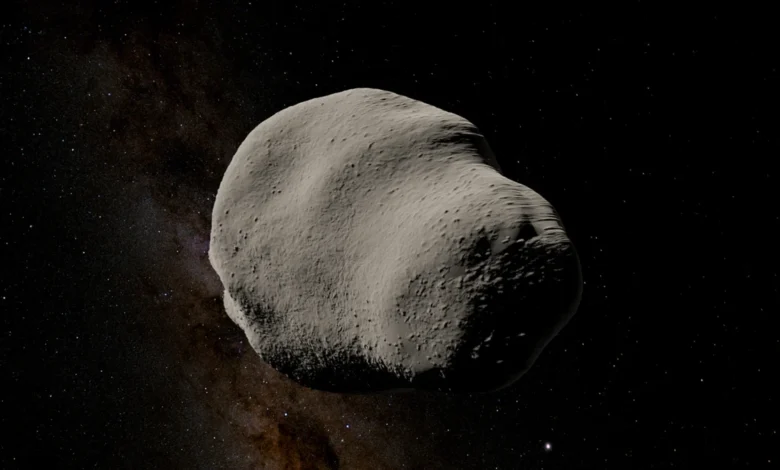
The scientific reality of the vacuum of space dictates that sound waves, which require a medium such as air or water to propagate, cannot travel through the void. Consequently, the celestial dance of planets, stars, and asteroids occurs in total silence. Yet, throughout human history, this physical limitation has failed to suppress the cultural impulse to assign sonic identities to the heavens. From the ancient Greek concept of musica universalis to the speculative compositions of the twentieth century, humanity has consistently sought to bridge the gap between the silent majesty of the cosmos and the expressive power of music. This intersection of astronomy and musicology has found a modern manifestation in the naming of asteroids, where celestial bodies are increasingly christened after the titans of classical music, permanently linking terrestrial art with the architecture of the solar system.
The Philosophical and Scientific Precedents of Celestial Harmony
The tradition of associating music with the heavens dates back to Pythagoras in the 6th century BCE. Pythagoras proposed the concept of the "Music of the Spheres," a philosophical theory suggesting that the distances between the planets correspond to musical intervals. This was not merely poetic; it was an attempt to impose order and aesthetic harmony upon the universe. For centuries, this theory influenced thinkers from Johannes Kepler to contemporary composers who find in the laws of planetary motion a rhythmic structure that mimics musical composition.
In the modern era, this relationship has shifted from speculative philosophy to the literal naming of astronomical objects. The International Astronomical Union (IAU) is the sole body responsible for the nomenclature of celestial bodies. Within its guidelines, the naming of minor planets—or asteroids—has become a way to immortalize historical figures, including those who have made significant contributions to the arts.
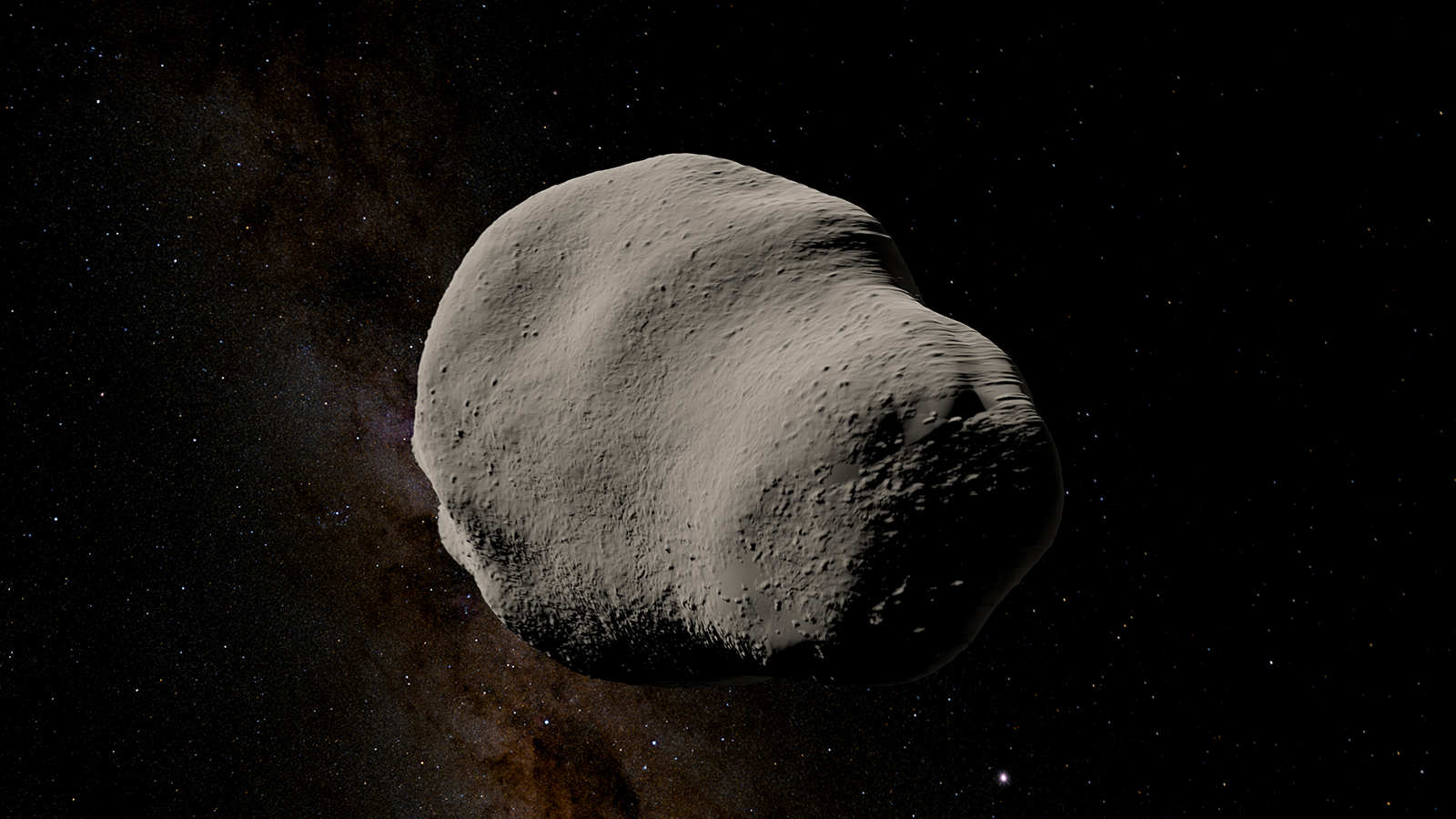
Chronology of Musical Nomenclature in the Asteroid Belt
The practice of naming asteroids after composers began as a way to honor those whose work defined Western culture. The process is rigorous: once a minor planet is discovered and its orbit is confirmed, the discoverer is given the privilege of suggesting a name. This proposal is then reviewed by the IAU’s Working Group for Small Body Nomenclature.
A notable timeline of these celestial tributes reveals a clear pattern of historical canonization:
- 19th Century Origins: The earliest asteroids were named primarily after figures from Roman and Greek mythology. As the number of discovered objects grew, the focus shifted toward scientists and mathematicians.
- The 20th Century Expansion: By the mid-20th century, the trend expanded to include the arts. In 1971, the asteroid 1815 Beethoven was named in honor of the German composer, marking a significant step in the recognition of artistic achievement within the scientific community.
- The Modern Era: Today, the naming conventions have become more diverse, covering a wide range of composers from Bach and Mozart to avant-garde figures like Karlheinz Stockhausen. The IAU currently maintains a database of thousands of named asteroids, with a significant percentage honoring cultural icons.
Data and Demographics of the "Musical" Asteroid Belt
An analysis of the current catalogue of minor planets reveals a fascinating demographic of space-bound musical tributes. There are currently dozens of asteroids that bear the names of composers, conductors, and performers.
Statistical distribution of these names often mirrors the historical prominence of the Western classical canon. For instance, the "Bach family" of asteroids is extensive, with 1814 Bach, 1815 Beethoven, and 1816 Mozart representing the core of the Classical and Baroque era presence in the asteroid belt. The data shows that the majority of these asteroids reside in the Main Asteroid Belt, located between the orbits of Mars and Jupiter.
| Asteroid Name | Number | Year Named |
|---|---|---|
| Bach | 1814 | 1971 |
| Beethoven | 1815 | 1971 |
| Mozart | 1816 | 1971 |
| Haydn | 1817 | 1971 |
| Wagner | 1818 | 1971 |
| Mahler | 4406 | 1987 |
| Stockhausen | 4944 | 1988 |
This data suggests that the naming process is not entirely random but rather reflective of the cultural prestige afforded to these figures at the time of the asteroid’s discovery.
The Intersection of Science and Art: Official Perspectives
The scientific community often views these names as a way to engage the public in astronomy. Dr. Elena Rossi, an astrophysicist involved in deep-space observational programs, notes that the naming process serves a dual purpose. "Naming a celestial body is a permanent record of our cultural priorities," she explains. "When we name an asteroid after a composer, we are essentially archiving human culture in the sky. It makes the cold, hard data of orbital mechanics feel accessible to the general public."
Conversely, musicologists argue that this practice serves to "humanize" the vacuum of space. By projecting the legacy of composers like Stockhausen—whose work, such as Sirius, explicitly deals with cosmic themes—onto physical objects, we are attempting to create a sonic map of the universe. The "spooky" or ethereal nature of Stockhausen’s work, which often utilizes electronic signals to mimic the radio frequencies of space, finds a perfect analog in the literal existence of a rock orbiting in the silence of the belt.
Broader Implications and Cultural Legacy
The implications of this trend extend beyond simple vanity or commemoration. By assigning musical names to asteroids, we are participating in a long-standing tradition of narrative construction. We are moving from a universe defined purely by gravitational pull and orbital resonance to one that is defined by the history of human creativity.

From a sociological perspective, the "musicalization" of the asteroid belt acts as a barometer for what society deems "timeless." Because these names remain in the official astronomical record indefinitely, they effectively serve as a long-term cultural legacy. If humanity were to be studied by a distant civilization, the presence of an asteroid named after Mozart or Mahler would provide a clear indication of our aesthetic values.
Furthermore, the technological aspect of this cannot be ignored. The advancement of telescopic technology allows for the discovery of smaller and more distant objects, meaning that the capacity for "naming" is increasing. While we once only named the brightest, most significant bodies, we are now able to provide names for thousands of minor bodies. This expansion allows for a more diverse representation of global music, moving beyond the Western-centric canon to include composers from different traditions and geographic regions, thereby broadening the "orchestra" of the night sky.
Conclusion
The silence of space remains a physical constant, yet the naming of asteroids after classical musicians provides a symbolic soundscape that resonates with human history. By bridging the gap between the mathematical precision of orbital mechanics and the emotive complexity of musical composition, we fulfill a fundamental human need: to see ourselves reflected in the stars. Whether through the symphonies of the past or the literal rocks hurtling through the vacuum, the marriage of music and astronomy continues to provide a framework through which we can organize, understand, and celebrate the vastness of the cosmos. As we look toward future missions and discoveries, the list of composers in the heavens will only continue to grow, ensuring that the legacy of music is, quite literally, written into the fabric of the solar system.