Dreadbox Reissues, Free ReBirth Clone & Oxygene Turns 50: Synth Journal

The intersection of vintage hardware nostalgia and modern software emulation continues to dominate the electronic music landscape, highlighted by a wave of recent announcements spanning retro computer music milestones, limited-run analog hardware, and monumental anniversary editions. This week’s synth journal captures a broad spectrum of audio heritage, offering a comprehensive look at how producers and manufacturers are honoring foundational electronic music milestones. From the surprising resurrection of a legendary 1990s software workstation to boutique hardware re-releases and a landmark half-century celebration for one of ambient music’s most influential records, the hardware and software markets are experiencing a profound period of retrospective appreciation.
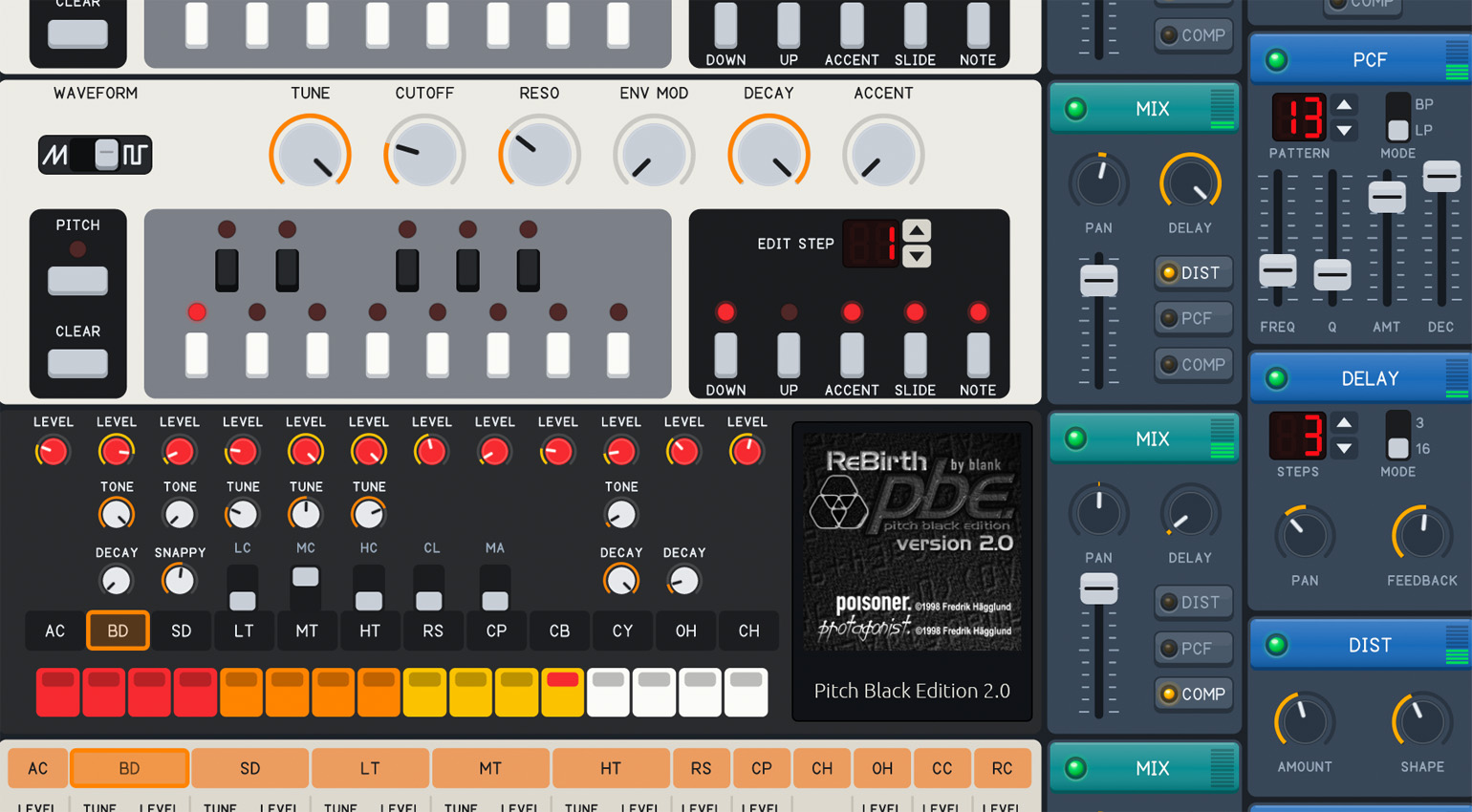
The digital audio workstation landscape of the late 20th century was defined by a handful of revolutionary applications that democratized electronic music production well before the advent of modern Digital Audio Workstations (DAWs). Chief among them was Propellerhead Software’s ReBirth RB-338, originally launched in 1997. For a generation of bedroom producers cutting their teeth on entry-level desktop computers, ReBirth served as a digital playground that bypassed the prohibitive costs of acquiring genuine vintage hardware. By bundling software emulations of Roland’s legendary TR-808 and TR-909 rhythm composers alongside the iconic TB-303 bass line synthesizer, the application permanently altered how electronic music was conceived, arranged, and produced.
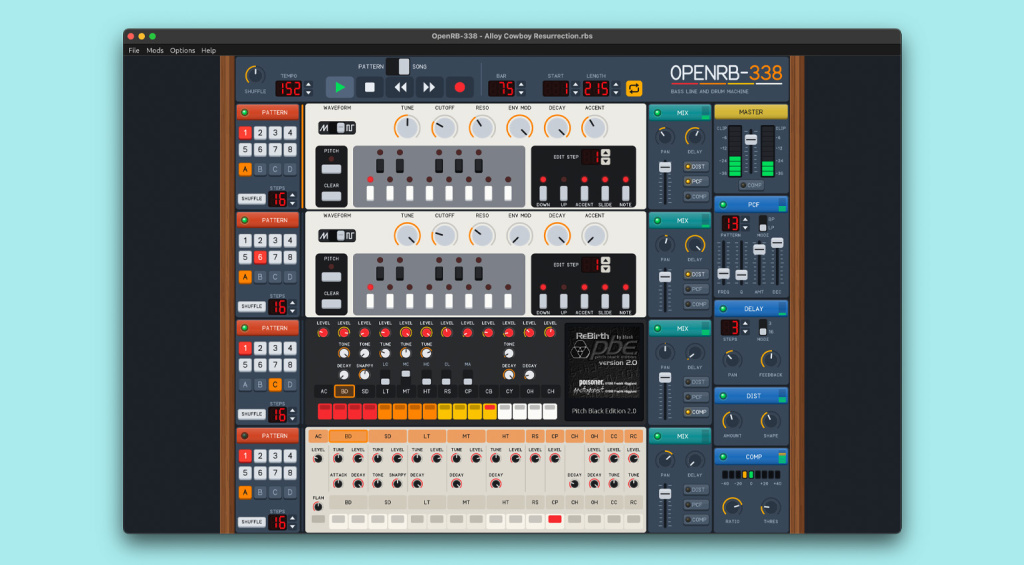
Nearly three decades after its initial commercial dominance, the spirit of that era has been revived through OpenRB-338, a free and open-source recreation designed to emulate the original application. Developed utilizing contemporary coding methodologies, the project aims to deliver a bit-accurate emulation of the software environment that defined late-90s techno, house, and electronica. While modern producers enjoy virtually infinite track counts and heavy VST plugin architectures, OpenRB-338 mirrors the limitations and workflow of its predecessor, functioning strictly as a standalone application for macOS, Windows, and Linux without native MIDI synchronization or ReWire capabilities. Despite these constraints, users are granted the ability to export loops directly as audio files, bridging the gap between historical preservation and modern sampling workflows. The release arrives alongside Reason Studios’ official 2025 reissue of ReCycle, another foundational tool from the same era, signaling a broader industry trend toward archiving and re-delivering the software architecture of early computer-based production.
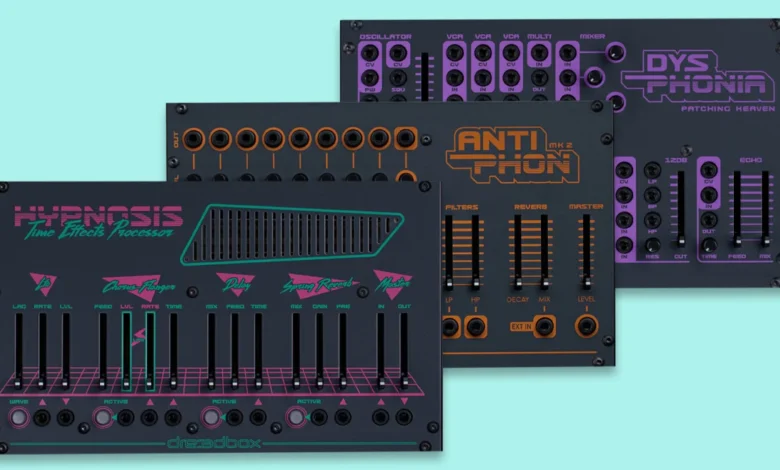
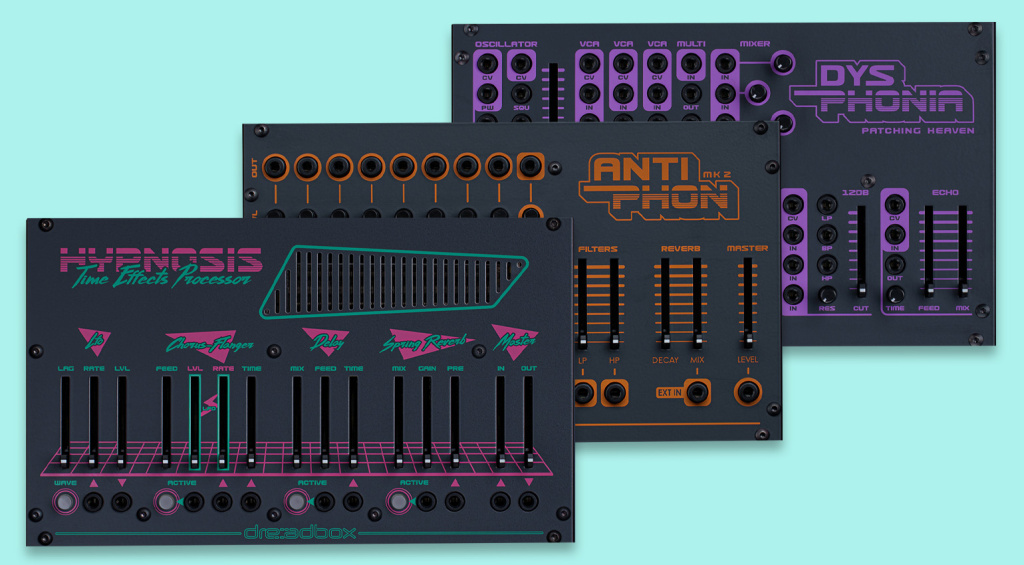
In the physical domain, boutique Greek synthesizer manufacturer Dreadbox has announced a strategic move to satisfy lingering market demand by reissuing three of its most sought-after desktop devices. Originally conceptualized and distributed as do-it-yourself (DIY) kits, the Dysphonia, Antiphon, and Hypnosis units are returning to production as fully assembled modules. This decision addresses feedback from consumers who lacked the time, tools, or technical expertise to assemble the original hobbyist kits, while maintaining the raw analog character that has defined the Dreadbox brand.
The Dreadbox Hypnosis, initially introduced in 2019 as an 80s-inspired analog desktop effects processor before transitioning into a Eurorack-compatible module, anchors the trio. It features an analog bucket-brigade device (BBD) chorus and flanger circuit, a hybrid delay derived from the company’s Erebus synthesizer, a genuine spring reverb tank, and dual Low-Frequency Oscillators (LFOs) for extensive modulation routing. Alongside it sits the Dysphonia, characterized by the manufacturer as a modular synth voice featuring an analog oscillator with four selectable waveforms, dual analog filters, and a hybrid echo effect. Rounding out the collection is the Antiphon, a specialized analog synth and drone voice featuring eight individual sine wave oscillators equipped with dedicated pitch, level controls, individual outputs, and control voltage (CV) inputs. With oscillators seven and eight capable of functioning as modulation sources, the Antiphon doubles as an expansive analog processor for external audio signals. Priced at €315 plus tax per unit and available in strictly limited quantities directly through the manufacturer’s official platform, these reissues represent a rare opportunity for modular enthusiasts to acquire discontinued analog signal paths.
Shifting from hardware production to recorded musical masterworks, the electronic music community is preparing to observe the 50th anniversary of Jean-Michel Jarre’s seminal masterpiece, Oxygene. Released in late 1976, the record defied contemporary commercial logic by featuring continuous, multi-movement compositions constructed entirely from analog synthesizers and tape machines, eventually shifting an estimated 12 million copies worldwide to become one of the most commercially successful French albums in history. Recorded under rudimentary conditions in the composer’s Paris apartment utilizing instruments such as the EMS VCS 3, Eminent 310 Unique organ, and ARP 2600, the album established a blueprint for ambient and instrumental electronic music that influenced generations of producers across ambient, trance, and soundtrack scoring.
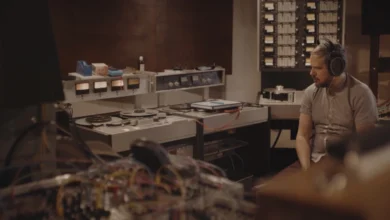
In an official statement regarding the landmark release, Jean-Michel Jarre detailed the meticulous restoration process undertaken at London’s historic Abbey Road Studios. Utilizing the surviving master tapes originating from the 1976 sessions, the production team worked to honor the natural warmth and mechanical idiosyncrasies of the original recordings rather than modernizing the arrangement framework. For the first time in the album’s history, the catalog has also been mixed into a spatial Dolby Atmos configuration, offering listeners an immersive multi-channel interpretation of the dense analog soundstages. Scheduled for release on November 20 across multiple physical formats—including curated vinyl pressings, compact disc, and high-resolution Blu-ray editions—the Oxygene 50th Anniversary Edition underscores the enduring commercial and artistic viability of foundational electronic compositions.
The convergence of these developments highlights a dual-track trajectory within the contemporary music technology and culture sectors. On one hand, historical artifacts of electronic music production are being meticulously preserved, whether through open-source software emulation of 1990s workstation environments or archival audio remastering at institutional recording studios. On the other hand, boutique hardware manufacturers continue to mine their recent product histories, transforming niche DIY concepts into accessible, production-ready instruments for contemporary artists. As the boundaries between vintage analog warmth and digital utility continue to blur, the appetite for historical context within electronic music shows no signs of waning, ensuring that the foundational tools and recordings of the past remain active participants in modern studio environments.