The Symphonic Blues Experience: Morgan Freeman’s Visionary Fusion of Delta Roots and Orchestral Grandeur

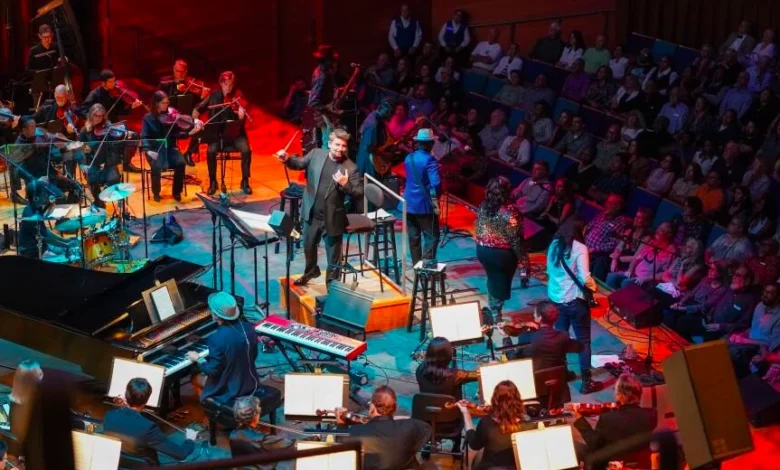
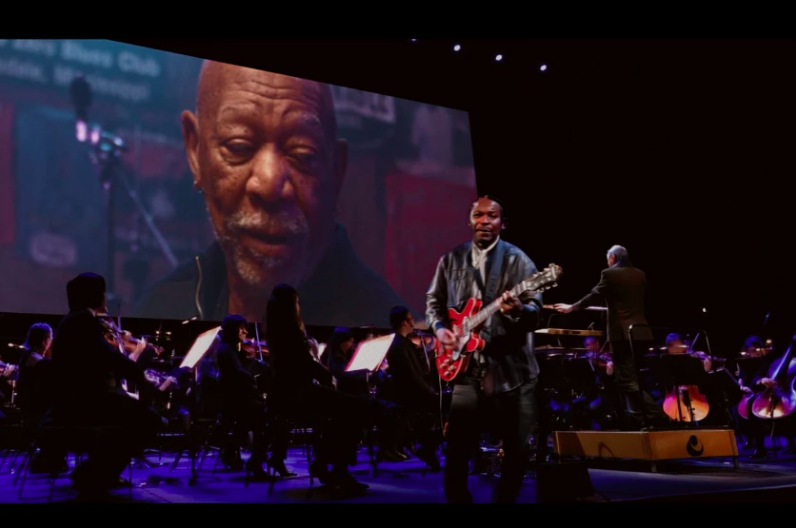
The intersection of folklore and musical mastery has long been defined by the myth of the "Devil’s bargain." In blues history, this narrative is inextricably linked to Robert Johnson, the Mississippi Delta legend who supposedly traded his soul at a crossroads for unprecedented guitar prowess. In the classical tradition, this archetype finds its mirror in Nicolo Paganini, the 19th-century violin virtuoso whose pale, gaunt appearance and impossible dexterity led audiences to speculate that his talents were of supernatural origin. While these two figures represent disparate musical lineages—the proletariat blues of the American South and the aristocratic symphonic tradition of Europe—they are united by a common thread of mystery and technical transcendence. In 2025, Oscar-winning actor and Mississippi blues entrepreneur Morgan Freeman sought to bridge this historical divide, launching the Symphonic Blues Experience, a project designed to elevate the blues from the juke joints of the Delta to the hallowed halls of international symphonic performance.
A Chronology of the Symphonic Blues Experience
The genesis of the Symphonic Blues Experience dates back to Freeman’s long-standing dedication to preserving Mississippi culture. As a co-owner of the Ground Zero Blues Club in Clarksdale, Freeman has spent decades championing the genre as a vital historical art form. The concept for the touring project began taking shape in 2023, driven by a desire to challenge the rigid boundaries between the working-class origins of the blues and the formal structure of the symphony.
By early 2024, the production team began coordinating with regional orchestras across the United States to recruit woodwind, string, and brass sections capable of adapting traditional blues arrangements. The tour officially launched in early 2025, playing to sold-out audiences in venues such as the Mahaffey Theater in St. Petersburg, Florida. Following the tour’s successful reception, a studio recording of the repertoire was produced, culminating in the summer 2026 release of the album titled Morgan Freeman’s Symphonic Blues Experience.
The Intersection of Two Musical Worlds
The project represents an ambitious attempt to integrate the improvisational, rhythm-heavy nature of the blues with the expansive, tonal depth of an orchestral ensemble. Historically, the blues relied on a specific instrumentation—typically guitar, harmonica, piano, and drums—centered around a call-and-response structure. Orchestral music, conversely, utilizes complex harmonic layering and dynamic crescendos.
The Symphonic Blues Experience succeeds in layering these two formats, though it highlights the structural tension between them. The blues is a genre defined by brevity and directness, with many seminal tracks clocking in under four minutes. Orchestral compositions, by nature, often require longer arcs to establish theme and development. The album, with a total runtime of 43 minutes across 12 tracks, serves as a concise study in how these genres can coexist, even if the traditional blues format frequently limits the orchestra’s ability to fully explore the symphonic scope of the arrangements.
Track-by-Track Technical Analysis
The album opens with "Dark Was the Night, Cold was the Ground," featuring a narrative recitation by Morgan Freeman. The track utilizes a 1927 historical account by Blind Willie Johnson, effectively framing the blues as a living history rather than a stagnant relic. The orchestral arrangement serves as a thematic backdrop, emphasizing the gravity of the lyrics.
"Crossroads," the Robert Johnson classic, is interpreted by Mississippi veteran Super Chikan. The arrangement deviates from the original’s solo acoustic roots, leaning heavily into the high-energy, electric-driven style popularized by Cream in the 1960s. The integration of horn sections provides a thick, brass-heavy foundation that contrasts with the traditional guitar-led blues.
"Death Letter Blues," featuring Taj Mahal, is perhaps the project’s most successful marriage of style and substance. The orchestral strings introduce a haunting, sustained tension that complements Taj Mahal’s gravelly, emotive vocal delivery. Here, the symphony acts as an extension of the singer’s internal landscape rather than mere accompaniment.
"Dust My Broom," sung by Lady Adrena, shifts the perspective of the original narrative. The inclusion of a brass-heavy Chicago soul arrangement elevates the song beyond its Delta roots, transforming it into a high-tempo, modern interpretation. Similarly, "The Thrill is Gone," performed by Alvin Youngblood Hart, attempts to capture the essence of B.B. King’s signature sound while expanding the instrumentation. The addition of orchestral layers and complex organ work imbues the track with a soulful, funk-inspired depth reminiscent of 1970s Stax records.
"Cadillac Assembly Line," performed by Keb’ Mo’, offers a social commentary on the transition of the blues from the rural South to the industrial North. The orchestration remains intentionally subtle, allowing the narrative of the working man to remain the focal point, while "Travelling Riverside Blues," sung by Shemekia Copeland, explores the versatility of the blues-rock idiom. The arrangement, characterized by sharp string swells, echoes the intensity of the Led Zeppelin adaptation, though it represents a departure from the song’s original folk origins.
The inclusion of non-traditional blues tracks, such as "I’ll Take You There," featuring Tierinii Jackson and the Stax Music Academy Chorus, provides a tonal shift for the album. By incorporating gospel and soul elements backed by a full symphony, the track serves as a bridge to a broader audience, demonstrating the genre’s adaptability. The album concludes with "I Lied to You," a track heavily associated with the film Sinners. Its inclusion reinforces the connection between contemporary film narratives and the preservation of Delta culture.
Broader Impact and Industry Implications
The Symphonic Blues Experience acts as a litmus test for the cultural viability of the blues in the 21st century. By bringing blues performers to symphony halls, Freeman is actively repositioning the genre within the canon of fine arts. This move is significant, as it challenges the historical elitism that has often categorized the blues as a "primitive" or "low-brow" art form compared to classical music.
Industry analysts note that projects like this are essential for introducing younger demographics to blues heritage. The recognition of tracks like "I Lied to You" by younger audiences suggests that the strategy of integrating blues with modern cinematic or orchestral contexts is an effective mechanism for audience expansion. However, the project also highlights the challenges of genre hybridization. Purists may argue that the short, punchy nature of blues songs is incompatible with the lengthy development required for orchestral mastery. Yet, from a curatorial perspective, the project achieves its primary goal: the elevation of the blues to a platform usually reserved for Western classical music.
Future Outlook and Cultural Legacy
The success of the tour and the subsequent album release suggests a sustained interest in "crossover" blues. The standout performances by Anthony "Big A" Sherrod, a rising talent from Clarksdale, indicate that the Symphonic Blues Experience serves not only as a celebration of legacy artists but also as a launchpad for a new generation of musicians.
As the project concludes its promotional cycle, the focus shifts toward the long-term impact on music education and performance spaces. By integrating the Stax Music Academy and other regional talent, Freeman has ensured that the project contributes to the training of new musicians, further embedding the blues into the academic and fine arts curriculum.
While the album may not capture the full, immersive experience of the live performances—where the visual spectacle of an orchestra in full swing adds a layer of grandeur—it stands as a definitive document of an important cultural experiment. The Symphonic Blues Experience confirms that the blues is not a static artifact of the early 20th century, but a dynamic, evolving language capable of commanding the stage in the most prestigious concert halls in the world. As audiences continue to visit Ground Zero and engage with the music, the narrative of the crossroads remains as potent as ever—only now, it is accompanied by the resonance of a full symphony orchestra.