Half a Century of The Last Waltz: How Martin Scorsese and The Band Created a Timeless Thanksgiving Cinematic Tradition

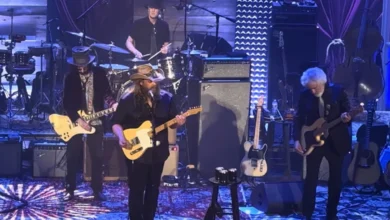
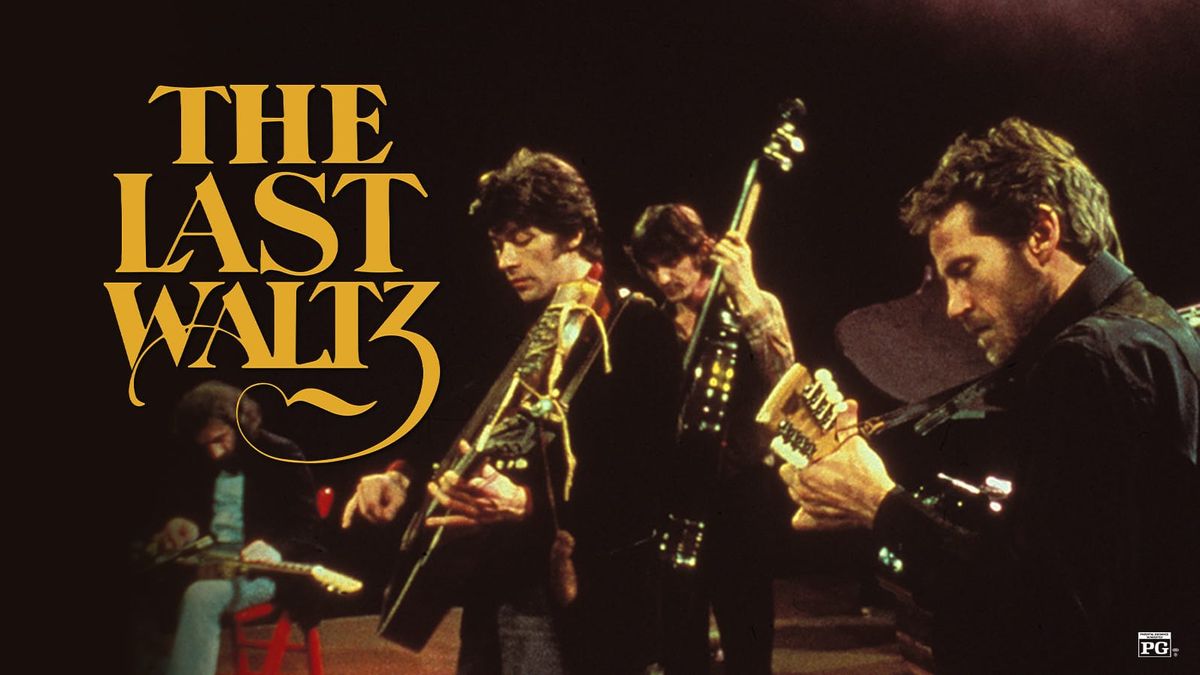
The crisp autumn air of late November reliably brings forth a familiar set of cultural traditions across North America. While households debate culinary centerpieces and millions tune in to televised gridiron matchups, another sacred ritual plays out on screens and in concert halls from coast to coast: the immortal strains of Martin Scorsese’s landmark 1978 documentary, The Last Waltz. Capturing the star-studded 1976 farewell concert of roots-rock pioneers The Band at San Francisco’s legendary Winterland Ballroom, the film has endured for half a century as a foundational text in music history. As anniversary celebrations culminate this week—highlighted by a major benefit concert at Toronto’s Massey Hall—critics, musicians, and historians continue to examine how a single night of Thanksgiving revelry captured an irreplaceable high-water mark of American and Canadian popular music.
Chronology and Origins: The End of a 16-Year Journey
The roots of The Last Waltz trace back nearly two decades before the cameras rolled at Winterland. Formed originally as The Hawks, the backing ensemble for rockabilly singer Ronnie Hawkins, the group eventually transitioned into Bob Dylan’s touring band during his contentious and pivotal 1965–1966 electric transition. By the late 1960s, the lineup—consisting of guitarist Robbie Robertson, drummer Levon Helm, bassist Rick Danko, keyboardist Richard Manuel, and multi-instrumentalist Garth Hudson—stepped out on their own as The Band.
Rejecting the prevailing psychedelic excesses of the late 1960s, they forged a distinct, organic style of roots rock that blended folk, blues, R&B, and country, drawing heavily on Americana mythology and historical imagery. However, relentless touring over sixteen years took a severe psychological and physical toll on the members. By 1976, primary songwriter and guitarist Robbie Robertson decided he could no longer sustain life on the road. Rather than letting the group quietly dissolve, Robertson envisioned an extravagant, celebratory finale.
On Thanksgiving Day, November 25, 1976, The Band hosted a massive farewell concert at the Winterland Ballroom, the very venue where they had played their first official concert under that name eight years prior. To commemorate the event, Robertson enlisted acclaimed filmmaker Martin Scorsese to direct a feature-length document of the evening. Bolstered by a lavish multi-course turkey dinner served to the 5,000 in attendance and a stage design modeled after La Traviata featuring velvet drapes and chandeliers borrowed from the San Francisco Opera, the concert transformed from a simple retirement gig into an all-star summit meeting of rock royalty.
A Star-Studded Stage and an Unrivaled Setlist
The scale of the collaboration at Winterland remains virtually unmatched in rock history. Over the course of the evening, The Band shared the stage with an extraordinary roster of musical icons who had influenced or worked alongside them throughout their career. The guest list read like a pantheon of 20th-century popular music: Bob Dylan, Van Morrison, Neil Young, Joni Mitchell, Muddy Waters, Eric Clapton, Dr. John, Emmylou Harris, Paul Butterfield, Ronnie Hawkins, Neil Diamond, and The Staple Singers.
Each guest brought distinct energy to the performance, yet the core of the show relied on the telepathic musical interplay between Robertson, Helm, Danko, Manuel, and Hudson. Iconic moments from the evening—such as Van Morrison delivering high kicks during a roaring rendition of "Caravan," Muddy Waters commanding the stage with "Mannish Boy," and a communal finale featuring "I Shall Be Released"—were meticulously captured by Scorsese’s crew, which included legendary cinematographers like Michael Chapman, László Kovács, and Vilmos Zsigmond.
When Warner Bros. finally released the film in the spring of 1978, it initially received a mixed commercial reception, with some critics questioning its theatricality and staging. Over the subsequent decades, however, critical consensus shifted dramatically. Today, The Last Waltz is widely regarded by film critics and musicologists alike as one of the greatest concert documentaries ever produced, praised for its visual grandeur, acoustic fidelity, and intimate portrayal of camaraderie.
The Golden Anniversary: LW50 and Contemporary Reverberation
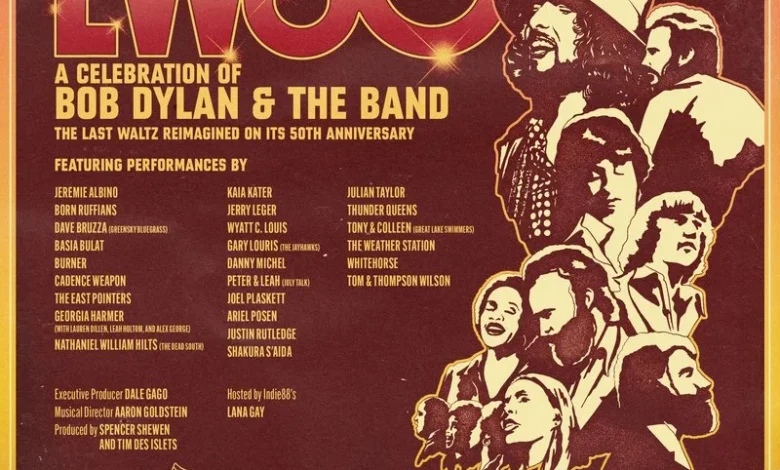
Fifty years to the day after the original curtains rose at Winterland, the enduring legacy of the event is being honored through live tributes across North America. Chief among these is "LW50: A Celebration of Bob Dylan and The Band," scheduled for November 25 at Toronto’s historic Massey Hall.
Organized as a benefit for MusiCounts, Canada’s premier music education charity, the tribute features an impressive roster of contemporary Canadian artists, including Basia Bulat, Born Ruffians, Whitehorse, The East Pointers, and Great Lake Swimmers. For these modern performers, participating in the tribute is both an acknowledgment of a debt owed and an opportunity to reconnect with foundational artistic values.
"As soon as we got the ask, it was an immediate yes," says Tim Chaisson of The East Pointers. "I’m pretty sure every folk musician is influenced by The Last Waltz in one way or another. It would’ve been a dream to be a part of it. This tribute will be the next best thing."
Chaisson notes that the film serves as a secular scripture for working musicians. "It’s a testament to really great songwriting and performing, all done with so much heart and soul. It’s almost a bible for any musician, or even just a music fan. It gives you a glimpse of what music, friendship, community, and a good time are all about."
Luke Lalonde, frontman of the indie rock band Born Ruffians, traces his own creative lineage directly back to The Band’s catalog. Ahead of performing "King Harvest" at the Massey Hall tribute, Lalonde points out how the rural, 19th-century frontier narratives favored by Robbie Robertson directly influenced his own songwriting, even manifesting as specific lyrical nods in tracks like "Hedonistic Me."
Fact-Based Analysis: The Analogue Contrast in a Digital Era
Cultural analysts and participating artists alike emphasize that the enduring appeal of The Last Waltz goes beyond nostalgia, serving instead as a vital counterweight to modern anxieties regarding technology and artistic authenticity.
In an era increasingly dominated by digital manipulation, pitch-correction software, algorithmic curation, and the rapid rise of generative artificial intelligence, the organic nature of the 1976 concert holds profound symbolic value. As Luke Doucet of the acclaimed duo Whitehorse observes, the music captured in Scorsese’s film represents an industrial-artisanal peak of American and Canadian folk-rock.
"These were artists making art at a time when things were still organic by definition," Doucet explains. "There wasn’t an alternative to that organic approach. Everything was still just: you’re pulling on metal, you’re hitting leather, you’re hitting plastic, and that’s what makes sound. You’re controlling the amount of electricity that goes through tubes. As music and pop culture become more controlled and more plastic, with AI and Auto-Tune, there’s going to be an ever-increasing appetite among a certain sector of listeners and creators who insist on keeping things organic."
This sentiment is echoed by Tony Dekker of Great Lake Swimmers, who highlights the spontaneous human interaction at the heart of the documentary. "I think it’s the ultimate example of human beings playing in a room together, responding to each other musically, but also being in front of an audience that is clearly a big part of that equation. The concert feels spontaneous and unhinged in the best possible way, even at a distance of half a century."
Broader Impact and Cultural Legacy
Beyond its technical and sonic achievements, The Last Waltz captures a poignant transitional moment in cultural history. Indie88 radio host Lana Gay, who is serving as the emcee for the LW50 tribute, notes that the event successfully reframed the traditional narrative of a band’s demise.
"They say a person’s biggest party is their funeral, which is pretty brutal when you think of it," Gay observes. "The Band took charge of their farewell and made it a historic snapshot and cultural moment. It also highlights the challenges of being an artist, which hasn’t changed."
Positioned chronologically right before the seismic shifts of late-1970s disco, punk rock, and the commercial pop explosion led by artists like Michael Jackson, the documentary stands as a magnificent monument to the golden age of 1960s and 1970s rock counterculture. It captures a moment when instrumental virtuosity, collective camaraderie, and communal celebration were central pillars of the musical landscape.
As the final notes echo through Massey Hall during the golden anniversary tributes, the true legacy of The Last Waltz remains rooted in its profound display of gratitude. It honors a sixteen-year journey of artistic toil, celebrates the deep-seated friendships forged on the highway, and expresses appreciation for a community of peers who gathered to give thanks. Fifty years after the house lights went down at Winterland, the North Star of collaborative roots music continues to shine undimmed, reminding audiences of the enduring power of human beings playing music together in a room.