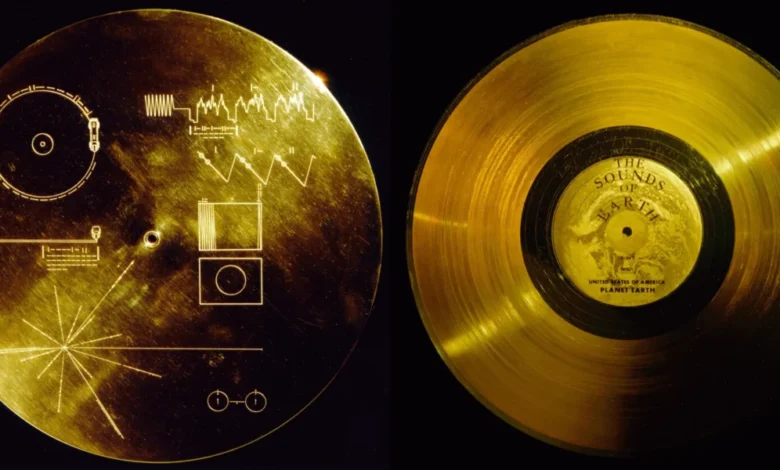
Earlier this month, NASA’s Voyager 1 spacecraft crossed a profound milestone, traversing more than 25.9 billion kilometers from Earth. To contextualize this distance, it is the span that light, traveling at approximately 300,000 kilometers per second, covers in a full 24-hour cycle. As Voyager 1 continues its steady march into the interstellar medium, it carries with it the Golden Record—a time capsule of humanity’s existence, aspirations, and artistic reach. Among the collection of terrestrial sounds and music, one composition stands out for its unique intersection of mathematical rigor and ethereal soundscape: Laurie Spiegel’s realization of Johannes Kepler’s Harmonice Mundi.
A Chronology of the Interstellar Voyager Program
The Voyager mission, launched in 1977, was conceived as an ambitious survey of the outer planets. Voyager 1, along with its twin, Voyager 2, provided the first detailed imagery of Jupiter, Saturn, Uranus, and Neptune. However, the mission’s design always looked beyond the immediate solar system. The inclusion of the Golden Record, a gold-plated copper phonograph record, was intended to serve as a message in a bottle for potential extraterrestrial civilizations.
The timeline of this journey is one of endurance:
- September 5, 1977: Voyager 1 launches from Cape Canaveral, Florida.
- March 1979: Voyager 1 makes its closest approach to Jupiter, providing unprecedented data on the gas giant’s moons.
- November 1980: The spacecraft performs a flyby of Saturn, studying the planet’s rings and the atmosphere of Titan.
- August 2012: Voyager 1 officially enters interstellar space, crossing the heliopause.
- November 2024: The spacecraft achieves the 25.9-billion-kilometer threshold, continuing to operate despite its extreme distance and the diminishing power of its radioisotope thermoelectric generators (RTGs).
The Technical Complexity of the Golden Record
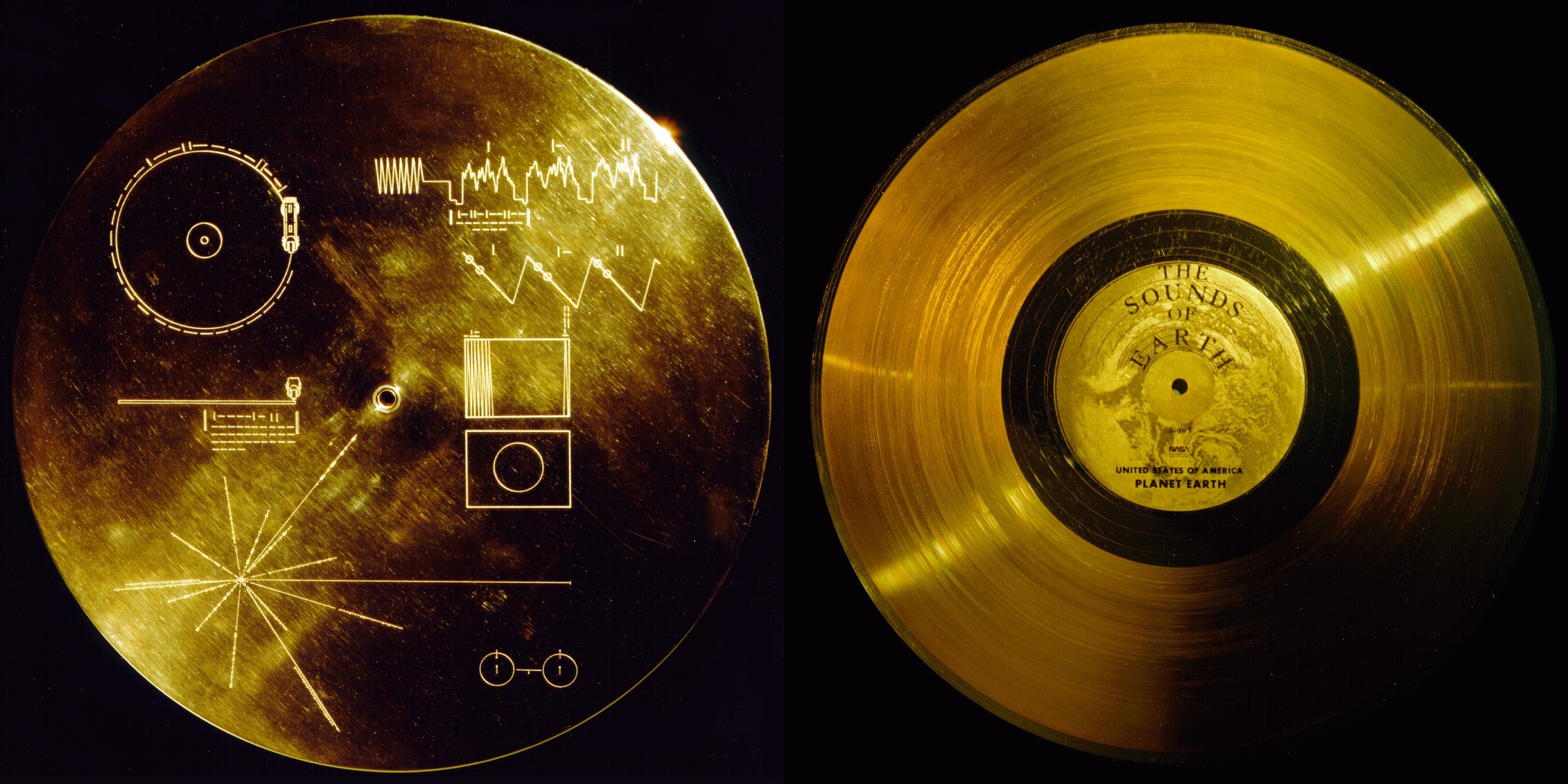
The Golden Record is a masterpiece of 1970s analog technology. It is a 12-inch, gold-plated copper disk containing images, greetings in 55 languages, natural sounds, and a diverse selection of music. The playback instructions, etched onto the cover, assume a level of intelligence capable of deciphering scientific notation and physical engineering principles.
The inclusion of Laurie Spiegel’s contribution—a sonic model of Kepler’s Harmonice Mundi—was a forward-thinking choice by the committee led by Carl Sagan. Kepler, a 17th-century astronomer, posited that the distances of the planets from the Sun were related to musical intervals, a theory he detailed in his 1619 work, Harmonice Mundi (The Harmony of the Worlds). Spiegel, an early pioneer in electronic and computer music, utilized computer-generated synthesis to translate these celestial ratios into a haunting, rhythmic structure.
While the music section of the record features diverse global traditions—ranging from Bach and Beethoven to Chuck Berry and traditional folk songs—Spiegel’s piece serves as the bridge between scientific discovery and creative expression. It is a sonification of the very physics that allowed the Voyager mission to exist.
Artistic and Scientific Implications
The significance of the Golden Record lies in its status as an "interstellar portrait." It is not merely a collection of data, but a reflection of the human condition. When analyzed, the selection of content reveals the values of the late 20th century. By including whale songs, the sound of a human kiss, and the complex, algorithmic compositions of electronic pioneers like Spiegel, the committee sought to present a holistic view of human biology and ingenuity.
Spiegel’s work is perhaps the most "forward-thinking" element of the record because it bypasses cultural or linguistic barriers. Music based on the fundamental ratios of the solar system is, in theory, mathematically accessible to any intelligence that understands the laws of physics. In this sense, the piece functions as a universal language. Its inclusion highlights the foresight of the NASA team, who recognized that an alien civilization might not understand Western tonality but would almost certainly recognize the mathematical beauty of planetary orbits.
Official Responses and Modern Context
In recent years, NASA has continued to update the public on the status of the Voyagers through the Jet Propulsion Laboratory (JPL) communications network. The agency acknowledges that the spacecraft are nearing the end of their operational lives. As power levels drop, engineers have had to systematically shut down non-essential scientific instruments to keep the communication transponders active.
The broader scientific community views the Voyager project as a testament to the longevity of human engineering. The fact that the spacecraft remains functional nearly five decades after launch is an anomaly in the history of aerospace engineering. Dr. Linda Spilker, a project scientist for the Voyager mission, has noted that the data returned from the interstellar medium provides invaluable insights into the density and magnetic fields of the space between stars—a region that had previously been theoretical for humanity.
Beyond the hard data, there is a persistent cultural fascination with the mission. The International Space Station (ISS) crew, in a symbolic gesture of unity and continuity, once transmitted a message directed at Voyager 1. Such interactions serve to bridge the gap between the present-day human presence in low-Earth orbit and the legacy of the deep-space probes that paved the way for modern exploration.
Analysis: Why the Voyager Legacy Persists
The endurance of the Voyager mission serves as a profound thought experiment for humanity. By attempting to communicate with the unknown, we are forced to confront our own terrestrial reality. The "Total Perspective Vortex"—a concept famously coined in science fiction—is an apt analogy for the experience of tracking Voyager: when we look at our planet through the lens of a probe billions of kilometers away, the trivialities of daily life fade, replaced by a singular, urgent sense of stewardship for Earth.
The choice of Laurie Spiegel’s composition, therefore, is not merely a footnote in a music archive; it is a declaration of intent. It asserts that human beings are capable of reconciling the cold, hard logic of geometry with the abstract beauty of art.
As Voyager 1 travels further into the cosmic void, it leaves behind a record that will likely outlive the planet that created it. The physical copper disk is expected to last for billions of years, potentially outlasting the Sun itself. While the chances of the probe being intercepted by another civilization remain statistically infinitesimal, the project itself has achieved a different kind of success: it has established a permanent, physical manifestation of human curiosity.
The Future of Deep Space Communication
Looking ahead, the lessons learned from the Voyager mission continue to influence modern deep-space communications. The "Golden Record" concept has been updated in the form of modern digital archives and high-capacity storage, though none carry the same romantic weight as the analog phonograph. NASA’s ongoing efforts to maintain contact with Voyager 1 serve as a baseline for future interstellar missions, such as the proposed interstellar probes that may one day use laser-sail technology to reach the nearest star systems within a human lifetime.
The cultural impact is equally robust. The imagery and soundscapes of the Voyager missions have become a permanent fixture in global pop culture, from the Star Trek films, which utilized the "VGER" narrative, to the constant digital distribution of the Golden Record’s contents online.
As we reflect on the current milestone—the 25.9-billion-kilometer threshold—we are reminded that Voyager 1 is not just a collection of metal and wire. It is a time capsule, a scientific laboratory, and a message of hope. Whether or not it is ever found, it remains a testament to the era that launched it: a time when the world looked at the sky and decided that, regardless of the odds, we should reach out and make our presence known. Laurie Spiegel’s Harmonice Mundi will continue to play in the silence of space, a rhythmic, geometric echo of humanity’s desire to understand its place in the vast, unfolding architecture of the universe.
Related posts: