Preserving the Sonic Fabric of the South: The 1935 Eatonville Expedition and the Legacy of Zora Neale Hurston

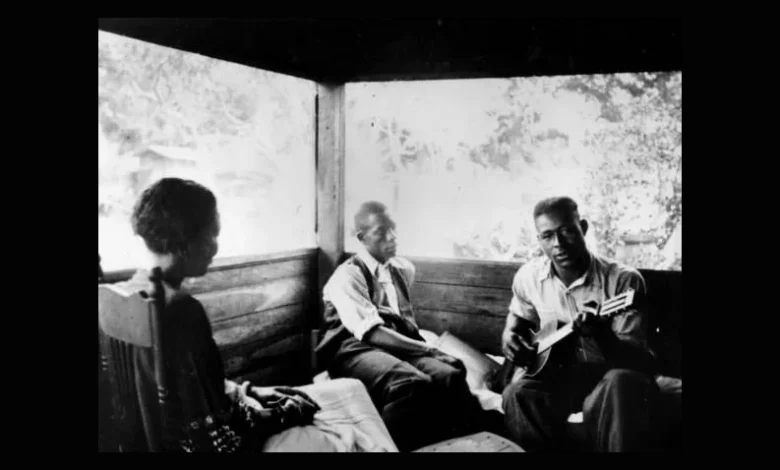
In June 1935, a monumental expedition into the cultural heart of the American South took place when renowned author and anthropologist Zora Neale Hurston joined forces with folklorists Alan Lomax and Mary Elizabeth Barnicle. Their journey, which wound through the humid landscapes of Florida and the sun-drenched islands of the Bahamas, served as a mission to capture the ephemeral oral histories, folk songs, and narrative traditions of Black communities. Among the most significant artifacts from this venture is a surviving photograph taken in Eatonville, Florida, depicting Hurston alongside Rochelle French and the local guitarist Gabriel Brown. This image, and the audio recordings it represents, stand as vital testaments to a blues tradition that existed long before the commercial machinery of the record industry standardized the genre.
A Chronology of the 1935 Expedition
The collaboration between Hurston, Lomax, and Barnicle was not merely a casual excursion; it was a carefully planned endeavor supported by the Library of Congress’s Archive of American Folk Song. The timeline of their work highlights the urgency with which these scholars approached their subject matter:
- Early 1935: Hurston, having already established herself as a literary force with her collection Mules and Men, receives funding and institutional backing to document the folk music of the South and the Caribbean.
- June 1935: The team arrives in Eatonville, Florida. Known as one of the first incorporated Black municipalities in the United States, Eatonville served as a living laboratory for Hurston’s anthropological research.
- Mid-June 1935: The team records Gabriel Brown and other local musicians. These sessions capture a raw, unvarnished sound that blends the secular blues with older spiritual and narrative traditions.
- Late 1935: The recorded materials are transported to Washington, D.C., and integrated into the Library of Congress archives, where they undergo initial preservation processes.
The Musical Repertoire of Gabriel Brown
Gabriel Brown, a pivotal figure in this collection, was far more than a musician. He was a storyteller whose repertoire functioned as a historical repository. His performance of "Careless Love," a staple of the American folk canon, provides a window into the fluid nature of early 20th-century music. Unlike the radio-ready hits of the era, Brown’s version was characterized by a distinct narrative structure that favored community connection over commercial appeal.
Analysis of the recordings indicates that Brown’s guitar work and vocal delivery were deeply influenced by the transient nature of the Florida labor landscape. As a singer who moved through turpentine camps, rail-line worker dormitories, and rural farms, Brown absorbed a myriad of influences. His music was not static; it was a rhythmic collage of Caribbean syncopation, Southern blues sensibilities, and the call-and-response patterns inherent in church traditions.
Hurston’s Anthropological Methodology
The presence of Zora Neale Hurston fundamentally shifted the power dynamics of the 1935 expedition. In many ethnographic missions of the early 20th century, the relationship between the collector and the performer was hierarchical, often described in terms of "discovery." However, Hurston’s methodology was radically different. As a native of Eatonville and a trained anthropologist under Franz Boas, Hurston possessed the cultural literacy necessary to navigate the complexities of local trust.
Her role went beyond simply operating a recording machine. She was an interlocutor who understood that the true value of the performance lay in the context of the setting. She facilitated environments where musicians felt comfortable expressing the totality of their lived experience, rather than performing a sanitized version of their music for an external audience. This approach effectively dismantled the colonial "explorer" trope, replacing it with a model of community-based documentation that prioritized the dignity and autonomy of the subjects.
Florida’s Role in the Blues Map
The 1935 expedition serves as a powerful rebuttal to the historical marginalization of Florida within the broader map of American blues music. Historically, the Delta blues of Mississippi or the Piedmont style of the Carolinas received the lion’s share of academic and commercial attention. Florida, however, acted as a crossroads for a unique set of influences.
The state’s geography—positioned as a gateway to the Caribbean—meant that musicians in regions like Eatonville were exposed to a different set of rhythms and instruments than their counterparts in the inland South. The turpentine camps and phosphate mines were brutal environments, but they were also sites of intense cultural exchange, where workers from across the Southeast converged. The resulting soundscape was a hybrid of African-derived musical structures, Caribbean rhythmic patterns, and the localized narrative traditions of the rural South. By documenting these sessions, the team provided empirical evidence that Florida was not a cultural backwater, but a central node in the development of American vernacular music.
Institutional Archives and the Ethics of Preservation
The Library of Congress currently serves as the steward of the 1935 recordings. While these archives provide researchers with invaluable data, the limitations of the medium remain a subject of rigorous academic debate. Audio recordings are inherently reductive; they capture the sound but often lose the visual, social, and environmental cues that define a performance.
Modern archivists and musicologists argue that the "blind spots" in these recordings—the silence between songs, the ambient noise of the room, and the laughter of onlookers—are just as significant as the music itself. These elements constitute the context that Hurston, Lomax, and Barnicle sought to capture. The challenge for contemporary institutions is to maintain these records without stripping away the humanity of the original performance. Scholars emphasize that preservation must be an ongoing process of contextualization, ensuring that the names of performers like Gabriel Brown and Rochelle French are not lost to history simply because they did not achieve commercial stardom in the traditional sense.
Implications for Modern Musicology
The legacy of the Eatonville sessions continues to influence how musicologists approach the history of African American music. The shift toward valuing "context over records" is a direct result of the work conducted in 1935. By analyzing these recordings, researchers can now trace the migration of musical themes across regional borders, providing a more granular understanding of how culture evolves.
Furthermore, the expedition serves as a case study in the necessity of interdisciplinary research. By combining the skills of a novelist and anthropologist (Hurston) with those of professional folklorists (Lomax and Barnicle), the project achieved a level of depth that single-discipline studies rarely reach. The collaboration proved that the study of music is inseparable from the study of the people who create it.
Conclusion: A Legacy of Context
Today, the surviving photograph of Hurston, French, and Brown stands as a symbol of the broader project of cultural preservation. It reminds us that the history of the blues is not solely found in the grooves of commercially distributed 78 rpm records. Instead, it is found in the field recordings, the ephemeral performances, and the interpersonal networks that functioned beneath the radar of the mainstream industry.
The 1935 expedition remains a definitive moment in the history of American folklore. It captured a snapshot of a specific time and place, documenting a musical language that was already in the process of transformation. For modern listeners and historians, these recordings are more than just historical curiosities; they are essential threads in the tapestry of American identity. By preserving the context of these performances, we honor the musicians who, despite operating outside the commercial record industry, defined the sonic landscape of their time. The Eatonville work remains a benchmark for future documentation efforts, proving that the most important stories are often those found in the quiet, local spaces where tradition lives and breathes.
Related posts: