Jan Kus Delivers a Transcendent Masterclass in Modern Jazz with the Release of His Critically Acclaimed Debut Album Faith

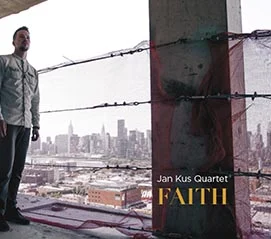
The contemporary jazz landscape has long been defined by its ability to absorb, reflect, and synthesize global musical traditions into a cohesive artistic statement. With the 2016 release of his debut full-length album as a bandleader, Faith, saxophonist and composer Jan Kus firmly established himself as a formidable voice in the modern jazz idiom. Self-produced and internationally flavored, the record serves as a comprehensive showcase of Kus’s technical dexterity, compositional maturity, and expansive artistic vision. Drawing from European classical sensibilities, traditional American bebop, and heavily syncopated Latin rhythms, Faith represents the culmination of years of rigorous international study, prestigious mentorship, and collaborative exploration.
Early Foundations and International Pedagogy
The trajectory of Jan Kus’s musical career is marked by early recognition and an uncompromising dedication to his craft. A native of Slovenia, Kus initially displayed exceptional promise on the saxophone during his formative years. His burgeoning talent caught the attention of the Slovenian Ministry of Culture, which awarded him a prestigious scholarship to further his education abroad. This financial and institutional backing enabled Kus to enroll at the esteemed Royal Conservatory of The Hague in the Netherlands.
During his time at the conservatory, Kus expanded his musical horizons through extensive touring across Europe. He performed alongside fellow young European jazz luminaries in Belgium, Cyprus, Greece, Hungary, Italy, Slovakia, Slovenia, and the Netherlands. These formative cross-cultural exchanges deeply influenced his compositional style, laying the groundwork for a globally transcendent sound that would later define his solo work.
Seeking to immerse himself directly in the epicenter of the global jazz tradition, Kus crossed the Atlantic in 2012 to pursue a Master’s degree at the Aaron Copland School of Music at Queens College in New York. There, he studied under renowned alto saxophonist Antonio Hart, an experience that profoundly shaped his tone and improvisational approach. Kus’s academic excellence and musical promise were further validated when he received the coveted Jimmy Heath Award, an honor traditionally bestowed upon exceptionally talented wind players demonstrating extraordinary potential.
The Genesis and Ensemble Dynamics of Faith
Released in 2016, Faith marks a critical milestone in Kus’s professional evolution. Eschewing the conventional reliance on major-label infrastructure, Kus opted to self-produce the record, retaining absolute creative control over the project’s sonic architecture. The album features a core quartet composed of Kus on tenor and soprano saxophones, Sean Fitzpatrick on piano and Fender Rhodes, Dan Martinez on double bass, and Joel Mateo on drums.
To achieve the rich, layered texture that distinguishes the album, Kus augmented his core ensemble with a stellar roster of guest artists. In addition to his former mentor Antonio Hart, the recording sessions featured electric guitarist Rafal Sarnecki, percussionist Carlos Maldonado, electronic artist Ziga Murko, and vocalist Mélanie JB Charles. Charles, an increasingly ubiquitous presence on emerging millennial jazz recordings, brings a distinct vocal signature that weaves seamlessly into the album’s intricate arrangements.
The interplay between Kus and Hart serves as one of the record’s primary sonic anchors. On the track "Emptiness," Hart’s focused, sharp alto saxophone acts as a brilliant foil to Kus’s brash, full-bodied tenor. Rather than competing for space, the two saxophonists execute tightly wound melodic harmonies that gradually escalate in intensity. Through consequential elongated lines and unyielding fervor, their improvisations evolve into a controlled fury of sound, demonstrating an elevated level of musical telepathy and mutual respect.
Reimagining Tradition Through Global Rhythms
While Faith is fundamentally a modern jazz record, Kus demonstrates a profound reverence for the genre’s historical canon. This is perhaps best exemplified in the quartet’s radical reimagining of Thelonious Monk’s iconic bebop composition, "Rhythm-A-Ning." Featuring trumpet player Alex Sipiagin alongside Kus’s relentless tenor, the track blazes a new path through familiar harmonic territory.
Fitzpatrick’s agile piano work and Mateo’s dynamic drumming establish a palpable tension, which is subsequently resolved when Martinez’s double bass anchors the arrangement in a vibrant Latin rhythm. Above this rhythmic foundation, the tenor and trumpet serve as coloristic agents, recontextualizing Monk’s angular melody for a contemporary audience. Music critics have frequently highlighted this track as evidence of Kus’s sophisticated rhythmic awareness, noting that his playing extends far beyond conventional technical facility to engage deeply with structural groove and pulse.
The album’s stylistic diversity is further underscored by tracks like "Neófito," a muscular, compositionally complex piece steeped in heavy Latin grooves. The tune, which stands out as a high-water mark within the tracklist, exemplifies Kus’s penchant for dense textures and polyrhythmic frameworks. It captures the essence of his globally influenced sound, offering listeners a masterclass in modern rhythmic integration.
The Vocal Mastery of Mélanie JB Charles
The integration of Mélanie JB Charles’s vocals across several tracks introduces a compelling texture to the album. Charles possesses a languid, seasoned vocal delivery characterized by a rare stylistic singularity. Rather than functioning merely as a conventional guest vocalist, Charles utilizes her voice as an intrinsic instrumental element.
On the track "Strength," Charles vocalizes in direct unison and counterpoint with Kus’s saxophone. The two blend their respective timbres so effectively that they sound like a pair of identically trained horn players. Conversely, on "I’m Just a Little Person"—a ballad presented in two distinct versions—the ensemble adopts a patient, spacious approach. This minimalist setting allows Charles to showcase the breathy vulnerability of her voice while demanding absolute control, dynamic sustain, and emotional maturity from Kus.
On the album’s alternate trio version of the same track, Kus steps forward on soprano saxophone, initiating the piece with an open, exploratory cadence. Supported by the rhythm section, the trio constructs a loping, contemplative atmosphere of longing. This instrumental interpretation diverges notably from the vocal recording while maintaining an equally high standard of lyrical fluency and expressive depth.
Track Listing and Personnel Overview
The comprehensive scope of Faith is reflected in its expansive track listing and the diverse collective of musicians assembled for the sessions.
Track Listing:
- Disconnect
- Emptiness
- One for the Band
- Aqui
- One for the Band–Jan’s Story
- I’m Just a Little Person
- One for the Band–Sean’s Story
- Rhythm A Ning
- Strength
- One for the Band–Dan’s Story
- Neófito
- Faith
- I’m Just a Little Person (trio version)
Personnel:
- Jan Kus: Tenor saxophone, soprano saxophone
- Sean Fitzpatrick: Piano, Fender Rhodes
- Dan Martinez: Double bass
- Joel Mateo: Drums
- Mélanie JB Charles: Vocals
- Antonio Hart: Alto saxophone
- Alex Sipiagin: Trumpet
- Carlos Maldonado: Percussion
- Rafal Sarnecki: Electric guitar
- Ziga Murko: Electronics
Broader Impact and Industry Implications
The release of Faith carries significant implications for the ongoing evolution of contemporary acoustic jazz. In an era where genre boundaries are increasingly porous, Kus’s debut demonstrates how rigorous classical and jazz pedagogy can successfully intersect with multicultural rhythmic traditions without diluting the core integrity of the music.
Industry analysts and jazz critics have pointed to Faith as an indicator of a shifting generational paradigm in jazz. Young bandleaders educated in global conservatories are increasingly rejecting stylistic isolationism, opting instead for collaborative models that leverage international talent pools. By integrating European harmonic sensibilities, American bebop structures, and Afro-Caribbean rhythmic frameworks, Kus has positioned himself at the forefront of this transnational movement.
Furthermore, the critical reception of Faith validates the educational investments made by institutions such as the Slovenian Ministry of Culture and the Aaron Copland School of Music. By providing talented young artists with the resources necessary to study across borders, these bodies have directly facilitated the creation of high-caliber artistic works that enrich the global cultural commons.
Conclusion and Future Outlook
As a foundational artistic statement, Faith reveals an instrumentalist and composer possessing dexterity, breath control, and a warm, round tone that far exceeds his years. The maturity with which Kus navigates complex harmonic structures and delicate ballad spaces alike suggests a long and influential career ahead.
For observers of the contemporary jazz scene, Jan Kus has transitioned from a promising student scholar to a fully realized artist capable of commanding international attention. With Faith serving as an ambitious and accomplished benchmark, the jazz community will undoubtedly monitor his future endeavors with considerable anticipation.