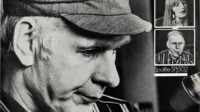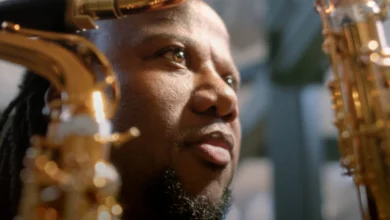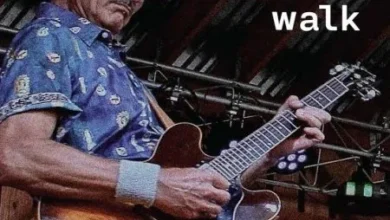
The release of the self-titled album King Leo & Son marks a unique intergenerational collaboration in the contemporary blues landscape, uniting veteran blues artist Leo LaDell and his son, electric guitarist Oscar LaDell. Recorded live to tape over the course of a productive winter session at Surgery Studios in Wellington, New Zealand—locally known as Pōneke—the 10-track, 28-minute project captures a raw, authentic synergy that bridges decades of musical experience and geographical distance. For Leo LaDell, whose extensive career spans decades of touring, recording, and performing across the United States and Australasia, sharing the stage and studio with his son represents a rare convergence of lineage and artistry. Oscar, who is now permanently based in Melbourne, Australia, reunites with his father periodically for family and performance, resulting in a musical dialogue characterized by profound mutual understanding, stylistic restraint, and deep emotional resonance.
Background Context and Musical Lineage
The roots of this collaboration trace back through a lifetime of blues immersion. Leo LaDell has long established himself as a formidable presence in the international blues circuit, a reputation solidified by sharing bills and opening for legendary blues figures such as Pinetop Perkins and Bo Diddley. His musical vocabulary is deeply rooted in traditional American blues forms, yet it remains fluid and expressive, shaped by years of traversing diverse cultural landscapes.
Currently anchored in the scenic coastal environment of Ōteoti/Dunedin, New Zealand, the LaDell family home serves as a creative anchor point for these periodic artistic reunions. The decision to record the album at Surgery Studios in Wellington was driven by a desire to capture an unpolished, organic sound reminiscent of classic blues recordings. By opting to record live to tape rather than utilizing modern, multi-layered digital production techniques, Leo and Oscar embraced the imperfections and immediate energy of live performance. The resulting record relies entirely on the interplay between Leo’s strident, evocative vocals and poignant harmonica work, and Oscar’s measured, calculated guitar accompaniment. Industry observers and critics have noted that the album rewards careful listening, ideally experienced loudly and in stereo to fully appreciate the dynamic range and spatial separation captured during the live-to-tape sessions.
Chronology of the Recording Sessions
The genesis of the album began during the Southern Hemisphere winter, when Oscar traveled across the Tasman Sea from Melbourne to New Zealand to visit his father and collaborate on new material. Operating on a streamlined timeline, the duo entered Surgery Studios in Wellington with a curated selection of original compositions penned by Leo and Oscar, alongside a carefully chosen repertoire of blues standards from luminaries such as Howlin’ Wolf, Little Walter, Bobby Bland, and Muddy Waters.
Without the safety net of digital editing or pitch correction, the sessions required absolute focus and synergy. Over a concentrated period, the duo laid down the ten tracks that comprise the record. The methodology prioritized spontaneous emotional delivery over technical perfection, ensuring that every intake of breath, string bend, and harmonica note retained its immediate, unadulterated impact. Following the completion of the recording sessions, the project was prepared for independent release under the self-released banner, maintaining complete artistic control over the final product.

Track-by-Track Breakdown and Artistic Analysis
The album commences with "Run Run Run," an original composition written by Leo LaDell. The track immediately establishes the dynamic of the record, featuring crisp harmonica lines and driving vocals from Leo, underpinned by Oscar’s sharp, articulate guitar picking. The lyrical and structural foundation of the song showcases Leo’s seasoned songwriting capabilities, setting a high standard for the remainder of the tracklist.
Transitioning into traditional territory, the duo tackles Howlin’ Wolf’s classic "Smokestack Lightning." Rather than attempting to replicate the frantic energy of the original electric ensemble recordings, Leo and Oscar approach the song with a deliberate, hauntingly slow pace. Leo’s vocals are delivered with gritty authority, complemented by subdued yet intensely effective guitar work that builds a dark, atmospheric tension.
The emotional depth of the record deepens with "Nothing You Can Do," an original piece featuring probing harmonica phrases and impassioned vocal delivery, supported by Oscar’s sensitive guitar phrasing. This theme of emotional intimacy continues into "All Along," a slow-tempo blues ballad that explores themes of distance, connection, and familial bonds. The track’s somber mood is anchored by sparse guitar licks and a vocal performance that communicates profound sincerity without resorting to melodrama.
Shifting the tempo, "Hands of a Maker" introduces a spirited, rhythmically bouncy groove. The song functions as a piece of philosophical life advice, delivered with vocal confidence and a steady, foundational guitar rhythm that highlights the duo’s tight-knit rhythmic synchronization. This momentum carries into "Gather You In," where Leo executes intricate, laid-back harmonica solos while Oscar provides a relaxed, supportive guitar backing that allows both instruments to converse naturally within the mix.
Oscar LaDell steps forward as a songwriter with "Down on My Knees," a stark, minimalist, slow-tempo blues track defined by its heavy emotional weight. Leo’s vocals take on a howling, visceral quality, matched by Oscar’s restrained yet devastatingly effective guitar accompaniment. The song stands out as one of the album’s emotional pinnacles, demonstrating a mature understanding of space and silence within blues composition.
The duo then pivots to Little Walter’s "Tell Me Mama." While Jacobs’ original recording is famous for its swinging, jump-blues energy, the LaDells reinterpret the track through a front-porch acoustic lens, translating the urban Chicago jump style into an intimate, roots-oriented delivery that demonstrates their ability to honor source material while asserting a distinct identity.
Approaching the album’s conclusion, the duo delivers a powerful rendition of Bobby Bland’s 1955 ballad "You or None." Oscar’s restrained electric guitar provides a delicate sonic bed for Leo’s emotive, soaring vocals. The arrangement avoids unnecessary flashiness, instead relying on gradual dynamic building that guides the listener toward a passionate, resonant climax. The album concludes with Muddy Waters’ "Country Boy," featuring ringing electric guitar work and a commanding vocal and harmonica performance from Leo. The track serves as a fitting homage to the foundational architects of the genre, executed with a contemporary vitality that bridges the gap between historic blues tradition and modern execution.

Industry Implications and Critical Reception
The release of King Leo & Son arrives at a time when audiences increasingly value authenticity and tactile production methods in recorded music. By choosing an all-analog, live-to-tape recording process, the LaDells have positioned their project within a growing subset of the roots music community that rejects hyper-polished studio production in favor of human imperfection and emotional directness.
Early critical reception of the album has been overwhelmingly positive, with reviewers praising the telepathic musical communication between father and son. The project challenges the notion that generational gaps in modern music must result in stylistic disconnects; instead, it demonstrates how shared heritage can foster a deeply intuitive musical vocabulary. For Oscar LaDell, the project further cements his standing as a formidable guitarist capable of navigating traditional blues structures with modern sensitivity, while for Leo LaDell, the album serves as a triumphant continuation of a storied career dedicated to the preservation and evolution of the blues.
Broader Impact on the Australasian Blues Scene
Beyond its artistic merits, the collaboration highlights the vibrant, transnational nature of the modern blues community. With Leo based in New Zealand and Oscar residing in Australia, the transatlantic and trans-Tasman exchange of musical ideas underscores how regional scenes in Australasia continue to produce world-class interpretations of traditionally American art forms.
The independent release model chosen by the duo also reflects broader industry trends, wherein legacy and independent artists bypass traditional major-label distribution frameworks to connect directly with niche, dedicated audiences worldwide. Supported by their official web presence and targeted distribution, King Leo & Son have delivered a concise, highly focused body of work that stands as a testament to the enduring vitality of family musical traditions and the timeless appeal of the blues.