Lawrence Bud Freeman The Legacy of Jazz Improvisation and the Critical Listening Sessions

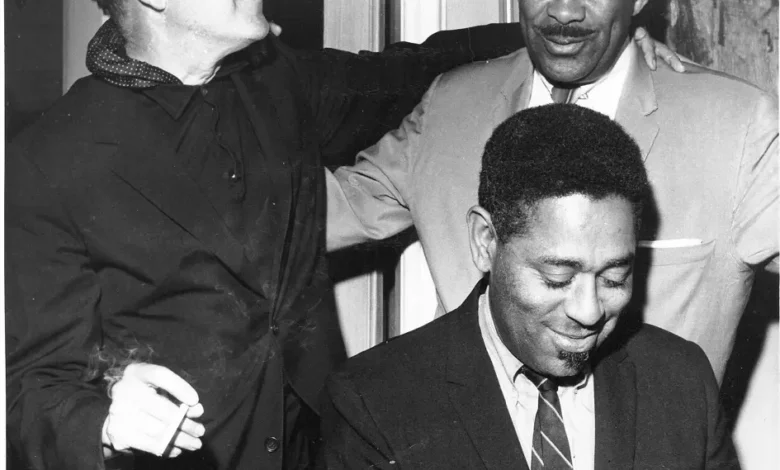
This series of taped interviews captures the candid, unfiltered perspectives of prominent jazz musicians as they engage with a curated selection of contemporary records. In these sessions, the artists are presented with recordings without prior notice, provided with the album sleeves only as the tracks commence. This methodology ensures that the critical feedback remains untainted by reputation or pre-conceived notions of the performers. The selections featured are chosen from inventory currently available in record stores, offering a real-time snapshot of how working musicians perceive the evolving landscape of their craft.
The Chicago School and the Austin High Influence
Lawrence "Bud" Freeman, a seminal figure emerging from the legendary Austin High School Gang in Chicago, has become a fixture in the British jazz circuit. His recurring presence in the United Kingdom has fostered a familiarity that often transcends his American roots, with audiences and peers alike viewing him as a staple of the local scene. Freeman’s tenor saxophone style—noted for its economy of phrasing and rhythmic clarity—serves as a bridge between the traditional New Orleans polyphony and the emerging swing sensibilities of the 1930s.
His career began in the early 1920s, a period defined by the rapid migration of jazz from the South to the urban centers of the North. Freeman’s early professional experiences, including his tenure in Ben Pollack’s orchestra, provided the crucible for his development. It was during these formative years in New York that he bore witness to the arrival of Jack Teagarden, a meeting that shifted the trajectory of big band arrangements and introduced a new standard of trombone performance that would eventually influence Glenn Miller and Benny Goodman.
The Art Tatum Paradigm
Among the tracks reviewed, Art Tatum’s performance on ‘S Wonderful (Verve VLP 9110) elicited a profound response from Freeman, who characterized the work as a singular masterpiece. Freeman’s historical account of his first encounter with Tatum at the Three Deuces in Chicago highlights the reverence held for the pianist by his contemporaries. The incident, where Freeman convinced Tatum to extend his set by forty-five minutes after hours, underscores the unspoken professional bond that existed between elite musicians of the era.
Tatum is frequently cited by musicologists as the architect of modern jazz piano harmony. By expanding the harmonic palette and utilizing rapid-fire velocity, Tatum set a ceiling for technical proficiency that remains a benchmark in academic jazz studies. Freeman’s comparison of Tatum to other greats—such as James P. Johnson, Fats Waller, and Bud Powell—positions Tatum as the definitive answer to the question of what an ultimate jazz pianist should achieve.
Melodic Lineage and the Alto Saxophone Tradition
Freeman’s critique of Benny Carter and Johnny Hodges reveals a deeply held belief in the importance of the melodic line over the rapid, often frantic, experimentation that characterized the later bebop movement. Freeman argues that history will validate Carter and Hodges as the true pillars of the alto saxophone, emphasizing their consistency and internal sense of structure.
Regarding Charlie Parker, Freeman acknowledges the undeniable talent of the alto pioneer but introduces a critical distinction between raw genius and sustained professional output. He posits that Parker’s health and the pressures of his lifestyle prevented him from reaching the "complete flower" of his creative potential, unlike the longer, more consistent careers of Carter and Hodges. Freeman further critiques the "idiots"—the wave of imitators who lacked the fundamental understanding of Parker’s innovations, resulting in a degradation of the specific style Parker intended to pioneer.
Collaborative Dynamics: Terry, Brookmeyer, and the Studio Environment
The session shifted to the Tête à Tête (Fontana TL 5265) recording by Clark Terry and Bob Brookmeyer. Freeman noted that their collaboration is a testament to the success that can be achieved when musicians align their stylistic sensibilities. The duo’s success in a challenging commercial market is seen as a rarity.
The discussion touched upon the 1964 documentary project, The Making of a Pro, which centered on the New York Giants. The score, composed by Freeman and Bob Haggart, served as a notable instance of jazz integration into sports media. The project utilized a quintet featuring Clark Terry and Dick Hyman, ultimately receiving an ASCAP award. This highlights the practical applications of jazz in the mid-century commercial sector, where high-level improvisation was often commissioned for film and television scoring.
Critical Dissent: The Avant-Garde and Structural Integrity
Freeman’s reaction to Bobby Hutcherson’s Dialogue (Blue Note 4198) represents the friction between traditionalist views and the burgeoning avant-garde movement of the mid-1960s. Freeman expressed a firm disapproval of the record, characterizing the approach as "sick" and lacking in fundamental talent. While he maintained that experimentation is vital for the growth of jazz, he drew a sharp line between "musical experimentation"—which he attributed to masters like Clark Terry—and what he perceived as a lack of discipline in the newer generation.
This perspective aligns with the broader debate occurring in the jazz press during the 1960s, as the genre split between those who viewed the music as a formal language rooted in blues and swing, and those who sought to dismantle traditional harmony and rhythm in favor of total abstraction. Freeman’s insistence that "an artist knows when he has something to give" serves as a defense of the traditional work ethic required to sustain a career in the industry.
The Enduring Influence of the Masters
The discussion concluded with a reflection on the longevity of the jazz canon. Freeman emphasized that the music of Louis Armstrong, Bix Beiderbecke, King Oliver, and Coleman Hawkins remains "modern" regardless of the decade. He rejected the premise of "progressive" versus "reactionary" jazz, arguing that the term "progressive" inherently devalues the work of those who came before.
His own development, while often compared to Coleman Hawkins, was explicitly shaped by the earlier school of Beiderbecke, Armstrong, and Jimmy Noone. Freeman’s ability to synthesize these influences into a "Freemanistic" style demonstrates the cyclical nature of jazz education, where each generation absorbs the technical breakthroughs of their predecessors while adding personal inflection.
Implications for the Jazz Industry
The insights provided by Freeman offer a window into the professional mindset of the 1960s jazz musician. The emphasis on consistency, the necessity of a "personal sound," and the rejection of gimmicks are themes that have persisted in the industry. The tension between the commercial requirements of the record industry—represented by the A&R men seeking "soul" gimmicks—and the artistic desire to record in an "effortless" and authentic manner remains a central conflict for artists today.
As jazz continues to evolve, the distinction between "spurious" experimentation and genuine innovation remains a point of contention. Freeman’s assertion that musical fact—the recognition of greatness in figures like Dave Tough or Sid Catlett—provides the foundation upon which opinions are built, serves as a rallying cry for those who advocate for the preservation of jazz history. His vision of a future performance, where a musician might play only one perfect note at the age of ninety, captures the essence of the jazz spirit: a lifelong commitment to the instrument that transcends physical limitations and the changing fashions of the music business.
The legacy of the Austin High School movement, and the subsequent careers of its participants, underscores the resilience of the Chicago jazz tradition. Through the decades, these musicians maintained that the value of the music was not in its "way-out" or "angry" sounds, but in its ability to communicate a genuine, lived experience—a philosophy that Bud Freeman carried from the speakeasies of the 1920s to the concert halls of the 1960s and beyond.